Page 34 - Ready for IMPACT Battery Blog
-
- October 20, 2011
Lithium-ion batteries are used in an array of consumer electronics, from laptops, smart phones, and even electric cars. While the current lithium-ion batteries are good, they will get better. The reason can be credited to researchers who have found a way to have the batteries store more energy.
According to a recent article in Science Daily, the anode is a critical component in these batteries. Scientists at the U.S. Department of Energy’s Berkeley Lab have designed a new type of anode that can absorb eight times the lithium of current designs. Even more promising, it has maintained its greatly increased energy capacity after over a year of testing and countless charge-discharge cycles. And additional good news with it is that the new anodes are made from low-cost materials, compatible with current standard lithium-battery manufacturing technologies.
While the better batteries aren’t yet ready for your new electronics just yet, the emphasis on continual improvement to maintain high customer
-
- October 13, 2011
A battery not achieving or holding a desired charge is a common complaint with consumers for anything electronic. Whether it is a battery for a toy, scooter, golf cart, boat, RV, laptop, or a hose of other electronics items, customers rightfully expect for their battery to produce a charge that makes the equipment is for run.
We have discussed previously that batteries have a life and that no battery—regardless of the brand or quality—lasts forever. But sometimes, consumers unwittingly shorten their battery’s life by using the battery improperly. When that happens, the end result could be a battery that is damaged, and in some cases, could even affect the appliance or equipment itself.
Common reasons why batteries fail:
- A battery is exposed to extreme weather conditions—heat, cold or moisture.
- Battery is attempted to be used in a different way than what it was made for. Many batteries are designed for a specific product and using them interchangeably when they shouldn’t be can cause damage.
-
- October 07, 2011
According to a recent article in Science Daily, batteries could get a boost from a discovery that increases power, energy density and safety while dramatically reducing charge time.
A team led by Hansan Liu, Gilbert Brown and Parans Paranthaman of the Department of Energy lab's Chemical Sciences Division found that titanium dioxide creates a highly desirable material that increases surface area and features a fast charge-discharge capability for lithium ion batteries. Compared to conventional technologies, the differences in charge time and capacity are striking.
"We can charge our battery to 50 percent of full capacity in six minutes while the traditional graphite-based lithium ion battery would be just 10 percent charged at the same current," Liu said.
Compared to commercial lithium titanate material, the ORNL compound also boasts a higher capacity -- 256 vs. 165 milliampere hour per gram -- and a sloping discharge voltage that is good for controlling state of charge. This characteristic
-
- September 29, 2011
While momentum continues on the prospect of battery-powered automobiles in the future, a new study indicates that they aren’t currently a cost-effective way to reduce emissions and cut oil use. Rather, utilizing hybrids and plug-in cars that can go short distances on electricity still receive a battery return—at least for now.
Battery technology breakthroughs, a more efficient electric power grid and higher oil costs would actually be needed to justify the expense, weight and assembly-related costs of “large battery pack” cars, according to the survey, as reported in Bloomberg on Sept. 26.
“It’s not that large battery packs are bad, it’s that they are not providing as many benefits per dollar,” Jeremy Michalek, an engineering professor at Carnegie Mellon University in Pittsburgh who led the review, said in an interview. “Ordinary hybrids increase fuel economy substantially, and the incremental cost of those systems is getting relatively small.”
That by no means that research on battery
-
- September 22, 2011
We have been writing weekly blogs about our quality batteries and how Impact Battery is your source for your power needs of all kinds, but this week we wanted to talk about why ordering batteries online makes sense.
Studies of consumer buyer trends continue to show how more and more people are purchasing online. Reasons are simple: consumers don’t have to drive around and “hunt” for a particular item they seek. Rather, they point and click, are able to read about the item from the comfort of their own home, are able to shop for prices and quality, and then know that the item they want will be delivered to their doorstep.
We stock a wide variety of battery types that aren’t always readily available on retailers’ shelves, and our customers have told us they appreciate knowing that a particular replacement or backup battery is available and will be ready for shipping right away. Since scooter batteries and batteries for toys, boats, power sports, RVs, wheelchairs, and other equipment are sometimes
-
- September 15, 2011
Selling batteries is what we do, but when we saw the article this week from Techlicious about potential techie products that are possible dangers to children, we wanted to pass it on to our families.
Topping No. 4 on the hazards list is "button cell batteries", touted as potential poison pills. Since 1985, there have been 3,500 injuries and nine deaths. These small button-sized batteries are commonly used in items like remote controls, toys, light-up shoes, digital ear thermometers, and countless other products.
The danger here According to the National Capital Poison Center in Washington, D.C., is that children, usually toddler-age, swallow these batteries. The batteries can get stuck in children’s throats. This is obviously a choking hazard but more often overlooked is the potential for severe chemical burns. "The effect starts within minutes of ingesting the battery and in as soon as two hours can burn a hole through the esophagus where it's lodged," says Dr. Toby Litovitz, executive
-
- September 08, 2011
Labor Day is the traditional end to summer. And while there is still ample time to enjoy warm weather sports and activities across much of the country, thoughts are already turning to cooler temperatures and new activities it will bring.
If you are a fair weather boater and don’t plan to use your boat once cooler temperatures make their debut, it’s important to make the proper preparations for storing your battery so that it will serve you well when boating season returns.
While the preparations make take some time and effort, it’s much better than having to buy a new battery when you are ready to bring your boat out again next springtime.
Here are the basic steps in boat battery storage:
- Remove the caps off the top of wet cell batteries and check the water level in each cell. Add distilled water so that the level is full in every cell, and then replace the caps.
- Test your battery to make sure it is fully charged. If not, put it on the charger until it is fully charged.
- Clean and dry the
-
- September 01, 2011
In the wake of hurricane Irene and the east coast earthquake we have not been able to keep the Goal Zero portable power packs on our shelves! The lightweight and extremely versatile battery packs, lights and foldable solar panels are the perfect solution for when the power goes out or for when you plan to go out and "rough it" in the wild places this world has to offer. There were definitely 3 Goal0 kits that made an impression:
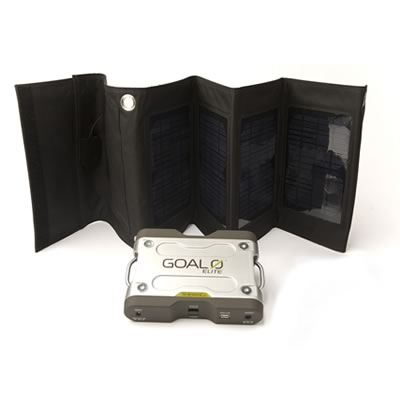
This is probably one of the most affordable and lightweight kits. It's extremely compact design weighs no more than 7 total pounds and includes the Sherpa 50 Whr lithium battery and the Nomad 13.5W foldable solar panel. You can charge or run your devices via the USB ports (found on the battery and the panel) and the 12V DC female cigarette lighter socket.
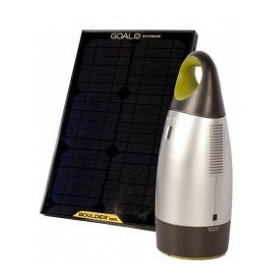
This unit contains a sealed lead acid battery providing 150 Whr of power. This 15 lb torpedo looking power unit has a built in USB port, 12V
-
- August 31, 2011
A futuristic concept called “reverse electrowetting” could change the way we recharge cell phones and other portable devices, but don’t look for it anytime soon.
Engineers are working on a new method to harvest the mechanical energy in our day-to-day strides, meaning they are looking at shoes to serve as a source for powering portable gadgets. The concept would utilize a micro-fluidic device consisting of thousands of micro-droplets that move past a nanotechnology-based film. The motion of the droplets would then be converted into an electric current. The idea is that you would have the energy to power devices whenever you choose to take a “power walk.”
Creators envision equipping special footwear with tiny mobile hotspots that are powered by the electricity-generating shoes. Researchers say in theory the shoes could generate up to 20 watts of electrical power.
While this additional convenience may sound appealing, it will have a long way to go before it is actually on shoe (or electronics)
-
- August 24, 2011
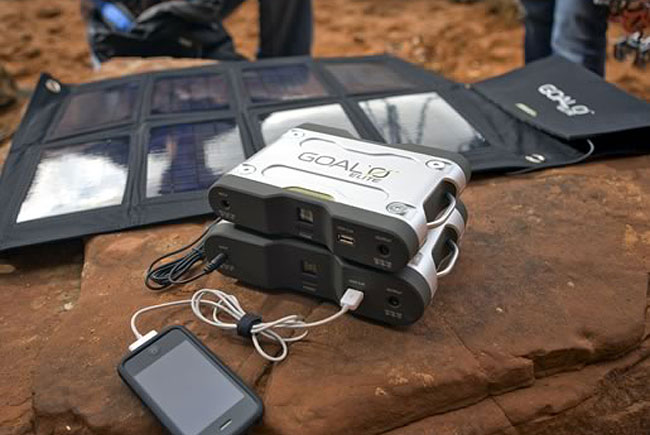
ImpactBattery.com is excited to announce we now offer genuine Goal Zero power packs, solar panels and accessories. These portable power products are rugged, versatile high quality power products that meet the energy needs of the traveling business community to the extreme adventurer.
[caption id="attachment_549" align="alignleft" width="300" caption="Sherpa 120 Adventure Kit"][/caption]
The most popular item is the Guide 10 Adventure Kit. It includes the Nomad 7 Watt foldable solar panel (with USB and 12 volt DC female cigarette lighter adapter) and the Guide 10 AA battery included rechargeable power pack.
Goal0 also makes numerous accessories from rugged high quality speakers to various USB enabled lights to hard plastic waterproof carrying cases. They have thought of nearly everything we need to enjoy the creature comforts of home in the great outdoors, highways and byways.
Check out the new stock and enjoy the great prices!
Goal 0 = Power Anywhere