
PulseTech PowerPulse Battery Reconditioner
Batteries for

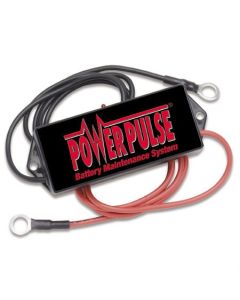
PulseTech PowerPulse is a battery reconditioner and desulfator designed to help maintain lead-acid batteries by reducing sulfate buildup, improving charge acceptance, and supporting longer battery life. If you are searching for Brands PulseTech Power Pulse, you are most likely looking for PulseTech’s PowerPulse battery maintenance system, especially the popular 12V model used for cars, trucks, RVs, boats, motorcycles, generators, fleet vehicles, and powersports equipment.
The main thing to understand is simple: PulseTech PowerPulse is not a traditional battery charger. It does not replace your alternator, onboard charger, solar charger, or battery maintainer. Instead, it works alongside an existing charging system to condition the battery while it is in use or connected. PulseTech describes the 12V PowerPulse as a patented battery reconditioner and battery desulfator made for frequently used vehicles and demanding environments.
For buyers, the real value of PowerPulse is prevention. If your battery is already physically damaged, shorted, or completely dead beyond recovery, a desulfator will not magically turn it into a new battery. But if your battery is still usable and affected by normal sulfation, PowerPulse may help improve performance, reduce early failure, and lower replacement costs over time.
What Is PulseTech PowerPulse?
PulseTech PowerPulse is a battery maintenance device that uses pulse technology to help reduce and prevent lead sulfate buildup on battery plates. Sulfation is one of the most common reasons lead-acid batteries lose capacity, charge slowly, or fail earlier than expected. When sulfate crystals build up and harden on the plates, the battery cannot accept and hold charge as effectively.
The PowerPulse 12V model is designed for 12-volt lead-acid batteries. PulseTech lists the model name as PowerPulse 12-Volt Battery Reconditioner, model number PP-12-L, and part number 735X012. The company says it works with multiple lead-acid battery types, including flooded, sealed maintenance-free, VRLA, AGM, hybrid, antimony, calcium-plate, and gel-cell designs.
The device is best understood as a battery conditioner, not a battery charger. A charger adds energy to the battery. PowerPulse uses a very small portion of the battery’s own energy to create desulfating pulses. PulseTech states that the PP-12-L uses less than 2% of the battery’s energy to produce these pulses.
How PulseTech PowerPulse Works
PulseTech PowerPulse works by sending controlled electrical pulses through the battery. These pulses are designed to target sulfate buildup on the lead plates. Over time, this process can help break down sulfate deposits and reduce the conditions that cause poor charge acceptance.
In plain English, sulfation makes the battery lazy. The battery may still show voltage, but it does not perform strongly under load. You may notice slower starts, weaker cranking, shorter runtime, or faster discharge. PowerPulse is built to fight that specific problem by conditioning the battery continuously while it remains connected.
PulseTech says the PowerPulse 12V works best in parallel with existing charging systems, including alternators, onboard charging systems, battery chargers, and solar charging setups. That matters because many buyers make the wrong assumption. PowerPulse does not replace the charging source; it supports battery health while the charging system does its main job.
Is PowerPulse a Charger or Battery Maintainer?
PowerPulse is not a standard charger. It does not work like a trickle charger that slowly charges a battery during storage. It also does not work exactly like a battery maintainer that keeps a battery at a safe float voltage. Its main job is battery reconditioning through pulse-based desulfation.
This difference is important for buyers. If your battery is low, you still need a charger, alternator, solar panel, or onboard charging system to restore charge. PowerPulse can help the battery accept and hold charge better, but it is not the main power source. Treating it like a charger will lead to disappointment.
A better way to describe it is this: a charger fills the battery, while PowerPulse helps keep the battery plates cleaner so the battery can work more efficiently. PulseTech also says the product improves charge acceptance and charging efficiency, which means the battery may recharge better when connected to a proper charging system.
Key Features of PulseTech PowerPulse
The biggest feature of PulseTech PowerPulse is its patented pulse technology. According to PulseTech, this technology helps reverse and prevent sulfation, which is the main cause of many lead-acid battery problems. The brand also claims the device can help extend battery life up to three times, though this should be viewed as a performance claim based on conditions, not a guaranteed result for every battery.
Another key feature is direct battery terminal installation. The device connects to the battery terminals and stays installed, allowing it to condition the battery during normal use. PulseTech says the 12V model has plug-and-play installation, ultra-low current draw of less than 15mA, and maintenance-free operation with no manual monitoring required.
The device is also built for demanding conditions. PulseTech lists it as safe, reliable, and weatherproof, with an LED light that shows the circuit is energized and working. The official specs list dimensions of 3.5 inches long, 1.5 inches wide, and 1 inch high, with a shipping weight of 0.5 lbs and a 3-foot wire length.
Benefits of Using PulseTech PowerPulse
The main benefit of PulseTech PowerPulse is better battery maintenance. If you use lead-acid batteries in cars, trucks, RVs, boats, generators, commercial equipment, or powersports vehicles, sulfation can quietly reduce performance over time. PowerPulse is designed to slow down or reverse that process before it causes expensive battery failure.
Another benefit is improved charge acceptance. When sulfate buildup covers the plates, the battery struggles to recharge efficiently. PulseTech says PowerPulse provides greater charge acceptance so batteries recharge faster. For vehicles and equipment that are charged regularly, this can help maintain stronger performance and reduce downtime.
The long-term value is cost control. Replacing batteries too often gets expensive, especially for fleets, RV owners, marine users, and anyone maintaining multiple vehicles. PowerPulse is not a magic repair device, but as preventive maintenance, it can make sense if it helps delay battery replacement and keeps equipment reliable.
PulseTech PowerPulse Compatibility
PulseTech PowerPulse 12V is best suited for 12V lead-acid batteries. That includes many common automotive, marine, RV, generator, trailer, and powersports battery setups. PulseTech specifically says the 12V model is compatible with flooded, AGM, VRLA, and gel-cell lead-acid batteries.
For higher-voltage systems, PulseTech also offers other PowerPulse versions, such as the 48V PowerPulse battery reconditioner. The 48V model is designed for frequently charged 48V lead-acid systems and works on VRLA, AGM, gel, and flooded-cell batteries.
Do not assume PowerPulse is compatible with every battery chemistry. The safest approach is to match the device voltage and battery type before buying. If you have a lithium battery, check the manufacturer’s instructions first. Unless the product page clearly confirms lithium compatibility, do not use a lead-acid desulfator on lithium batteries.
PulseTech PowerPulse vs Traditional Battery Charger
A traditional battery charger restores battery charge. A trickle charger or maintainer keeps a battery topped off during storage. PulseTech PowerPulse has a different role: it conditions the battery by targeting sulfate buildup. That makes it a support device, not a replacement for your charger.
For example, if your RV battery sits unused for long periods, a maintainer may keep the charge level stable. But if the battery has sulfation issues, the maintainer alone may not solve the plate buildup problem. PowerPulse can work alongside a maintainer or charging system to help reduce sulfation while the battery is connected.
The practical answer is simple: use a charger when the battery needs power, use a maintainer when the battery needs storage protection, and use PowerPulse when the battery needs ongoing desulfation support. In many cases, the best setup is not one device or the other. It is a proper charger plus a battery conditioner.
Who Should Buy PulseTech PowerPulse?
PulseTech PowerPulse makes the most sense for people who depend on lead-acid batteries regularly. This includes car owners, truck owners, fleet operators, RV users, boat owners, motorcycle riders, generator owners, agricultural users, and commercial equipment operators. PulseTech says the 12V version is designed for daily drivers, frequently used vehicles, and equipment in demanding environments.
Fleet and commercial users may get the strongest value because downtime is expensive. If one weak battery stops a truck, generator, emergency vehicle, or work machine, the cost is not just the battery. It is lost time, labor, service calls, missed work, and customer delays. A battery conditioner can be a smart preventive tool in that situation.
Casual users should be more realistic. If you own one car, drive normally, and replace a battery every several years without issues, PowerPulse may not be essential. But if your batteries fail early, sit unused, operate in harsh environments, or run heavy electrical loads, it becomes more useful.
PulseTech PowerPulse Specifications
The PulseTech PowerPulse 12V model is listed as model number PP-12-L and part number 735X012. It is designed for 12V lead-acid batteries and uses a small amount of the battery’s own energy to generate desulfating pulses. PulseTech lists its dimensions as 3.5” L x 1.5” W x 1” H, with a 3-foot wire length and 0.5 lb shipping weight.
The operating temperature range is listed as 0°F to 130°F, or -18°C to 54°C. Storage temperature is listed as 0°F to 150°F, or -18°C to 66°C. These specs make it suitable for many automotive, marine, RV, fleet, and outdoor equipment applications, but users should still install it in a protected location away from moving parts.
PulseTech also lists a five-year limited warranty for the PowerPulse 12V. That is a useful trust signal for buyers, especially for a product intended to remain connected long term. However, warranty terms can change, so buyers should confirm the current warranty on the seller or manufacturer page before purchase.
How to Install PulseTech PowerPulse Safely
Installation is usually straightforward, but it must be done correctly. The device should be mounted near the battery, not where it can touch moving engine parts, belts, fans, or hot components. The official installation manual says that for 12-volt batteries, the circuit box should be mounted near the battery rather than directly on the battery itself.
The red wire connects to the positive battery terminal, and the black wire connects to the negative battery terminal. The manual clearly states that the positive PowerPulse wire must be connected to the positive terminal and the negative wire to the negative terminal for the device to work properly. Reversed polarity or a poor connection can stop the LED from lighting.
After installation, check the LED indicator. The manual says the LED should blink when the wires are connected properly and the unit is activated. If the LED does not light, the issue may be incorrect installation, a bad connection, or battery voltage that is too low to operate the PowerPulse.
Common Problems PulseTech PowerPulse Can Help With
PulseTech PowerPulse is mainly designed to help with sulfation-related battery problems. Sulfation can reduce battery capacity, slow down charging, weaken starting power, and shorten battery life. If your battery still works but seems weaker than before, sulfation may be part of the problem.
It can also help in situations where batteries face frequent starts, short trips, stop-and-go driving, heavy electrical loads, or demanding work cycles. PulseTech specifically mentions those use cases for the PowerPulse 12V. These conditions are tough on lead-acid batteries because the battery may not get enough time to recharge fully.
However, be honest about what this product can and cannot fix. It may help with sulfate buildup, but it will not repair a cracked case, broken internal plates, a shorted cell, severe corrosion, or a battery that has reached the end of its physical life. If a battery fails a proper load test badly, replacing it may be the smarter move.
PulseTech PowerPulse Pros and Cons
The biggest advantage of PulseTech PowerPulse is that it provides ongoing battery conditioning with very little effort after installation. It connects directly to the battery, uses low current, and does not require constant monitoring. For people maintaining multiple batteries, that simplicity matters.
Another advantage is broad lead-acid compatibility. The 12V version works with several lead-acid battery types, including flooded, sealed maintenance-free, VRLA, AGM, hybrid, antimony, calcium-plate, and gel-cell designs. That makes it useful across many automotive, marine, RV, generator, and equipment applications.
The main downside is expectation. Some buyers may think PowerPulse is a battery charger, battery booster, or instant battery repair tool. It is not. It is a desulfator and battery conditioner. If your battery needs immediate charging, you need a charger. If your battery is damaged, you need a replacement.
Is PulseTech PowerPulse Worth It?
PulseTech PowerPulse is worth considering if you use lead-acid batteries regularly and want to reduce sulfation-related performance loss. It is especially useful for vehicles and equipment that are expensive to keep offline, such as fleets, RVs, marine systems, generators, commercial vehicles, trailers, and powersports equipment.
It is also worth considering if you repeatedly deal with early battery failure. If your batteries are dying faster than expected, the issue may be charging habits, storage conditions, heat, vibration, short trips, parasitic draw, or sulfation. PowerPulse may help with sulfation, but it will not solve every battery problem by itself.
Do not buy it expecting miracles. Buy it as preventive battery maintenance. That is the correct use case. When combined with proper charging, clean terminals, correct battery sizing, and regular testing, PulseTech PowerPulse can be a useful part of a smarter battery care setup.
Buying Tips Before Choosing PulseTech PowerPulse
Before buying, confirm your battery voltage. The 12V PowerPulse is for 12V systems, while other versions are made for higher-voltage systems such as 48V lead-acid applications. Buying the wrong voltage model is a basic but serious mistake.
Next, confirm battery chemistry. PulseTech clearly positions PowerPulse around lead-acid batteries. If your battery is flooded, AGM, VRLA, gel, or another compatible lead-acid design, the product may fit. If your battery is lithium, do not assume compatibility without checking the battery and device manufacturer guidance.
Finally, check whether you actually need a charger instead. If the battery is low right now, PowerPulse alone is not the answer. Charge and test the battery first. If the battery is healthy enough to keep using, then a PowerPulse desulfator may help maintain it better over time.
Frequently Ask Questions (FAQs)
Brands PulseTech Power Pulse FAQs explain how the charger works, which batteries it supports, charging time, safety features, maintenance tips, warranty details, and troubleshooting steps. These answers help buyers understand compatibility, prevent battery damage, extend battery life, and choose the charging solution for motorcycles, ATVs, marine batteries, and power equipment.
What is PulseTech PowerPulse used for?
PulseTech PowerPulse is used to help condition lead-acid batteries by reducing and preventing sulfate buildup. It is mainly used for cars, trucks, RVs, boats, motorcycles, generators, fleet vehicles, and powersports equipment.
Does PulseTech PowerPulse charge a battery?
No, PulseTech PowerPulse is not a traditional battery charger. It works with an existing charging system, such as an alternator, battery charger, onboard charger, or solar setup, to help condition the battery.
Can PowerPulse fix a dead battery?
PowerPulse may help batteries affected by sulfation, but it cannot repair every dead battery. If a battery has internal damage, a shorted cell, broken plates, or severe failure, replacement is usually the better option.
Is PulseTech PowerPulse safe for car batteries?
Yes, when used correctly with a compatible 12V lead-acid car battery, PulseTech PowerPulse is designed for automotive battery maintenance. The 12V model connects directly to the battery terminals and includes an LED indicator to show operation.
Can I use PowerPulse with a solar charger?
Yes, PulseTech says the PowerPulse 12V can work with solar charging setups. However, it does not replace the solar charger. The solar charger provides charging power, while PowerPulse supports battery conditioning.
How long does PulseTech PowerPulse take to work?
PowerPulse is not an instant repair device. It works over time by continuously sending desulfating pulses through the battery. Results depend on the battery’s condition, age, sulfation level, and charging setup.
Is PulseTech PowerPulse good for RV and marine batteries?
Yes, it can be useful for RV and marine lead-acid batteries, especially when batteries face storage periods, irregular use, deep cycling, or demanding electrical loads. Always confirm the correct voltage and battery chemistry before installation.
Final Verdict
PulseTech PowerPulse is a smart battery maintenance product for people who want to reduce sulfation and extend the useful life of lead-acid batteries. It is especially valuable for users with vehicles, RVs, boats, generators, fleets, and equipment that rely on strong battery performance.
The biggest mistake is thinking it is a charger. It is not. PowerPulse is a battery reconditioner and desulfator. It works best when paired with a proper charging system and a battery that is still in usable condition.
If your goal is to protect batteries, improve charge acceptance, and reduce premature replacement, PulseTech PowerPulse is worth considering. If your battery is already severely damaged or completely failed, skip the fantasy and test the battery first. Sometimes the honest answer is simple: a bad battery needs replacement, not another accessory.