



- Category
-
- On Board 15A 6
- On Board 10A 5
- DC to DC 0
- 3 Bank 4
- 1 Bank 3
- Marine 24V 6
- 4 Bank 3
- 2 Bank 4
- 220V Input 4
- Accessories 7
Marine Battery Chargers
Batteries for
Marine battery chargers are built to safely charge and protect your boat batteries in wet and rough conditions. But they do more than just supply power. A good charger keeps your entire electrical system stable and ready every time you head out on the water.
Whether you use a small fishing boat or a larger setup with multiple batteries, the right charger helps avoid common issues like dead batteries, slow starts, and power drops during use. It also extends battery life and reduces the need for frequent replacements.
With the right setup, you spend less time worrying about charging and more time enjoying your time on the water with confidence.
What Is a Marine Battery Charger
A marine battery charger is a special type of charger made for boats and water use. It is designed to handle moisture, vibration, and long hours of use. These chargers protect your battery from overcharging and help keep it in good shape over time.
Many boat owners use them for:
Trolling motor batteries
Deep-cycle marine batteries
Starting batteries
Multi-battery setups
If you spend time on the water, a proper charger is not optional. It is one of the most important tools in your setup.
Types of Marine Battery Chargers
Marine battery chargers come in different types based on how they are used and how many batteries they support. Choosing the right type depends on your boat setup and how often you need to charge your batteries.
Onboard Marine Chargers
Onboard chargers are fixed inside your boat. You plug them in after your trip and they charge your batteries automatically. These are great if you want a simple setup with no extra steps.
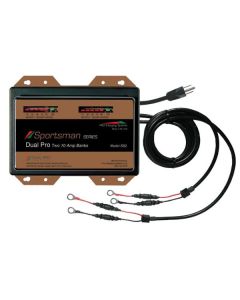
If you want a reliable option, the Dual Pro waterproof 2 bank charger is a strong choice. It is built for harsh marine use and handles two batteries at once.
Portable Marine Chargers
Portable chargers are not fixed to the boat. You can move them from one battery to another. These are useful if you only charge once in a while or need a backup option.
Multi-Bank Chargers
Multi-bank chargers can charge more than one battery at the same time. Each bank works on its own, which means every battery gets the right charge.
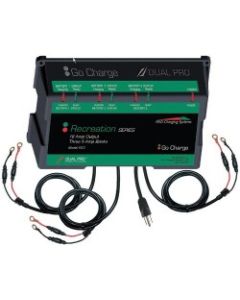
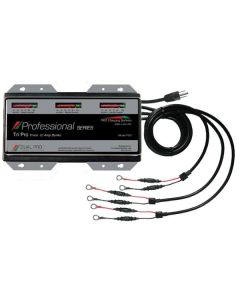
A great example is the 3-bank marine battery charger for setups with trolling motors and extra batteries.
Why Waterproof Chargers Matter
Water and electricity do not mix well. That is why marine chargers are sealed and protected.
Waterproof chargers help you:
Stay safe in wet conditions
Prevent damage from splashes or rain
Extend the life of your charger
If your charger is mounted in the boat, this feature is very important.
Smart Charging Protects Your Battery
Modern marine chargers use smart charging. This means the charger checks your battery and adjusts power as needed.
Benefits of smart charging:
Prevents overcharging
Reduces heat damage
Extends battery life
Keeps performance strong
This is especially useful for expensive batteries like AGM or lithium.
Choosing the Right Marine Battery Charger
Picking the right marine battery charger is easier when you break it down into a few simple steps. The goal is to match your charger to your boat setup so your batteries stay safe, last longer, and charge the right way every time.
Number of Batteries
Start by counting how many batteries your boat uses. Each battery needs its own charging bank.
If you have:
1 battery → 1 bank charger
2 batteries → 2 bank charger
3 batteries → 3 bank charger
Most fishing boats use at least two batteries. One runs the engine and one runs the trolling motor. Larger setups can have three or more.
If you choose a charger with fewer banks than your batteries, you will have to charge them one by one. That takes more time and can lead to uneven charging.
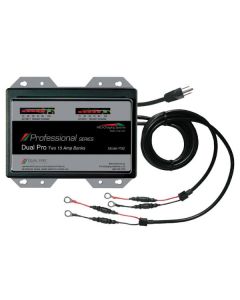
For a balanced setup, a charger like the 2-bank 15-amp marine charger works well for boats that need steady power across two batteries.
Battery Type
Not all batteries are the same, so your charger must match the battery type you use. Common marine battery types include:
Flooded lead-acid
AGM
Gel
Lithium
Each type has its own charging needs. For example, lithium batteries need a different charging pattern than lead-acid batteries.
If your charger does not support your battery type, it can cause:
Short battery life
Poor performance
Safety issues
Always check the product specs before you buy. A good marine charger will clearly list the battery types it supports.
Voltage Compatibility
Your charger must match the voltage of your battery system. This is one of the most important things to get right.
Most marine systems run on:
12V for small boats and basic setups
24V for trolling motors
36V or 48V for larger systems
If your voltage does not match, the charger will not work properly. In some cases, it can damage the battery.
Multi-bank chargers make this easier because each bank can handle a battery in the system without confusion.
Charging Speed
Charging speed is measured in amps. This tells you how fast your battery will charge.
Lower amps → slower charge
Higher amps → faster charge
A small battery does not need a high amp charger. A large deep cycle battery needs more power to charge in a reasonable time.
If the charger is too weak, charging will take too long. If it is too strong, it may stress the battery over time.
A balanced option is best. Choose a charger that matches your battery size and how often you use your boat.
Power Input
Think about where you will use your charger. Most chargers are built for standard 110V power.
If you travel or use your boat in areas with different power systems, you may need a charger that supports 220V input.
Build Quality and Protection
Marine environments are tough. Your charger should be built to handle water, heat, and vibration.
Look for features like:
Waterproof or water resistant casing
Strong outer housing
Protection against overheating
Spark and reverse polarity protection
These features help your charger last longer and keep your system safe.
Ease of Use
A good charger should be simple to use. Many modern chargers come with automatic modes that handle everything for you.
Look for:
Plug and play setup
LED indicators or status lights
Automatic shut off when full
This makes your charging process smooth and stress free.
Long-Term Value
A marine battery charger is not just a short-term purchase. A good charger will protect your batteries for years.
Spending a bit more on a quality charger can:
Extend battery life
Reduce replacement costs
Improve overall performance
In the long run, this saves money and avoids problems when you are out on the water.
Best Use Cases for Marine Battery Chargers
Marine battery chargers are used in a wide range of setups, from simple boats to more advanced systems. The right charger depends on how you use your boat and how much power your setup needs.
Fishing Boats
Fishing boats often use trolling motors. These need steady power. A multi-bank charger helps keep all batteries ready for the next trip.
Recreational Boats
For casual boat use, a simple onboard charger keeps your battery full without extra effort.
Backup Power Systems
Some people use marine batteries as backup power. A smart charger helps keep these batteries ready at all times.
Why Buy from Impact Battery
Impact Battery focuses on real-world performance. Every product is selected for reliability and long-term use.
When you shop here, you get:
Trusted brands with proven results
Chargers built for harsh environments
Clear product specs so you can choose with confidence
Fast shipping and strong customer support
This is not a marketplace filled with random products. It is a focused catalog built for people who depend on their equipment.
Explore More Battery Charging Solutions
If you want more options, explore our full range of different uses. For advanced setups, you can also check our onboard battery chargers that are made for permanent installation.
If you run multiple batteries, our multi-bank charger collection has more options to match your system.
Pair your charger with the right battery from our marine battery selection to get the best performance.
How Marine Chargers Help Your System Last Longer?
A good marine battery charger does more than just fill your battery with power. It protects your system and keeps everything working the right way over time. When your batteries are charged properly, your boat becomes more reliable and easier to use.
Reduces Battery Wear
Batteries wear out faster when they are charged the wrong way. A quality charger sends the right amount of power at each stage, which helps reduce stress and heat.
Over time, this helps your battery last longer and hold its charge better.
Prevents Deep Discharge Damage
When a battery drains too low, it can suffer damage that cannot be fixed. This often happens when a boat is not used for a while.
A smart charger helps keep the battery at a safe level, so it stays ready even during long gaps between use.
Keeps Voltage Stable
Stable voltage is important for your system to run well. Sudden changes can affect performance and harm electronics.
A proper charger keeps power steady, which helps protect your equipment and avoid issues.
Improves Overall Reliability
Healthy batteries make your whole setup more dependable. Your engine starts easily, and your trolling motor runs without problems.
This gives you confidence every time you go out on the water.
Saves Money Over Time
Batteries are expensive, so keeping them in good shape matters. A good charger helps reduce wear and lowers the need for early replacement.
This saves money over time and keeps your setup simple to manage.
Common Mistakes to Avoid
Many boat owners make simple mistakes when choosing a marine battery charger. These mistakes may seem small at first, but they can lead to poor performance and shorter battery life.
Using a charger with too few banks can lead to uneven charging and weak battery performance.
Picking the wrong voltage can cause undercharging, system stress, or long-term battery damage.
Ignoring waterproof ratings can expose your charger to moisture and reduce its lifespan.
Using a basic charger for advanced batteries can lower performance and shorten battery life.
Not planning for future upgrades can force you to replace your charger sooner than expected.
Final Tip : Choosing the right marine battery charger is an important step for any boat owner. A little planning now can help you avoid problems later and keep your system running strong for years.
Frequently Asked Questions (FAQs)
Here are some common questions boat owners ask when choosing a marine battery charger. These quick answers will help you understand what to look for and how to get the best performance from your setup.
What is a marine battery charger used for?
A marine battery charger is used to safely charge boat batteries. It is built to handle wet and rough environments. These chargers help protect your battery and keep it ready for use.
How many banks do I need in a marine charger?
You need one bank per battery. If you have two batteries, you need a 2 bank charger. This ensures each battery gets the correct charge.
Can I use a regular charger for marine batteries?
It is not recommended. Regular chargers are not designed for wet conditions or marine use. Marine chargers are safer and last longer in these environments.
Are marine battery chargers waterproof?
Most marine chargers are water resistant or waterproof. This protects them from splashes and moisture. Always check the rating before buying.
Do marine chargers work with lithium batteries?
Many modern chargers support lithium batteries. You need to confirm compatibility before use. Using the wrong charger can damage the battery.
How long does it take to charge a marine battery?
It depends on the charger and battery size. Higher amp chargers will charge faster. Most systems take a few hours to fully charge.
Can I leave my marine charger connected?
Yes, most smart chargers are safe to leave connected. They stop charging when the battery is full. This helps maintain battery health over time.
What is the difference between onboard and portable chargers?
Onboard chargers are fixed inside the boat. Portable chargers can be moved between batteries.
Onboard options are more convenient for regular use.
Final Thoughts
A marine battery charger is a key part of your boat setup. It keeps your batteries ready, safe, and strong for every trip.
Choosing the right one depends on your setup, battery type, and how often you use your boat. With the right charger, you can spend less time worrying about power and more time enjoying the water.