
Pallet Jack Chargers
Batteries for
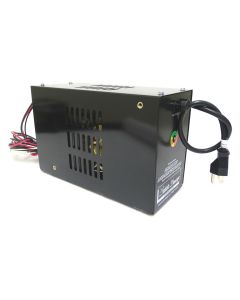
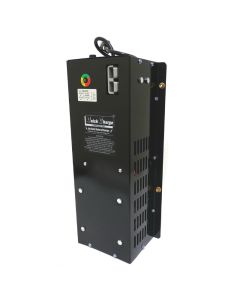
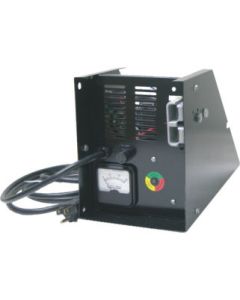
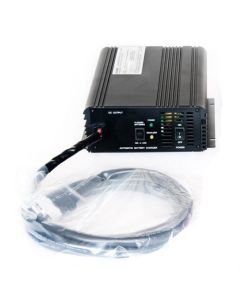
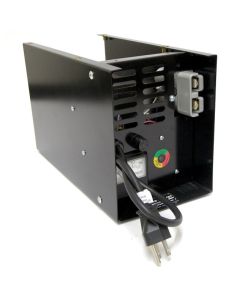
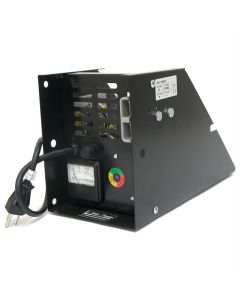
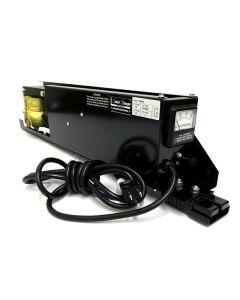
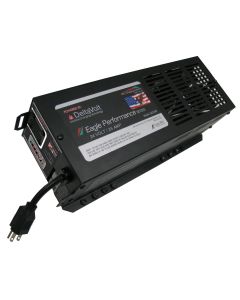
Keep your warehouse moving with our premium pallet jack battery chargers, built for relentless performance. The lineup delivers efficient power with smart, intuitive controls. Each unit guarantees the rugged reliability needed to tackle the toughest shifts without skipping a beat.
From standard 24V workhorses to high-speed 48V fast chargers, we have the exact solution to maximize your fleet’s uptime and extend battery life. Don't let dead batteries halt your workflow. Explore our selection of brand-specific and universal models designed to fit Crown, Toyota, Raymond, and more.
Understanding Pallet Jack Battery Charger Technology
It pushes current into the battery, carefully controlling the flow. It sounds simple, but modern chargers do much more than just deliver power; they think.
Standard vs. Fast Chargers: Which Do You Need?
Time is money in a warehouse. How you charge your batteries determines your workflow efficiency. You have two main paths.
Standard Chargers
These are the workhorses. They charge batteries slowly and steadily. They are gentle. They generate less heat. This extends battery life over the long term.
Use these if you run one shift per day. You plug them in at the end of the shift. They charge overnight. The battery is full by morning.
Fast Chargers
These are the sprinters. They push high amperage quickly. They allow "opportunity charging." You can plug in the jack during a 15-minute break. It gives the battery a quick boost.
This keeps the truck running 24/7. But fast charging creates heat. Heat is the enemy of battery chemistry. You must manage this carefully.
24V vs. 36V vs. 48V: Matching Voltage to Your Equipment
Voltage is a strict rule, not a suggestion. You must ensure the charger voltage matches the battery voltage, as mismatches can damage equipment.
Most pallet jacks operate on 24 volts, while some heavy-duty models use 36V or 48V. Always verify the battery label and consult your jack's manual; never guess.
24V Systems: The industry standard for walkie pallet jacks.
36V Systems: Often found in counterbalance trucks or larger units.
48V Systems: Used for high-performance forklifts.
If you connect a 24-volt battery charger for pallet jacks to a 48V battery, nothing happens. The battery remains dead. Connecting a 48V charger to a 24V battery can cause overheating, which may lead to swelling or an explosion. Always check the voltage before plugging in.
Types of Electric Pallet Jack Battery Chargers by Chemistry
Batteries have different internal chemistries, which affect how they charge. For example, a lead-acid battery requires a different "diet" than a lithium-ion battery. It's helpful to know the type of battery inside your jack to ensure proper care.
Lead-Acid Battery Chargers (Flooded & AGM)
Lead-acid technology is old but reliable. It is heavy. It is durable. It is the most common type in use today.
Flooded Lead-Acid
These batteries have caps. You must add water to them. The charging process creates gas. The charger must push the battery to a "gassing" stage to mix the electrolyte. If you do not reach this stage, the battery suffers.
AGM (Absorbent Glass Mat)
These are sealed and contain acid held in a mat, making them spill-proof. They are sensitive to overcharging, so it’s important to use a charger that limits the voltage precisely.
Look for a charger with an automatic shut-off. It senses when the battery is full. It stops the flow. This prevents "boiling" the battery dry.
Lithium-Ion Pallet Jack Chargers
Lithium-ion is the modern choice. It is light. It charges fast. It requires zero maintenance. You never add water.
But these batteries are sensitive. They need a charger that speaks their language. This is called BMS integration. The Battery Management System talks to the charger. It tells the charger exactly how much current to send. It monitors cell temperatures.
Using a standard lead-acid charger can damage a lithium battery. It's important to use a lithium-compatible pallet jack charger instead. This allows for fast charging and communication with the battery pack to ensure safety.
Critical Features to Look for When Buying a Pallet Jack Battery Charger
Not all chargers are created equal. Some are simple metal boxes. Others are sophisticated computers. You should look for features that protect your investment and save you time.
Microprocessor Control
This is the brain. It monitors the battery constantly. It changes the charging speed as the battery fills up. It prevents the "thermal runaway" that causes fires.
Temperature Compensation
Batteries act differently in heat and cold. A smart charger detects the ambient temperature. It adjusts the voltage. This is vital for warehouses without climate control.
Safety Certifications
Look for UL or CE marks. These prove the charger has been tested for safety. Insurance companies often require these. Do not risk your facility on untested equipment.
Finding the Right Charger for Crown, Toyota, and Raymond Pallet Jacks
Matching the connector is the hardest part. Many brands use proprietary plugs. If you buy the wrong charger, you cannot plug it in.
Crown Pallet Jacks
Crown trucks are popular. They have specific charging ports. A Crown Pallet Truck Battery Charger is built specifically for these machines. It matches the voltage and the connector style perfectly. You do not need adapters.
Crown also uses 12V systems in some smaller units. For those, a 12V Crown Pallet Truck Battery Charger is the correct match.
Toyota and Raymond
These brands often share connector styles. A Raymond Toyota Electric Walkie Pallet Truck Battery Charger is a versatile unit. It fits both brands seamlessly.
Yale, Hyster, and Cushman
This group often uses a standard industrial connector. A 24V 15A Electric Pallet Truck Charger covers all these bases. It is a high-quality aftermarket solution.
We also carry brand-specific versions, such as the 24 Volt Hyster Electric Pallet Truck Battery Charger and the 24 Volt Yale Electric Pallet Truck Battery Charger. These ensure you have the exact amperage rating required by the manufacturer.
For Cushman and Big Joe fleets, a Cushman Big Joe Pallet Truck Battery Charger offers the same reliable fit.
Here is a compatibility guide to help you match the charger to your fleet.
Best Practices for Charging and Maintenance
Buying the right charger is step one. Using it correctly is step two. Poor habits kill batteries. Good habits save you thousands of dollars in replacement costs.
Follow these steps every time you charge.
Park Safely: Move the jack to a designated charging area. Ensure the space is well-ventilated.
Turn Off the Truck: Never plug in a charger while the key is in the "on" position. This can blow a fuse in the charger.
Inspect the Connections: Look at the plug and the jack port. Check for burns, cracks, or corrosion.
Connect Firmly: Push the connector in until it clicks. A loose connection creates resistance. Resistance creates heat.
Set the Charger: If your charger has settings, choose the correct profile (Lead-Acid vs. AGM).
Disconnect Carefully: When charging is done, pull the connector by the handle. Do not pull the cable.
Top Pallet Jack Battery Chargers for Warehouse Efficiency
When your pallet jack is down, your warehouse is down. Choosing the right charger isn't just about voltage; it's about finding the specific amperage and connector that fits your fleet. We have compiled the top 10 most essential chargers, ranging from universal workhorses to brand-specific replacements, to keep your operations moving.
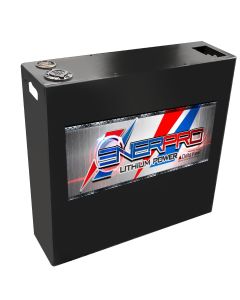
1. EnerPro EP100
The EnerPro EP100 represents the future of warehouse power. With a massive 100A output, it is designed specifically for lithium chemistry, offering rapid charge cycles that minimize downtime. It is the ideal solution for opportunity charging during short breaks, ensuring your fleet never misses a beat.
Best For: High-throughput warehouses running 24/7 operations.
Key Features:
High Capacity: 24 Volt 100 Amp Hour capacity.
Long Lifespan: Designed to last 10-20 years (8x-10x longer than conventional batteries).
On-Board Convenience: Built-in charger works with any standard 120V outlet.
Remote Monitoring: DeltaView Link app allows you to monitor battery health and charge history remotely.
2. Schauer JAC2024H
The Schauer JAC2024H is the "brainy" option for standard fleets. It uses microprocessor control to analyze the battery before delivering power, adjusting the charge rate based on condition. This smart feature significantly prolongs the life of expensive lead-acid batteries by preventing overcharge and thermal stress.
Best For: Extending the life of lead-acid and AGM batteries.
Key Features:
Universal Input: Auto-sensing 100-240 VAC input for use in any facility.
Versatile Chemistry: Selectable settings for Flooded or Sealed Lead Acid (AGM) batteries.
Industrial Duty: Aluminum case rated for 100% duty cycle with fused input/output.
Standard Connector: Comes with the industry standard 50 amp Anderson SB50 grey connector.
3. HYW2415 Charger
If your warehouse floor features a mix of brands, the HYW2415 Charger is your go-to solution. It is a versatile unit designed to fit a wide range of popular 24V trucks. It offers the reliability of a brand-specific unit but with the flexibility to move between different trucks, simplifying your maintenance inventory significantly.
Best For: Mixed fleets (Yale, Hyster, Big Joe, Cushman).
Key Features:
Multi-Brand Compatibility: Fits Yale, Hyster, Big Joe, Cushman, and Toyota trucks.
Programmable: Features 4 different charge profiles for Wet, AGM, or GEL batteries.
Connector Options: Supports SB175 (default) and SB50 Anderson connectors.
Made in USA: Rugged design with a 3-year warranty.
4. Crown CR2415 Charger
Crown trucks have specific connector requirements, and generic chargers often need adapters. The Crown CR2415 Charger eliminates that hassle. Built by Quick Charge, this unit matches the Crown electrical profile perfectly, replacing older models like the 092221-001 without modification. It provides a steady, controlled charge for single-shift operations.
Best For: Standard 24V Crown walkie pallet jacks.
Key Features:
Direct Replacement: Replaces Crown charger models 092221-001, 092221-1, 109131-001, and 109131-1.
Dual Fit: Also fits Yale charger numbers 2415B1 and ET241516B1.
Rugged Design: Tough metal cast enclosure protects against warehouse debris.
Smart Charging: Fully automatic with float maintenance and LED status indicators.
5. Raymond & Toyota RA2415
Toyota and Raymond trucks often share similar charging profiles. The Raymond & Toyota RA2415 is engineered to service both brands efficiently. This 24V 15A charger features the correct connector geometry for these popular walkie models, making it an excellent choice for maintaining consistency across a mixed brand fleet.
Best For: Toyota and Raymond fleets sharing similar interfaces.
Key Features:
Wide Application: Replaces Toyota 00590-43337-71 and Raymond RA313799-001 chargers.
Standard Connector: Stocked with SB175 black connector (SB50 available on request).
Temperature Compensating: Adjusts voltage based on ambient temperature.
USA Made: Manufactured with a 3-year warranty.
6. GNB Pallet Pro Charger
GNB batteries have a specific charging algorithm that generic chargers might miss. The GNB Pallet Pro Charger is programmed to match these requirements exactly, ensuring the battery reaches a full state of charge without overheating. It is a direct replacement for GNB Pallet Pro chargers and fits Crown 125322 models.
Best For: GNB battery systems and Crown pallet jacks.
Key Features:
Plug-n-Play: Directly replaces GNB SVR24251205/6 and Crown 125322 chargers.
Programmable Profiles: Select from 4 profiles to match battery chemistry.
Safety First: Reverse polarity spark-free operation.
Durable Build: Tough metal cast enclosure with a 3-year warranty.
7. Quick Charge RPT2450
Mounting the charger directly to the truck changes the game for efficiency. The Quick Charge RPT2450 is an industrial-grade on-board charger that delivers a robust 50 amps. Because it stays on the jack, your operators simply plug into a standard wall outlet wherever they are, eliminating the need for dedicated charging rooms.
Best For: Fleets needing to save floor space with on-board charging.
Key Features:
High Speed: 50A output significantly reduces charging time.
Space Saving: Mounts on the truck to free up floor space.
Industrial Grade: Ruggedized to withstand mobile vibration and shock.
Universal Input: Wide AC input range for facility flexibility.
8. i2425OBRMBPT Charger
The i2425OBRMBPT Charger is specifically matched to the Deka 12-D85-7 battery profile, which is common in Toyota, Yale, and Caterpillar jacks. It utilizes Pro Charging System’s exclusive DeltaVolt technology, which can provide 25% more discharge time by intuitively charging batteries to optimal levels.
Best For: Equipment running the popular Deka 12-D85-7 battery.
Key Features:
DeltaVolt Technology: Ensures 100% charge and longer run times.
Remote Connectivity: Compatible with DeltaView Link for wireless monitoring.
Wide Capacity: Works with batteries ranging from 150Ah to 395Ah.
Fast Recharge: Reaches absorption levels quickly and finishes completely.
9. OB2425QSVR Charger
For operations running Cat, Jungheinrich, or Mitsubishi trucks, finding the right profile is critical. The OB2425QSVR Charger is tailored for these specific major global brands. It offers a higher amperage (25A vs the standard 15A), meaning faster recharge times for heavy-use equipment without compromising safety.
Best For: Global brands requiring a higher amperage solution.
Key Features:
Brand Specific: Designed for Cat, Jungheinrich, and Mitsubishi trucks.
Faster Charging: 25A output reduces downtime compared to standard 15A units.
Smart Profile: Microprocessor-controlled for battery health.
Rugged Housing: Resistant to industrial oils and chemicals.
How to Prolong Battery Life Cycle
You want your battery to last years, not months. The "80/20 Rule" is your best friend here.
The 80% Rule
Do not run your battery until it is dead. Lead-acid batteries hate deep discharge. When the battery gauge hits 20%, stop. Plug it in. Discharging past 20% causes sulfation. This hardens the lead plates. The battery loses capacity permanently.
The 100% Goal
Lead-acid batteries need to reach 100% charge regularly. You should charge them fully at least once a day. If you do opportunity charging, make sure you do a full "equalization" charge once a week. This balances the cells.
Desulfation
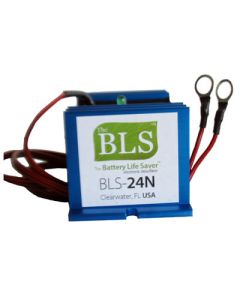
If your battery is struggling, you might save it. Sulfation can sometimes be reversed. A 24 Volt Battery Life Saver Desulfator uses high-frequency pulses. It knocks the sulfate crystals off the plates. It can restore lost performance.
Safety Protocols for Industrial Battery Charging Areas
Charging batteries involves electricity and chemicals. It can be dangerous. Follow strict safety protocols and protect your workers. Safeguard your property.
Ventilation is Critical
Lead-acid batteries release hydrogen gas during charging. Hydrogen is explosive. If it builds up in a small room, a spark can cause an explosion. Install fans. Keep the charging area open. Let the air flow.
Personal Protective Equipment (PPE)
Workers handling batteries must wear the right gear.
Goggles: Protect eyes from acid splashes.
Acid-Resistant Gloves: Protect skin from chemical burns.
Aprons: Protect clothing and body.
Emergency Equipment
Accidents happen. You must be ready.
Eye Wash Station: Install one within 10 seconds of the charging area.
Fire Extinguisher: Keep a Class C extinguisher nearby for electrical fires.
Spill Kit: Have baking soda or acid neutralizers ready for acid spills.
Specialized Charging Solutions for Diverse Fleets
Not every warehouse runs a standard Yale or Crown jack. You might have niche equipment. You might need onboard chargers. These specialized solutions make your life easier.
On-Board Chargers
These chargers mount directly to the pallet jack. You plug the jack into a standard wall outlet. You do not need a separate charging station. This is great for small warehouses or delivery trucks. A 24V 25A Top-Facing on-Board Charger is a perfect example. It saves space and simplifies the process. For heavier-duty cycles, an On-Board 24V 50A Industrial Charger provides rapid power without taking up floor space.
Specific Brand Compatibility
Some brands have unique electrical profiles.
GNB: The 24 Volt GNB Pallet Pro Battery Charger is tailored for GNB battery systems.
Deka: If you run Deka 12-D85-7 batteries, use any Pallet Jack Charger for Deka. It matches the unique amperage requirements.
Cat, Jungheinrich, Mitsubishi: These major global brands require robust power. A 24V 25A Charger covers this wide range.
Universal Options
Sometimes you have a mixed fleet. You need one charger that does it all. A 24 Volt 15A Yale Hyster Pallet Jack Charger is a versatile workhorse. It fits many standard 24V trucks. If you run a smaller 12V Crown unit, the 12V Crown Pallet Truck Battery Charger is the specific solution for that lower voltage requirement.
Why Choose Impact Battery For Your Pallet Jack Battery Charger
When your fleet is down, your warehouse loses money. You need a partner who keeps your equipment powered. Impact Battery is more than a retailer. We are experts in industrial power and help keep your operations running smoothly.
Power systems can be confusing, but we make it simple. Need a charger for a Crown truck? Switching to lithium-ion? We give clear advice and help you avoid costly mistakes. Our goal is to get you the right equipment the first time.
We carry chargers for every warehouse need, from 48V fast chargers for forklifts to 24V units for walkies. We stock top brands like Toyota, Raymond, Hyster, and Yale, with both OEM and aftermarket options.
At Impact Battery, we help you extend battery life and prevent downtime. We are a partner you can trust to keep your fleet powered and productive.
Frequently Asked Questions (FAQs)
You have questions. We have answers. Here are the most common queries about keeping pallet jacks powered up.
Can I use a car battery charger on a pallet jack?
No. Car chargers are 12V, but most pallet jacks need 24V or more. Car chargers also aren’t designed for deep-cycle batteries and can damage them.
How long does it take to charge a pallet jack battery?
It depends on the battery and charger. Standard chargers take 8–12 hours, while fast chargers take 2–4 hours. You can estimate time by dividing the battery’s amp-hour (Ah) rating by the charger’s amps.
Why does my pallet jack battery smell like rotten eggs?
That smell is hydrogen sulfide from overcharging. It’s dangerous. Turn off the charger and check the voltage. Too high or a bad cell could be the cause.
Can I leave my pallet jack plugged in all weekend?
Only with a smart charger. Modern chargers switch to float mode to avoid overcharging. Old manual chargers will damage the battery if left plugged in.
Do lithium-ion pallet jacks need special chargers?
Yes. Lithium batteries need a charger that matches their voltage and communicates with the BMS. Using a lead-acid charger can shut down the battery or cause a fire.
Get Ready To Optimize Your Warehouse Efficiency
Power keeps your warehouse running. A pallet jack battery charger keeps your trucks ready and your operations moving. Standard chargers work for single shifts, while fast chargers provide quick power for 24/7 use.
Match the charger’s voltage to your fleet and follow proper charging steps. Smart features like microprocessor controls and temperature compensation help protect your batteries.
Choose a charger built for reliable performance to reduce downtime and keep your warehouse running smoothly.