Parallel vs. Series Battery Configurations: Understanding the Differences
Ever wondered why your electric bike drains so fast or your garden lights don’t last all night? The problem often starts with the way your batteries are wired. Most battery systems use either a series or parallel connection, which depends on the goal. The right battery setup improves performance, increases runtime, and helps your devices last longer.
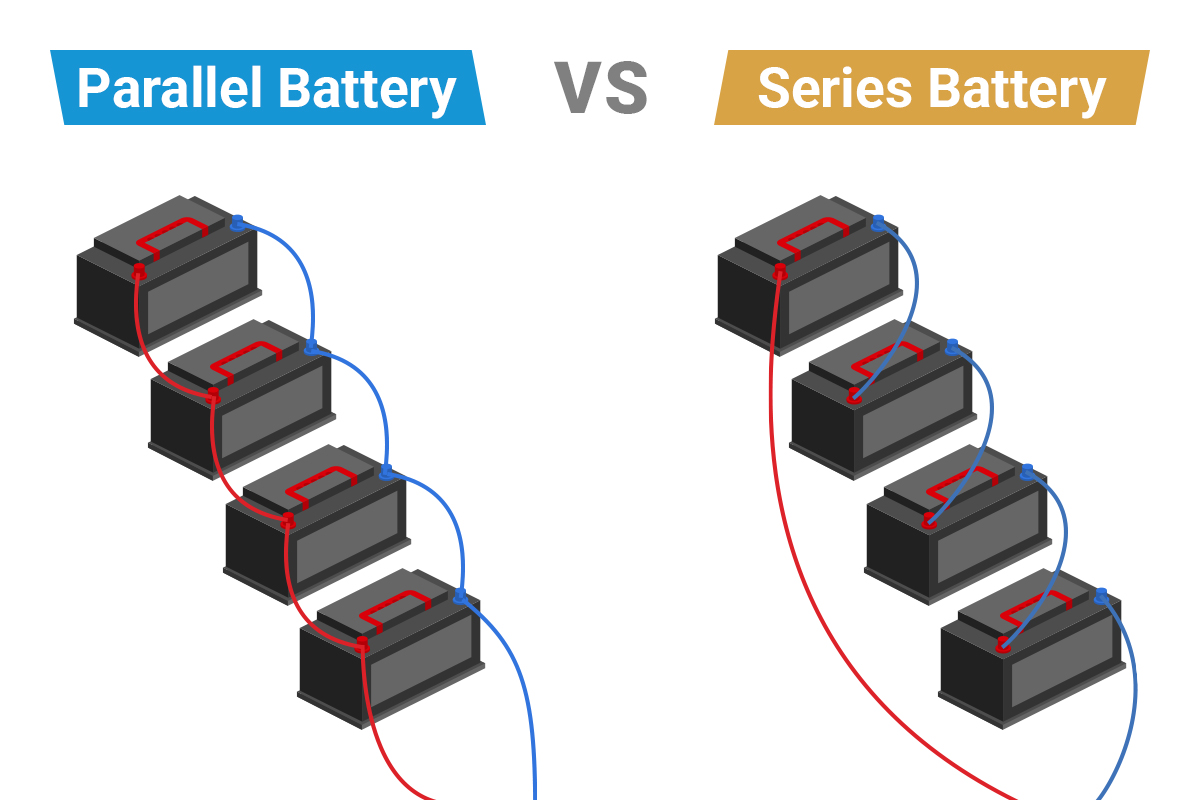
In simple terms, series connections increase voltage and keep the current the same. They are useful for powering high-demand devices. Parallel connections increase battery capacity while keeping the voltage stable, which helps devices run longer on one charge.
From this guide, you will learn how series and parallel battery configurations can improve your energy systems. These setups boost efficiency and help avoid common problems. By the end, you'll know which setup fits your needs best.
How Does a Series Battery Connection Work?
A series connection links two or more batteries in an end-to-end configuration. This setup increases the total voltage.
To connect batteries in series, attach the positive terminal of one battery to the negative terminal of the next. This forms a longer electrical circuit. Gather two or more batteries with marked positive (+) and negative (–) terminals, along with connectors.
Align the batteries in a row to ensure all are of the same type for uniform charging. Connect the positive terminal of the first battery to the negative terminal of the second, and continue this pattern through any additional batteries.
Ensure connections are tight to prevent power loss. Once all are connected, check the total voltage with a voltmeter at the unconnected terminals of the first and last batteries to ensure it matches the expected sum.
Finally, test the setup by connecting your device and monitoring for any signs of issues, such as overheating or rapid discharge.
Why Use a Series Battery?
A series battery configuration is the right choice when your device or system needs higher voltage. This setup adds the voltage of each battery while maintaining the same capacity.
It’s useful for running high-voltage equipment like electric vehicles, solar power inverters, and backup power systems. Series connections help deliver strong, stable power without adding more batteries for capacity.
How Does a Parallel Battery Connection Work?
A parallel connection joins two or more batteries by linking all the positive terminals together and all the negative terminals together. This setup increases total capacity while maintaining the same voltage.
To connect batteries in parallel, attach the positive terminal of one battery to the positive terminal of the next. Do the same with the negative terminals. This creates a wider electrical circuit that shares the current evenly across the batteries.
Use batteries of the same type and capacity to avoid imbalance. Gather two or more batteries with clearly marked positive (+) and negative (–) terminals, along with the needed wires or connectors.
Place the batteries side by side for easy access. Connect all positive terminals with one wire, then connect all negative terminals with another. Continue this pattern for any extra batteries.
Once connected, use a voltmeter to check the output voltage. It should match the voltage of a single battery. The total capacity (Ah), however, will increase, allowing longer run time.
Finish by connecting your device to the outer terminals and monitor for signs of imbalance. A good setup delivers stable power without raising voltage.
Why Use Parallel?
A parallel battery configuration is best when you need longer run time without raising the system voltage. It adds capacity by combining the amp-hours of each battery while keeping the voltage constant.
It’s ideal for RVs, garden lights, home backup batteries, and solar power systems that run on 12V. Parallel connections give you safe, extended power without needing high-voltage setups.
Series vs. Parallel: Main Differences Explained
Before wiring your batteries, it’s important to know how series and parallel setups impact system performance. The two configurations behave very differently when it comes to voltage, current, runtime, and safety.
Let's compare both setups across six key areas clearly, so you can match the setup to your performance needs.
1. Voltage Output
In a series connection, each battery's voltage adds up. For example, connecting two 12V batteries results in a 24V system. This is ideal for high-power setups like solar inverters or electric vehicles that need more voltage to operate efficiently.
High-performance EVs such as Teslas rely on series wiring to reach the voltage required for their motors without drawing heavy current through thick cables.
A parallel connection, on the other hand, keeps the voltage the same as a single battery. Two 12V batteries connected in parallel still output 12V, but the capacity increases.
Many solar energy systems use parallel connections to increase storage capacity while keeping voltage levels steady at 12V or 24V. It also allows for easy maintenance since a single battery can be replaced without affecting the entire pack.
2. Current Capacity
Series wiring does not affect the amp-hour rating. Even with multiple batteries, the current stays the same as a single one. That makes it suitable for equipment that needs more voltage but doesn’t draw a lot of power, like certain high-efficiency solar appliances.
Parallel connections do the opposite. Every added battery increases the current capacity, allowing the system to deliver more power over time. This setup shines in use cases like RV battery banks or off-grid systems where longer runtime is a must.
3. Application and Usability
You’ll often see series setups in systems with strict voltage needs. Think of a 48V solar inverter or a 36V e-bike. These applications need a specific voltage to function correctly, and series wiring provides that without changing the battery type.
On the other hand, parallel connections are ideal when you want more energy but don’t need more voltage. They’re common in 12V solar battery packs, power stations, or camping setups where runtime matters more than electrical force.
4. Battery Balance
Battery health becomes a bigger concern in series configurations. If one battery underperforms, it drags the entire setup down. That's why systems like EVs use a Battery Management System (BMS) to track and balance each battery’s charge and condition.
Meanwhile, parallel systems are more forgiving. Each battery shares the load independently, so imbalance is less likely to hurt performance. Still, using batteries of the same age and type helps avoid uneven wear or charging problems.
5. Charging and Maintenance
Charging in series requires a charger that matches the total voltage of the full battery string. You’ll also need to ensure each battery receives a balanced charge to avoid overcharging one and undercharging another, especially in solar setups.
Parallel systems simplify charging. Since voltage stays constant, a standard charger can often do the job. However, it’s important to monitor current flow. One battery could draw more than others if they’re not balanced, leading to heat or faster wear.
6. Safety Considerations
Series configurations come with a higher risk. If one battery fails, it could cause a voltage spike or shut down the whole system. In home backup setups or larger power systems, this could result in failure during critical use or even pose safety hazards.
Parallel setups are generally safer and easier to manage. A failing battery often won’t take down the entire system. Still, improper wiring or unmatched batteries can lead to one battery working too hard, which may cause heat buildup or damage over time.
Advantages and Disadvantages of Series Battery Connections
Before choosing a battery setup, it's important to understand what a series connection can do and where it may fall short. Series wiring is well-suited for many high-voltage applications, but it also presents some trade-offs.
Advantages:
A series battery connection is often used in systems where high voltage is required without increasing current. It provides several technical and cost-saving benefits, especially in high-power applications.
Increased voltage for high-power systems
Power devices with specific voltage requirements
Simplified wiring allows the use of thinner cables
Better for long-distance electrical circuits
Helps reduce system cost in high-voltage power systems
Disadvantages:
Despite its benefits, a series connection has limitations that can affect system reliability if not properly managed. Imbalance, mismatched batteries, and maintenance challenges are common concerns.
Battery imbalance can reduce system efficiency
One weak battery affects the entire battery pack
Voltage mismatch between batteries can cause performance issues
Requires matched batteries to avoid current imbalance
Maintenance is harder when tracking battery health
A series connection offers clear benefits in high-voltage systems like electric cars and solar inverters. It provides increased voltage using fewer wires, which simplifies wiring and reduces costs. These setups work well when you need a strong and stable power source.
But there are also series connection disadvantages to watch for. If just one battery goes bad, the whole pack suffers. A voltage mismatch can cause battery imbalance issues, which reduce performance and harm battery health over time. This is why matched batteries and regular maintenance are so important.
Advantages and Disadvantages of Parallel Battery Connections
Not every system needs high voltage. Sometimes, what matters most is longer runtime and steady power. That’s where a parallel connection can help. It’s a popular choice for setups that need more energy without increasing voltage.
Below, you'll find a comparison that shows the advantages and disadvantages of parallel battery connection so you can decide if it's the right fit.
Advantages:
A parallel battery connection is ideal when you need longer runtime and greater energy storage without increasing voltage. It provides flexibility, ease of maintenance, and better support for power-hungry systems.
Increased capacity gives extended battery life
Ideal for load sharing in long-use systems
Offers extended runtime for power-hungry devices
Each battery adds more usable energy to the system
Allows you to replace one battery without shutting down the system
Disadvantages:
While parallel setups offer better runtime, they come with wiring challenges and safety risks if not properly managed. Imbalance, increased current, and voltage mismatch are key issues to watch for.
Increased current may strain small wires or connectors
Wiring complexity grows with more batteries
Voltage must match exactly across all batteries
Uneven charging can cause performance or safety issues
Safety concerns in parallel wiring may arise if the setup is imbalanced
A parallel connection increases capacity and supports extended runtime, making it perfect for systems that use power over long periods. These setups are common in RVs, solar storage, and backup units. One big advantage is that you can replace a battery without turning everything off.
Still, there are parallel connection disadvantages to consider. More current flows through the system, which may lead to heat or damage if wires are too small. Matching voltage across all batteries is a must, and larger battery packs can become harder to wire.
Series-Parallel Battery Configurations: Combining the Best of Both Worlds
Some systems need both higher voltage and more energy storage. A series-parallel connection is designed to handle both. It combines two methods. One connects batteries in series to raise voltage, and the other in parallel to boost capacity.
The process begins by linking a few batteries in series to build the required voltage. Each group adds up its voltage. Then those groups are connected in parallel, which increases the total runtime. Together, they form a balanced battery pack that gives more power and longer use.
You’ll often see this used in large solar energy systems and electric buses. These setups need strong voltage to run and enough capacity to last through the day. A series-parallel battery configuration helps meet both needs without overloading wires or devices.
Many hybrid systems at home use this too. If you store solar energy, this setup can match your inverter’s voltage while keeping your lights and appliances running longer. It is a smart way to power systems that need both strength and stability.
Best Practices for Battery Configuration Selection
The battery configuration you choose should depend on your system’s voltage, current, and runtime needs. Some setups need more voltage. A well-planned configuration improves performance, increases safety, and protects your battery investment. Below are key practices to follow before you begin wiring.
Start with your system’s voltage, current, and runtime needs.
Choose series for high-voltage equipment.
Use parallel for longer runtime at the same voltage.
Combine both for more power and storage.
Match battery type, size, and age.
Do not mix different voltage or capacity.
Check wiring often for heat or damage.
Plan your layout before making connections.
Conclusion
Every battery setup should match the needs of your system. That includes how much voltage, current, and runtime you need. Series, parallel, and series-parallel connections each serve different purposes and come with their own pros and cons. The right time and method to use each setup can help you build a safe, efficient system.
Choose a series for high voltage, a parallel for longer use, and a combined setup if you need both. Always match battery types and check your wiring. For the safest results, consult a professional or do further research before making any connections. A well-planned setup will boost performance and extend battery life.