sulfation
-
- November 18, 2015
Sulfation and How to Prevent it
It is no secret that sulfation is the #1 killer of lead acid based batteries and that desulfators using Pulse Technology make an IMPACT. PulseTech, a company that produces desulfators, recently said, “After 20+ years, there is no doubt that our products will eliminate your battery problems and will make your batteries perform better.” However, there are still some much respected battery professionals that would argue differently.
-
- October 23, 2015
In this month’s edition of PulseTalk, we will be exploring the PowerPulse onboard desulfators and how they should be used within a Battery Maintenance System (BMS). These tiny, yet powerful, devices help ensure peak battery performance and can extend battery life up to three times using patented pulse technology.
PowerPulse is a battery maintenance technology designed to help reduce sulfation in lead-acid batteries. It sends high-frequency electronic pulses through the battery, which can help break down sulfate crystals and improve battery performance and lifespan.
Sulfation is one of the most common causes of battery failure. When a battery remains partially discharged for extended periods, sulfate crystals can build up on the battery plates, reducing its ability to hold a charge. PowerPulse technology aims to minimize this buildup and keep the battery operating more efficiently.
Many vehicle owners, RV users, and equipment operators use PowerPulse devices to maintain batteries during storage or regular use. While it cannot repair severely damaged batteries, it may help extend battery life, improve charging efficiency, and support more reliable starting performance when used as part of a proper battery maintenance routine.
-
- August 09, 2011
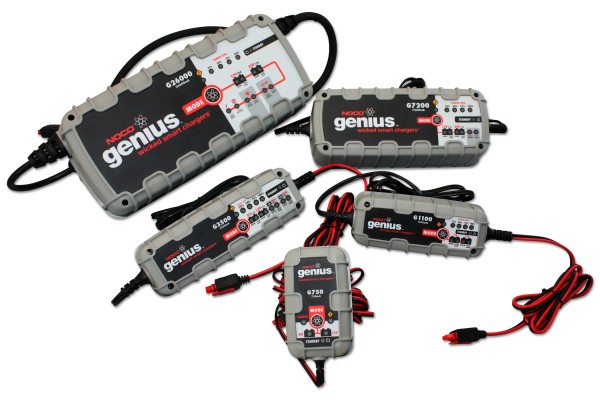
[caption id="attachment_40" align="alignleft" width="300" caption="Smart Genius Chargers"][/caption]Customers frequently ask, "Why do I need a charger?" Rather than replying sarcastically, "Why do we need to eat healthy and exercise?" I choose to provide a little education that will hopefully help save our customers money and frustration in the future.
Lead acid batteries will self discharge when left sitting unused. Discharged batteries rapidly undergo a process called sulfation. You see, when batteries are discharged the active lead material bonds with the sulfate and electrolyte forming sulfate crystals. These sulfate crystals harden and block the effective area of the battery and reduce its capacity. A battery with no capacity is useless; it can't provide the power required for its designated function. A smart battery charger, such as the Noco Genius brand of chargers, will help prevent sulfation from occurring by keeping your battery in a constant state of charge. They will never
-
- April 21, 2011 2
Sulfation is the buildup of lead sulfate crystals on a battery’s plates, usually in lead-acid batteries. It happens when a battery stays discharged too long, is undercharged, or is repeatedly used without proper recharging. Sulfation reduces the battery’s ability to hold and deliver power.
When sulfation builds up, the battery charges slower, loses capacity, and may struggle to start engines or power devices. Over time, the crystals harden and block the chemical reaction needed for normal battery performance.
Mild sulfation can sometimes be reduced with proper charging or a smart charger’s desulfation mode. Severe sulfation is often permanent and usually means the battery needs replacement. The best prevention is keeping the battery fully charged, avoiding deep discharge, and using a maintainer during long storage.
What is Sulfation and How Does it Affect My Battery?
Sulfation is the buildup of lead sulfate crystals on a battery’s plates, usually caused by low charge or long storage.