12v vs 24v Explained: Which Voltage is Right for Your RV, Boat, or Solar Setup?
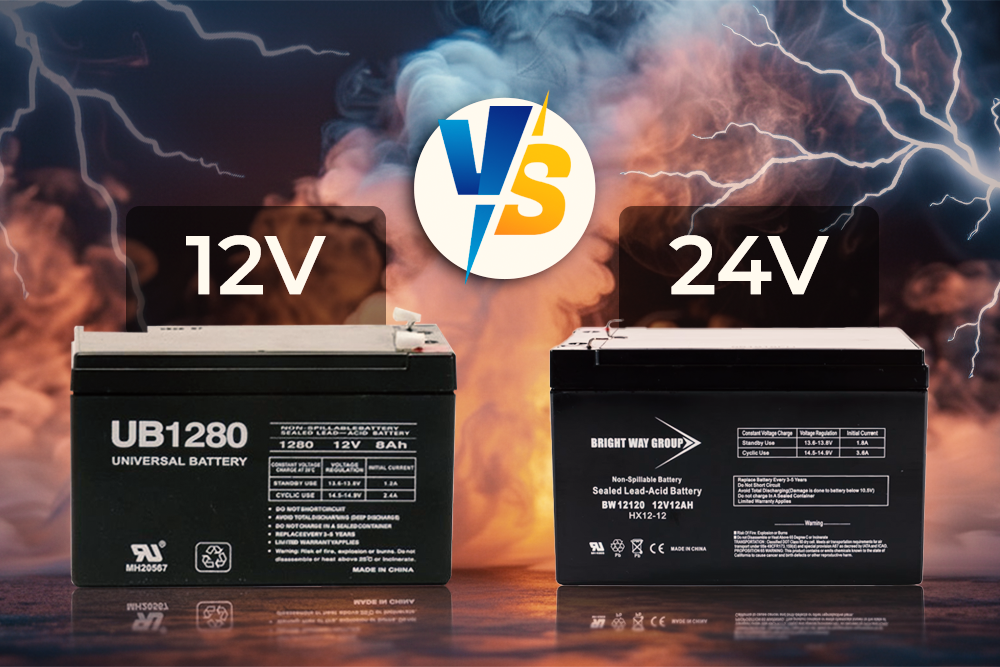
Are you trying to power your RV, boat, or off-grid cabin? If so, you have a big choice to make. You need to pick the right battery system voltage.
For a long time, 12-volt systems were the only real option. They are still super common. But now, 24-volt systems are becoming very popular, too. This is especially true for bigger setups with more power needs.
This guide will help you understand the big 12v vs 24v debate. We will look at what makes them different. By the end, you will know exactly which one is perfect for you.
Understanding the Core Concepts: Volts, Amps, and Watts
Before we compare the two systems, let's learn some simple words. These words are volts, amps, and watts. Knowing them will make everything else much easier to understand.
Think of electricity like water in a hose.
Voltage (V) is like the water pressure. It is the force that pushes the electricity through the wires. So, a higher voltage means more push.
Current (A), or amps, is like the size of the hose. It tells you how much electricity is flowing at one time.
Power (W), or watts, is the total amount of work the electricity can do. You get watts by multiplying volts and amps. So, Watts = Volts x Amps. More water pressure and a bigger hose give you more total water. It is the same with electricity.
Key Differences at a Glance: 12v vs 24v Comparison Table
For those in a hurry, here is a simple chart that breaks down the main differences.
Feature | 12V System | 24V System |
Best For | Systems under 3000W | Systems over 3000W |
Appliance Choice | Very wide and common | Less common, may need a converter |
Wire Size | Thicker, more expensive | Thinner, less expensive |
Efficiency | Good for small setups | More efficient for high power |
Complexity | Simpler, beginner-friendly | More complex, especially for charging |
A Head-to-Head 12v vs 24v Comparison
Now that you know the basics, let's put the 12v system and the 24v system side by side. They both get the job done, but they do it in different ways.
Wiring Size and Cost
One of the biggest differences is the size of the wires you need. This might seem small, but it can be a big deal.
Imagine you want to power something that needs 240 watts. In a 12v system, you would need 20 amps of current. But in a 24v system, you would only need 10 amps.
The 24v system uses half the amps to do the same amount of work. Because it uses fewer amps, it can use thinner wires. Thinner wires are much cheaper and easier to work with.
System Efficiency
Efficiency is all about how much power you get out versus how much you put in. You don't want to waste power.
When electricity flows through a wire, some of it gets lost as heat. The more amps you have, the more heat you lose.
Since a 12v system uses more amps, it loses more power to heat. A 24v system runs cooler because it uses fewer amps. This makes it more efficient.
This might not matter for a small setup. But for a big solar power system, that extra efficiency means you get more power from your panels. More power is always a good thing.
Component Cost & Availability
So far, the 24v system seems perfect. But here is where the 12v system shines.
Most things made for RVs, boats, and cars are designed to run on 12 volts. Think about lights, water pumps, fans, and phone chargers. They are everywhere, and they are usually cheap.
Finding appliances that run on 24 volts can be harder. They are not as common. Sometimes, they can cost more money, too. For a simple setup like a kid's scooter, a basic 12V 10Ah scooter battery is easy to find and works perfectly.
So, if you want lots of choices for your gadgets, a 12v system is easier to work with.
Installation & Complexity
For most people, a 12v system is easier to set up. You buy your 12v battery and your 12v lights, and you connect them. It is pretty straightforward.
A 24V system can be a little trickier. What if you need to run a 12v appliance? You can't just hook it up to a 24v battery.
You would need something called a DC-to-DC converter. This little device changes the voltage from 24v down to 12v. It is an extra step and an extra piece of equipment you have to buy. This can make the installation more complex.
Beyond the Basics: Other Key Considerations
The differences don't stop there. To make the best choice, you also need to think about your inverter, overall costs, and safety.
The Impact on Your Inverter
The inverter is a key part of your system. It changes DC power from your batteries into AC power for things like your microwave or TV.
Just like with wiring, a 24V inverter is more efficient than a 12V inverter doing the same job. It can handle more power with less heat and energy loss. This means more power from your batteries reaches your appliances.
Safety and Reliability
Lower amps also mean a safer system. High current creates heat, which can be a fire risk if a connection is loose or a wire is damaged. Because 24V systems run at half the amperage, they are generally safer.
It's also important to keep your batteries healthy. When creating a 24V bank from two 12V batteries, both batteries must be identical in age and model. An imbalance can cause one battery to overwork and fail early.
The True Cost: A Look at the Whole System
Don't just look at the price of one battery. Think about the whole system.
For a small system, 12V is cheaper upfront. The batteries and appliances are less expensive.
But for a large system (over 3000W), 24V often becomes cheaper overall. The savings on thinner wiring, a smaller solar charge controller, and a more efficient inverter can be huge.
How Do You Charge a 24v System?
Charging is a huge factor in your decision. While charging a 12V system is simple, a 24V system has special needs.
Charging from Solar
This is where a 24V system has a big advantage. A solar charge controller has an amp limit. With a 24V battery system, you can connect twice as many solar panels to the same controller compared to a 12V system. This can save you hundreds of dollars on a large solar setup.
Charging from a Vehicle's Alternator
Your truck or RV engine has a 12V alternator. You cannot directly connect it to a 24V battery bank. You will need a special DC-DC charger that takes the 12V power and boosts it to 24V. This adds cost and complexity to the system.
Charging from Shore Power
This is the easiest part. Most modern inverter-chargers can handle either 12V or 24V systems. When you plug into an outlet at a campground, the device will charge your batteries correctly.
Real-World Applications: Which Voltage Is Best for You?
The best system voltage really depends on what you are doing. Let's look at some common situations to see which one makes more sense.
For RVs and Camper Vans
Most RVs and campers come with a 12v system already built in. The lights, the water pump, and the slide-outs all run on 12 volts.
If your power needs are simple, sticking with a 12v system is smart. It works with everything in your RV. It is great for systems that use less than 3000 watts of power.
A good, solid battery is the heart of any RV power system. A reliable deep-cycle battery like the Universal Battery UB12350 is a great choice. It can power your adventures for a long time.
However, if you have a huge RV with a big solar array and lots of power-hungry appliances like an air conditioner or microwave, a 24v system is much better. It will be more efficient and save you money on wiring.
For Marine and Boating
Boats are a lot like RVs. Most of them have a 12v system for lights and basic electronics. For most weekend boaters, a 12v system is all you need.
A high-quality marine battery is crucial for boats. It needs to provide strong power to start the engine and handle the vibrations of being on the water.
But what if you are a serious fisherman? High-power trolling motors work much better on higher voltages. They can run longer and stronger. Upgrading to a powerful 24V 50Ah lithium trolling motor battery can completely change your fishing game. You get more power and a lighter battery.
For Off-Grid Solar Systems
If you are building an off-grid solar system for a cabin, a 24v system is almost always the better choice. This is because of the solar charge controller.
A charge controller is like the brain of your solar setup. It manages the power coming from the panels to the batteries.
Every charge controller has a limit on how many amps it can handle. With a 24v battery system, your solar panels can produce twice the amount of watts without going over the amp limit. This means you can have a much bigger solar array with the same controller. This saves you a lot of money.
For Smaller Vehicles and Devices
What about smaller things, like motorcycles or scooters? These almost always use 12v systems. The electrical parts are all designed for it.
For these vehicles, you just need a great battery that fits. You can count on top-quality motorcycle batteries to give you the reliable starting power you need for the road.
Even electric scooters and powered toys are designed for a specific voltage. Many small scooters use a simple PowerTron 24V 11A electric scooter battery for clean, efficient power.
Some toys are also quite powerful. The famous Peg Perego 24 Volt battery for the John Deere Gator is a perfect example of a 24v system in a small package. It gives the toy the power it needs to be fun.
Building Your System: Series vs. Parallel Wiring
What if you decide you want a 24v system but you can only find 12v batteries? No problem. You can connect two 12v batteries to get the voltage you need.
You can do this in two ways: in series or in parallel.
Wiring in Series
To get 24 volts, you connect two 12v batteries in series.
This means you connect the positive terminal of the first battery to the negative terminal of the second battery. The remaining positive and negative terminals will now give you 24 volts.
When you connect in series, the voltage adds up, but the capacity (amp-hours) stays the same. For example, if you connect two UB12220 12V 22Ah batteries in series, you get a 24v system with 22 amp-hours of capacity.
Wiring in Parallel
When you connect batteries in parallel, the voltage stays the same, but the capacity adds up.
To do this, you connect the positive terminal of the first battery to the positive of the second. Then you connect the negative to the negative.
If you connected the same two 12v 22Ah batteries in parallel, you would have a 12v system with 44 amp-hours of capacity. This gives you more runtime for your 12v devices.
Frequently Asked Questions
Choosing the right voltage can feel complicated, but you're not alone. We've gathered the most common questions people ask about 12V and 24V systems. Here are the clear, simple answers you need to make your decision with confidence.
Does a 24V system run longer than a 12V system?
Not necessarily. Runtime depends on total energy (watt-hours), not voltage. A 24V 100Ah battery stores the same energy as a 12V 200Ah battery. The 24V system's higher efficiency may only provide a slightly longer runtime by wasting less power.
Is it better to run batteries in series or parallel?
It depends on your goal. Wire in series to increase voltage (e.g., two 12V batteries become 24V). Wire in parallel to increase your amp-hour capacity for a longer runtime while keeping the voltage the same.
What is the main advantage of a 24V system for solar?
The biggest advantage is saving money on the solar charge controller. A 24V system lets you connect twice the solar panel wattage to the same controller compared to a 12V system. This allows for a much larger, more affordable solar array.
Can you mix a 12V and 24V system?
Yes, but only with the right equipment. Use a primary 24V battery bank, then add a 24V-to-12V step-down converter. This creates a safe, separate 12V circuit to power common appliances like lights, fans, and USB ports.
Are 24V systems safer than 12V systems?
Yes, in many ways. A 24V system delivers power with half the current (amps) of a 12V system. Lower amps mean less heat buildup in your wires and components, which significantly reduces the risk of an electrical fire.
Making the Final Decision in the 12v vs 24v Debate
So, who wins the battle? The truth is, there is no single winner. Both systems are great, but for different reasons.
12V systems are best for:
Simpler setups with lower power needs (under 3000 watts).
Standard RVs, boats, and cars.
People who want lots of choices for appliances.
24V systems are best for:
Larger systems with high power needs (over 3000 watts).
Big off-grid solar arrays.
Setups that need long wire runs.
The right choice comes down to you. Look at how much power you need and what you plan to run. The 12v vs 24v decision is about balancing what is easy to find with what is most efficient.
Have more questions or need help designing your perfect power system? Explore our wide range of deep-cycle and lithium batteries or contact our experts today.