How Long Do ATV Batteries Last: Let’s Find Out
Nothing ruins a ride faster than a dead battery. One minute, the engine’s running. The next? Silence. Stuck on the road.
So, how long do ATV batteries last? Well, it depends. Some only last about two years. Others can go up to five.
It all comes down to the type of battery, how it’s used, and how well it’s cared for. Cold mornings and hot afternoons are tough on them. Leave it half-charged, skip maintenance, and it dies faster.
Batteries aren’t forever. Treat them right, and they’ll start every time. Ignore them, and they’ll leave you stranded. Keep reading to learn how to make your ATV battery last longer, avoid problems, and keep every ride running smoothly.
How Long Do ATV Batteries Last?
Under normal conditions, an ATV battery usually lasts 3 to 4 years. This is the typical set of expectations that mechanics and experienced riders use as a baseline. But it’s not a strict rule.
Battery life depends on several factors, especially the type of battery you choose. With proper maintenance, some batteries can go over five years.
Let them sit, get abused, or buy cheap, and they can fail in under two. That usually points to wiring issues, neglect, or low-quality batteries that weren’t made for the trail. Battery lifespan also depends on the technology:
Flooded lead-acid: 2–3 years
AGM (Absorbent Glass Mat): 3–5 years
Lithium-ion: 8–10+ years
Note: A battery’s lifespan depends mostly on the rider. Charge it right, store it smart, and it’ll reward you. Ignore it, and it’ll stop working, usually at the worst possible time.
What Determines Your ATV Battery's Lifespan: Types & Proper Care
A battery’s life comes down to two things: what’s inside it and what it goes through. Ignore one, and it won’t last. Treat both right, and it can keep running for years.
Cold mornings, rough trails, and long storage all wear down a battery. How it’s charged, stored, and used matters just as much as the type you buy.
The Right ATV Battery Type For You
Not all batteries are made the same. Some shrug off vibration, heat, and neglect. Others fail at the first sign of trouble. Here’s a breakdown:
Battery Type | Lifespan | Pros | Cons | Best For |
Lead-Acid (Flooded) | 2–3 yrs | Cheap, widely available | Heavy, needs regular maintenance, and spills easily | Budget riders, older ATVs, light use |
AGM | 3–5 yrs | Maintenance-free, spill-proof, tough, better cold starts | Higher cost, sensitive to overcharging, and heat can harm | Most riders, (Balanced performance, and value) |
Gel Cell | 3–5 yrs | Spill-proof, mounts any way, good deep-cycle | Charges slowly, cold reduces capacity, expensive | Specialty rigs, deep-cycle use, extreme angles |
Lithium-Ion | 8–10+ yrs | Super light, charges fast, holds charge long | High upfront cost, needs a special charger, and cold mornings are tricky | Performance riders, racers, long-term reliability seekers |
The 5 Critical Factors Beyond Battery Type
Even the best lithium battery can fail in a season if treated poorly. Beyond the battery itself, these five things decide how long it will actually last.
Temperature Extremes: Batteries hate heat. It accelerates corrosion and wears them out quickly. Cold doesn’t destroy them, but it steals power. A battery that cranks fine at 60°F might struggle at 20°F. It’s not dead, just cold.
Usage Patterns: Regular rides keep the chemistry active and the charge full. Let it sit for months, especially partly dead, and sulfation starts. You may need to use a desulfator to remove sulfation inside the battery.
Charging System Health: The battery relies on the ATV’s charging system. Bad regulators or stators can overcharge, undercharge, or drain it slowly.
State of Charge During Storage: Always store a battery fully charged. Low charge during storage speeds up damage.
Maintenance Quality: Flooded lead-acid batteries require water to be added. AGM and gel batteries are sealed, but terminals still need cleaning and tight connections.
How to Tell If Your ATV Battery Is Failing
Spotting a dying battery early can save you from trouble and getting stranded. Most batteries show small warning signs before they fail completely. Knowing these signs is the first step in understanding when to replace the battery in an ATV.
Symptom | What It Means | Quick Check |
Slow engine crank or clicking | Battery is weak or low | Test voltage. Healthy: 12.6V+, needs charging below 12.4V, very low below 12.0V |
Dim headlights or weak accessories | Battery can’t hold charge | Check terminals for corrosion. Clean with a wire brush and baking soda + water |
Needs frequent jump-starts | Battery can’t keep a charge | Do a load test at an auto parts store |
Bulges, cracks, leaks | Battery is damaged | Replace immediately. Do not use |
Low electrolyte (flooded batteries) | Plates may be damaged | Check fluid. Add distilled water if needed. Dry plates mean the battery is bad |
A battery may read 12.7V after charging, but if it drops below 10V when starting, it has no power. If your battery is over three years old and shows any of these signs, plan a replacement before it leaves you stranded.
How to Keep Your ATV Battery Lasting Longer
You can’t control the weather, but you can control how your battery handles it. These steps aren’t busy work. They’re the difference between a battery that lasts two seasons and one that lasts five or more.
Proper ATV Battery maintenance and replacement practices are essential for maximizing lifespan.
1. For Off-Season Storage
Winter is when batteries die. A partially charged battery left in a cold garage won’t survive. Follow these steps to keep yours ready for spring:
Clean the Battery
Don’t just unhook it. Pull it out and check the case. Dirt holds moisture and drains the battery. Check the terminals, if they’re crusty with white or green buildup, scrub with baking soda and water. Rinse and dry completely.
Fully Charge
Never store a battery partially charged. Use a smart charger and let it reach 100%. This keeps the chemistry stable and the plates protected.
Disconnect or Use a Maintainer
Clocks, ECUs, and stereos slowly drain the battery. Disconnect the negative cable, or better yet, use a smart maintainer. It keeps the battery full without overcharging.
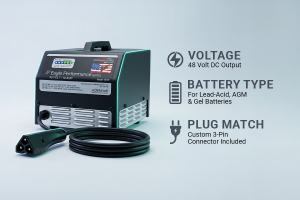
Smart trickle chargers are designed for exactly this purpose, providing a slow, steady charge to maintain voltage during storage.
Store in a Cool, Dry Place
Heat speeds self-discharge. Cold is okay if the battery is fully charged, but a discharged battery can freeze and crack. Aim for 50–70°F in a dry spot.
Routine Checks
Maintenance isn’t just for storage. These simple habits keep your battery healthy all season:
Ride Regularly
Batteries like to be used. The stator needs engine RPMs to keep the battery charged. If the ATV sits for more than a couple of weeks, charge it or hook up a maintainer.
Check Connections
Make sure terminals are tight. Loose connections cause arcing, which damages the metal and makes hard starts. Often, it is mistaken for a dead battery.
For Flooded Batteries Only
Check water levels monthly. Remove caps and make sure the plates are covered. Top off with distilled water only. This simple habit can add years to a battery’s life.
Charging & Replacing Your ATV Battery
When maintenance isn’t enough, knowing how to charge or replace your battery safely becomes a necessity. Do it wrong, and you risk damaging the battery or yourself.
Charging Correctly
Not every charger works with every battery. Using the wrong one can be dangerous.
12V smart chargers work for flooded, AGM, and gel batteries.
Lithium Iron Phosphate (LiFePO₄) batteries need a charger made for lithium. Using a lead-acid charger can confuse the battery’s management system or start a fire.
How to Charge Safely:
Charging a battery is easy if you do it right. Follow these steps:
Connect the positive (red) clamp to the positive terminal.
Connect the negative (black) clamp to the negative terminal or a clean metal part of the frame.
Plug the charger into the wall after connecting to the battery.
Select the correct battery type on the charger (AGM, Lithium, etc.).
Watch it for a few minutes. If it gets too hot, unplug it immediately.
Safety Notes: Charge in a ventilated area, never charge a frozen or damaged battery, and stay clear of sparks or flames.
When and How to Replace
If the battery is old or showing warning signs, don’t fight it. Replace it. Doing it right means long-lasting performance. Choosing the Right Battery:
Size: Must fit your battery box.
Polarity: Positive and negative terminals must match your ATV.
Cold Cranking Amps (CCA): You can go higher than stock, but never lower.
Type: Consider upgrading from flooded to AGM or lithium for reliability. AGM batteries are a popular upgrade, offering maintenance-free performance and greater vibration resistance.
Installing a New Battery:
A new battery is only as good as its installation. One careless move and it could fail early or cause sparks. Take a few extra minutes to do it right:
Remove the old battery: Negative (-) cable first, then positive (+). This prevents shorts.
Prep the new battery: Flooded batteries may need acid added. AGM and lithium are usually ready to go.
Install the new battery: Connect positive (+) first, then negative (-). Add a small amount of dielectric grease or petroleum jelly to prevent corrosion.
Secure it: Tighten the hold-down bracket. A loose battery can short or get damaged.
Do it right, and your battery starts strong, giving you years of reliable, hassle-free riding.
Frequently Asked Questions (FAQs)
People often get stuck with dead batteries because they listen to garage myths instead of facts. Here are some most asked questions to help you out:
Is it safe to use a car battery charger on my ATV battery?
It’s risky. Car chargers pump too many amps, which can fry a small ATV battery by boiling the electrolyte and warping plates. If you must use one, set it to the lowest amp setting (2 amps or less) to avoid cooking the unit.
Why does my battery die even when I’m riding every week?
Your charging system might be the culprit. Starting the engine drains massive power. Short, low-RPM rides might not give the stator enough time to replenish that energy. Test the running voltage; it should read 13.5-14.5V. Anything less means the battery is slowly starving.
Can a completely dead ATV battery be saved?
It depends. If it’s just deeply discharged, a smart charger with a "recondition" mode might revive it. But if it sat dead for months, sulfation has likely destroyed the internal plates. If it won’t take a charge or gets hot instantly, it’s permanently toast.
Do I really need to disconnect the battery for just a month of storage?
Yes. Modern ATVs have parasitic draws (clocks, ECUs) that slowly drain power. Even a month can pull a battery low enough to start sulfating. Disconnecting the negative cable takes seconds and guarantees these electronics won't kill your battery while it sits.
What is the white powdery stuff on my battery terminals?
That’s corrosion caused by acid fumes reacting with metal. It creates resistance, blocking power flow and mimicking a dead battery. Don’t just scrape it, neutralize it with a baking soda and water paste first. Then rinse and apply dielectric grease to prevent it from drying out.
Is it worth spending double the money on a Lithium battery?
For long-term owners, definitely. A lithium battery costs more upfront but lasts 8-10 years, while you’d replace a cheap lead-acid unit 3-4 times in that span. You save money and effort over time, plus you drop significant weight from the machine.
Ready to make your ATV battery last longer
Your ATV battery keeps every ride going. But how long do ATV batteries last? It really comes down to care and choice. Average of 3–4 years, but choosing AGM or Lithium and sticking to simple routines is key.
Let’s say, proper charging and smart storage can easily stretch that to five, six, or even ten years. A little time with a smart charger and basic maintenance goes a long way.
Keep the battery clean, charged, and secure, and it will start your ATV reliably every ride. Treat it like an important part, and it won’t leave you stranded.