How Many Batteries Does a Golf Cart Take? Count Your Caps and Find Out
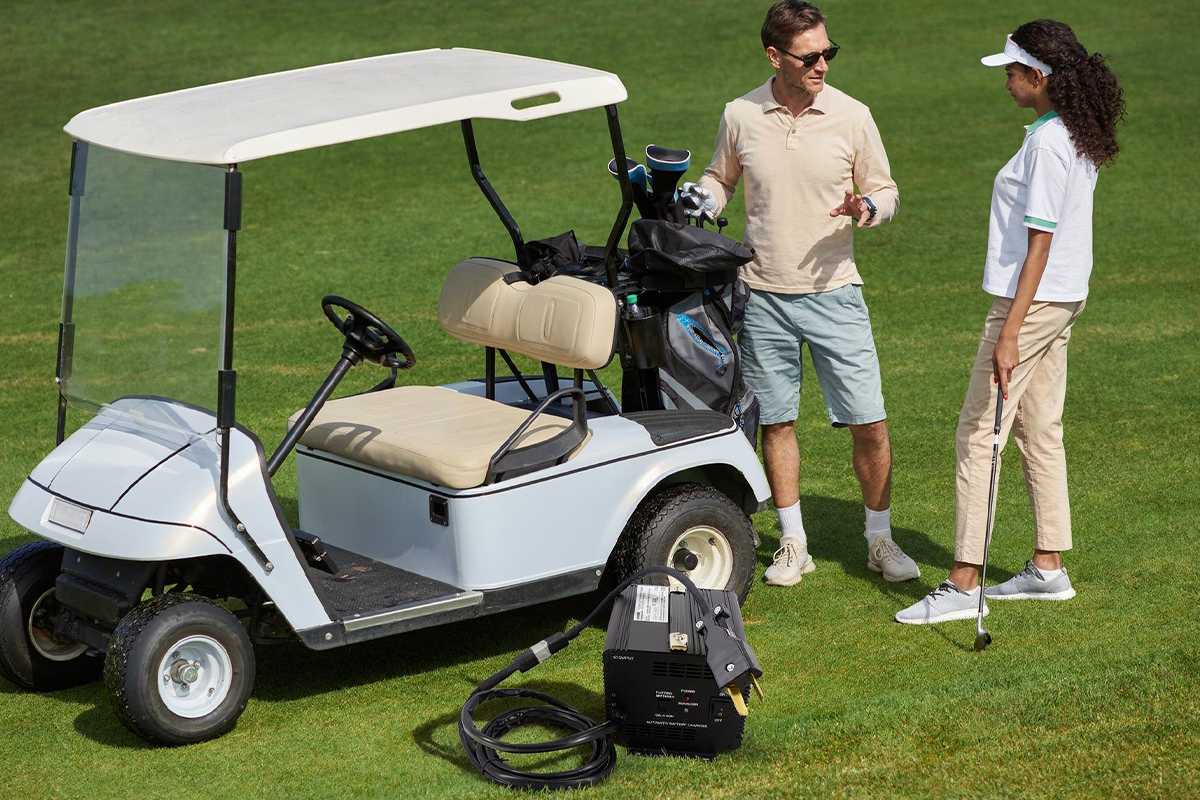
You jump into your golf cart. You turn the key and press the pedal. The cart moves forward, but it feels a little sluggish today.
You might wonder if it is time for a power upgrade. This leads you to the most common question for cart owners. You need to know how many batteries does a golf cart take to get back on the road.
The answer is not always the same for everyone. It depends on the specific type of cart you drive.
Most electric golf carts generally use a battery bank composed of 4, 6, or 8 deep-cycle batteries. The exact number depends on whether your cart runs on a 36-volt or 48-volt system.
Knowing the right number is important. It ensures you buy the correct replacements. It also helps you understand how far your cart can drive.
We will break down everything you need to know about golf cart batteries. We will look at the different voltage systems. We will also explore the difference between lead-acid and lithium options.
Understanding the Battery Bank
A golf cart does not run on a single battery like a car does. A car uses one 12-volt battery to start the engine. A golf cart is different because it runs entirely on electricity.
It uses a group of batteries working together. We call this group a "battery bank" or a "battery pack." This pack acts as the fuel tank for your vehicle.
The batteries are connected in a specific way. This connection gives the motor enough power to move you and your clubs. The total amount of energy depends on the voltage.
Think of voltage as the pressure that pushes electricity through the wires. More voltage usually means more power. This is why newer carts often have higher voltage.
To get that higher voltage, we must connect multiple batteries. This brings us back to counting them. The total count links directly to the system voltage.
The Two Main Systems: 36-Volt vs. 48-Volt
Most golf carts fall into two main categories. You either have a 36-volt system or a 48-volt system.
The 36-volt system was the standard for a long time. It is very common in older models. These carts are great for flat golf courses.
To make 36 volts, manufacturers use a specific math formula. They connect several lower-voltage batteries together.
The 48-volt system is the modern standard. It provides more torque and better acceleration. This is better for hilly areas or carrying passengers.
The number of batteries you see under the seat depends on which system you have. It also depends on the size of the individual batteries.
We need to look at the specific setups for each system. This will help you identify what is currently sitting in your battery tray.
Standard Configurations for 36-Volt Carts
The 36-volt cart is very consistent. Almost every 36-volt cart uses the same layout.
It typically uses six individual batteries. Each of these is a 6-volt battery. When you add them up, you get 36 volts.
Here are the quick facts for this setup:
Total Voltage: 36 Volts
Battery Count: 6
Battery Type: 6-Volt Deep Cycle
Math: 6 batteries x 6 volts = 36 volts
This setup provides a good balance of weight and range. The batteries are heavy, but they provide a steady flow of power.
If you have an older EZ-GO or a standard-duty Yamaha, this is likely what you have. You will see three batteries on one side and three on the other.
When replacing these, you need deep cycle capabilities. Standard car batteries will not work here. You need robust Golf Cart Batteries designed to drain and recharge many times.
Standard Configurations for 48-Volt Carts
The 48-volt system is a bit more complex. It is more flexible than the 36-volt system.
There are three common ways to achieve 48 volts. Manufacturers choose different setups based on space and cost.
Six 8-Volt Batteries
This is a very popular setup. It uses six batteries, just like the 36-volt system. But the batteries are different.
These are 8-volt batteries. The math here is: 6 batteries times 8 volts equals 48 volts. This is common in the Club Car Precedent models.
This setup offers a great mix of range and power. The physical size of an 8 volt battery is similar to a 6-volt one. This makes it easy for engineers to fit them under the seat.
Four 12-Volt Batteries
Some carts use fewer physical batteries. They use just four units. Each unit is a 12-volt deep cycle battery.
The math is: 4 batteries times 12 volts equals 48 volts.
This makes the cart lighter because there are fewer heavy plastic cases. However, this can sometimes result in less driving range. There is simply less lead to hold the energy.
Eight 6-Volt Batteries
This is the heavy-duty option. Some modified carts or utility vehicles use this.
They take eight of the standard 6-volt batteries. The math is: 8 batteries times 6 volts equals 48 volts.
This setup provides incredible driving range. It holds the most electricity. But it is very heavy and takes up a lot of space.
How to Determine Your Battery Count
You might not know which voltage your cart is. That is okay. You do not need expensive tools to find out.
You can figure it out by looking at the batteries. You need to verify the battery type first. Then you can do the math.
We will use the "Cap Counting" method. This is a trick used by golf cart mechanics.
Flooded lead-acid batteries have caps on top. These caps cover the water holes. You open these to add distilled water.
Each hole represents one battery cell. One lead-acid cell produces exactly 2 volts. This is a rule of chemistry.
The Math Behind the Caps
You just need to count the holes on one single battery.
3 Holes (Caps): 3 holes x 2 volts = 6-Volt Battery.
4 Holes (Caps): 4 holes x 2 volts = 8-Volt Battery.
6 Holes (Caps): 6 holes x 2 volts = 12-Volt Battery.
What This Tells You
If you count 3 holes, you have a 6-volt battery. Typically, you will find six of these in your cart. Check the labels to be sure. If you confirm this, you can browse the 6 volt section for replacements.
If you count 4 holes, you have an 8-volt battery. You will usually find six of these under the seat.
If you count 6 holes, you have a 12-volt battery. You will usually find four of these in your cart.
This simple check solves the mystery. You do not need to be an electrician. You just need to count the caps.
The Series Connection: Connecting the Dots
We mentioned earlier that batteries work as a team. This teamwork happens through "series connections."
This means the positive post of one battery connects to the negative post of the next one. This chain links all the batteries together.
When you connect batteries in series, the voltage adds up. It accumulates as you go down the line.
The amperage remains the same as one single battery. But the pressure increases. This is how six small batteries become one large 36-volt power plant.
If one battery in this chain fails, the whole team suffers. The power cannot flow properly. This is why you should usually replace the whole set at once.
Mixing old and new batteries is a bad idea. The old batteries will drain the new ones. It wastes your money in the long run.
Brand Specifics: What Does My Cart Need?
Different manufacturers have favorite setups. Knowing your brand helps you guess the answer.
Club Car Models
Club Car is a major player in the industry. Many people ask how many batteries in a club car golf cart specifically.
Most modern Club Cars use a 48-volt system. The most common setup is six 8-volt batteries. This provides reliable power for 18 holes of golf.
Some older Club Car models used four 12-volt batteries. This was done to save space.
If you have the 4-battery setup, you might want a specific replacement. The Trojan T-1275 12-Volt 150Ah is a famous option for this configuration. It is built to handle the deep discharge that golf carts demand.
E-Z-GO Models
E-Z-GO is famous for its TXT and RXV models. The TXT is often a 36-volt cart. It uses the standard six 6-volt layout.
The newer RXV models are usually 48-volt. They prioritize efficiency and speed.
Yamaha Models
Yamaha carts have switched between voltages over the years. They have used both 48-volt and 36-volt systems.
You really need to lift the seat on a Yamaha. Do not guess based on the year alone. Check the caps on the battery tops.
The Lithium Revolution
Everything we discussed so far applies to lead-acid batteries. These are the heavy batteries with water inside.
But technology is changing. Lithium batteries are becoming very popular.
This changes the answer to our main question. You might ask how many lithium batteries in a golf cart are required.
The answer is often just one.
Lithium is very energy-dense. A single lithium battery pack can hold as much power as six lead-acid batteries.
It comes in one large metal or plastic case. You drop it into the battery tray. It connects to the motor with just two wires.
However, some people use "drop-in" lithium replacements. These look like regular car batteries.
In that case, you might need two or three. You connect them in parallel to get more range. But for most factory lithium carts, there is only one big battery.
This reduces the weight of the cart significantly. Here are the benefits of switching to lithium:
Lighter Weight: A lighter cart drives faster.
Quick Stopping: It puts less stress on the brakes.
No Maintenance: No need to add water.
Fast Charging: They charge much faster than lead-acid.
Performance Trade-Offs: Range vs. Weight
Let's look closely at the 48-volt systems again. You might be wondering how many batteries does a 48-volt golf cart have if you want maximum range.
If you want to drive all day, you need capacity. Capacity is measured in Amp Hours.
The setup with eight 6-volt batteries usually has the most capacity. It has the most lead plates inside. This means it can store the most chemical energy.
However, eight batteries are very heavy. They might slow the cart down on steep hills.
The setup with four 12-volt batteries is the lightest lead-acid option. It is peppy and quick. But it runs out of juice faster.
The six 8-volt setup is the middle ground. It is the "Goldilocks" choice. It is not too heavy, but it has a good range.
If you have a 6-volt setup and want more power, look at capacity ratings. The US Battery US1800XC2 is a great example. It offers high amp hours for long drives.
Maintenance of Your Battery Bank
Knowing the count is step one. Taking care of them is step two.
Lead-acid batteries require maintenance. They contain a liquid electrolyte mixture. This is mostly water and sulfuric acid.
Over time, the water evaporates. You must refill it. If the lead plates get exposed to air, they corrode.
This damages the battery permanently. You must use distilled water. Tap water has minerals that ruin the chemistry.
Some batteries have features to help you. The Trojan T-105 Plus is famous for this. It has a special cap system. It makes watering the cells much easier.
If you hate adding water, you have options. You can buy AGM batteries. AGM stands for Absorbed Glass Mat.
These are sealed batteries. You never open them. They are maintenance-free.
A great option for heavy use is the UBGC8 Universal Power AGM. It fits in 8-volt carts but requires no watering.
The Cost Factor
The number of batteries affects the replacement cost.
Replacing four batteries is cheaper than replacing six. This makes the 4x12V setup attractive to budget buyers.
However, they might wear out faster. They work harder to move the cart. You might replace them more often.
The 6x6V setup is very standard. Because so many are made, the price is often reasonable.
The 6x8V setup is specialized. These batteries can sometimes cost a bit more. But their longer lifespan often justifies the price.
A cost-effective option for standard carts is the UPG UB GC2. It provides good performance without a high price tag.
Accessories and Your Batteries
We love to add cool things to our carts. We add radios, light bars, and fans.
These accessories use electricity. They pull power from your battery pack.
If you hook them up incorrectly, you can cause problems. Some people hook a 12-volt radio to just two of their 6-volt batteries.
This unbalances the pack. Those two batteries die faster than the others. The whole pack suffers.
It is better to use a voltage reducer. This device pulls power evenly from the whole pack.
Or you can add a separate battery. You can install a small dedicated battery just for accessories.
The Amstron 12 Volt 26 Amp battery is perfect for this. It is small and sealed. It keeps your lights on without draining your driving power.
Safety When Handling Batteries
Golf cart batteries are heavy. A standard battery can weigh 60 pounds or more.
You must be careful when lifting them. You do not want to hurt your back. There is also the risk of dropping one.
Always follow these safety rules:
Wear heavy gloves.
Wear eye protection to stop splashes.
Lift with your legs, not your back.
Keep tools away from the metal terminals.
To make lifting safer, use a strap. A special Caddy makes the job much easier. It hooks onto the lifting tabs.
It allows you to lift with your legs. It also keeps your hands away from the terminals.
Cables and Connections
The batteries connect with thick cables. These cables carry a lot of current.
Corrosion is the enemy here. You will see white or blue powder on the terminals. This powder stops the electricity from flowing. It acts like a blockage in a pipe.
You should clean your terminals regularly. A mixture of baking soda and water works well. Scrub the terminals until they shine. Then rinse them with a little water. Also, check for loose cables. A loose connection creates heat.
Heat can melt the battery post. This can destroy a perfectly good battery. Tighten the nuts with a wrench.
When to Replace Your Batteries
How do you know it is time for a new set? The signs are usually obvious.
Sluggishness: The cart will feel slow.
Poor Climbing: It will struggle to climb hills.
Reduced Range: You can barely finish 18 holes.
Short Charging: The charger turns off too quickly.
Bulging Cases: The sides of the battery look swollen.
If you see a bulge, stop using the cart. That battery is dangerous. It needs to be removed immediately.
Converting Voltage Systems
Some owners want to upgrade. They want to change from 36 volts to 48 volts. This gives the cart more speed. But it is not just about adding batteries.
You need to change other parts too. The motor might handle the extra power, but the controller might not. The solenoid also has a voltage rating. If you put 48 volts into a 36-volt solenoid, it will burn out.
You also need a new charger. A 36-volt charger cannot fill a 48-volt pack. It is a big project. But many enthusiasts do it for the performance boost.
Storage Tips
If you leave your cart for the winter, you must be careful. Batteries lose charge when they sit. If they go completely dead, they might freeze. A frozen battery is ruined forever.
You should charge them fully before you leave. If possible, keep the charger plugged in. Most modern chargers have a "float" mode. They turn on and off automatically. They keep the batteries topped off.
If you cannot leave it plugged in, disconnect the main cable. This stops the cart from draining small amounts of power. Check the water levels before storage. Ensure the plates are covered.
Frequently Asked Questions(FAQs)
Still have questions about your golf cart batteries? Here are the most common things owners want to know to keep their carts running smoothly and reliably.
How can I tell if I have a 36V or 48V system?
Lift your seat and count the filling caps on one battery. Multiply the number of caps by 2 to get the voltage per battery, then multiply that by the total number of batteries in the cart.
Can I mix old and new batteries in my golf cart?
No, you should never mix them. Old batteries will drain new ones quickly, which causes imbalance. This reduces the lifespan and performance of the entire battery pack, ultimately costing you more money over time.
How often should I water my flooded lead-acid batteries?
Check water levels monthly. Only add distilled water after charging unless the plates are exposed. Never overfill, as acid can expand during charging and cause corrosion or damage to the battery tray and surrounding components.
What is the difference between lead-acid and lithium batteries?
Lead-acid batteries are affordable but require regular maintenance like watering and cleaning. Lithium batteries are more expensive upfront but offer a much longer lifespan, faster charging times, and require zero maintenance during their entire life.
How long do golf cart batteries typically last?
Standard flooded lead-acid batteries usually last 3 to 5 years with proper maintenance. Sealed AGM batteries can last 4 to 6 years, while modern lithium batteries often provide reliable power for 8 to 12 years or more.
Can I use a regular car battery for my golf cart?
Technically, you can, but it is not recommended. Car batteries are designed for short bursts of starting power, not the deep, continuous discharge that golf carts need. They will fail very quickly in this application.
Ready to Power Up Your Ride?
Now you know exactly how many batteries does a golf cart take. You do not have to guess anymore. Just lift the seat and count the caps.
If your cart is feeling sluggish, it is time for fresh power. Don't let a dead battery ruin your weekend fun. We have the perfect match for your voltage needs.
Check out our full selection of Golf Cart Batteries today. Get the power you need and get back on the course. Your smooth ride is just a click away.