What Does CCA Mean On a Battery? Cold Cranking Amps Described
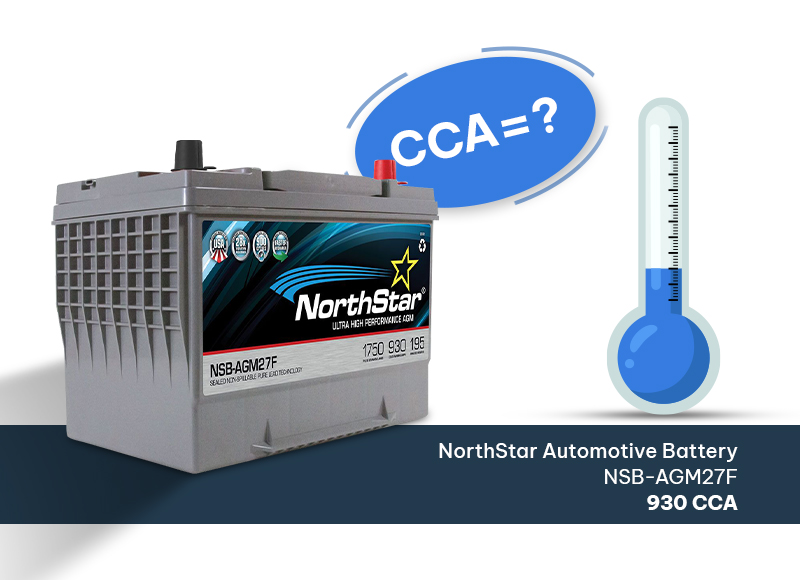
What does CCA mean on a battery? CCA = Cold Cranking Amps. It measures how much power (Amps) a battery can deliver for 30 seconds at 0°F (-18°C) without dropping below 7.2 volts.
If your battery doesn’t have enough CCA, your vehicle might struggle to start in cold weather. You’ll hear a slow crank, clicking noises, or no start. Cold engines need more power to turn over, and a weak battery can’t deliver it.
In this blog, we’ll walk you through what CCA really means, how it affects cold starts, and what you can do to make sure your battery doesn’t fail you when you need it most.
What is CCA? (Cold Cranking Amps Explained)
CCA stands for Cold Cranking Amps. It shows how much power a battery can give to start your car in cold weather. More clearly, it measures how many amps a battery can deliver for 30 seconds at 0°F (-18°C) without dropping below 7.2 volts.
Simply put, the colder it gets, the harder it is for your engine to start. The oil thickens, and the engine parts move more slowly. Your battery needs to “push harder” to turn the engine over. That’s where CCA comes in.
A battery with a higher CCA rating gives your car the extra power it needs to start in freezing conditions. If the CCA is too low, your vehicle may struggle, crank slowly, or fail to start.
That’s why knowing your battery’s CCA is so important, especially if you live in a region with harsh winters.
Why is CCA Important for Your Car?
When it’s cold, your car needs more power to start. The oil gets thick. The engine moves slower. Even your starter motor has to work harder. But at the same time, your battery is weaker because cold affects how much power it can give.
This is where Cold Cranking Amps (CCA) matter. CCA shows if your battery can handle the extra effort your engine needs in freezing weather.
| Temperature | Power Supplied | Power Required to Start Engine |
| 27°C | 100% (0% Drop) | Normal Power |
| 0°C | 65% (35% Drop) | 150% More Power |
| -18°C | 40% (60% Drop) | 210% More Power |
| -29°C | 25% (75% Drop) | 350% More Power |
A higher CCA means your battery can deliver more power when needed most. Here’s the simple truth:
Colder weather = more power required to crank the engine.
But colder weather = less power available from the battery.
That’s precisely where CCA matters. Without enough cold cranking power, your engine may struggle, crank slowly, or fail to start.
Symptoms of Low CCA (When You Should Worry)
A battery with low Cold Cranking Amps (CCA) struggles to deliver the power needed for cold starts. While this might not be obvious in warm weather, sure signs indicate your battery’s CCA no longer meets your vehicle’s demands.
One of the first symptoms is a slow engine crank. Suppose your engine turns over sluggishly when you start the car. This happens especially on cold mornings and points to insufficient CCA. Another clear warning sign is clicking noises when you turn the key. This occurs when the battery lacks the power to engage the starter motor properly.
You might also notice dim headlights during startup. As the battery directs most of its power to cranking the engine, weak CCA affects other electrical components, making lights flicker or appear dim.
If your battery needs frequent jump-starts, it’s another symptom of low CCA. Your vehicle constantly needs a boost, especially after sitting overnight in cold weather. This is a strong sign that your battery’s CCA has dropped below effective levels.
A typical pattern is that the vehicle starts fine in summer but struggles or fails in winter. This happens because batteries lose cranking power as temperatures fall, and it exposes weak CCA that might not be noticeable during warmer months.
Identifying these symptoms early allows you to find the issue before a complete battery failure leaves you stranded.
How to Check Your Battery’s CCA?
Cold Cranking Amps (CCA) show how well your battery can start your vehicle in cold weather. Knowing this number helps you avoid weak starts, especially in winter. With a few simple steps, you can check your battery’s CCA rating and its current health.
Step 1: Find the CCA Rating on the Battery Label
Look for a label on top or the side of your battery. You’ll see a number followed by “CCA” (e.g., 600 CCA). This tells you the battery’s original cold-starting power when it was new. Make sure this matches your vehicle’s recommended CCA rating.
Step 2: Test the Battery’s Actual CCA Output
Use a digital battery tester to determine your battery’s current CCA performance. Connect the clamps to the battery terminals, follow the device instructions, and the tester will display the measured CCA.
Step 3: Get a Free CCA Test at an Auto Parts Store
If you don’t own a CCA tester, a digital battery tester can help you check it yourself. These tools let you monitor your battery’s health anytime and give you peace of mind before cold weather hits.
Step 4: Don’t Rely on Voltage Alone
Many drivers check voltage to judge battery health, but voltage only shows the charge level, not CCA strength. A battery can show 12.6 volts and still fail to start your car in the cold. Always test the actual CCA output for an accurate picture.
Following these steps, you can confidently check your battery’s cold-starting power and avoid unexpected failures when temperatures drop.
Recommended CCA by Vehicle Type & Climate
The right Cold Cranking Amps (CCA) rating depends on what you drive and where you drive it. Matching your battery’s CCA to your vehicle and climate will make sure you have a reliable start and avoid overpaying for power you don’t need.
For small cars, a battery with 350-500 CCA is usually sufficient. These vehicles have smaller engines that require less power to start, even in cooler weather.
SUVs, pickup trucks, and larger vehicles need more cranking power. A battery rated between 500-750 CCA is recommended to handle their bigger engines and heavier electrical loads.
Diesel engines demand the most starting power, especially in cold climates. Batteries with 750-1000+ CCA are typically required to reliably crank diesel trucks and heavy-duty vehicles.
Climate makes a big difference in the type of batteries you use. In hotter regions, a lower CCA is often used as the batteries perform better in warmth. In cold climates, where temperatures fall below freezing, a higher CCA rating becomes crucial to offset power loss from thickened engine oil and slower battery chemistry.
For PowerSport usages like ATVs, Motorcycles, UTVs, and Snowmobiles, the CCA requirements are lower but still critical. These smaller engines typically need 100-300 CCA, but performance in cold starts is just as important for outdoor enthusiasts.
For recreational vehicles, RV Batteries are built to handle higher demands. They often combine deep cycle capacity with solid CCA ratings that are suitable for large engines and accessory loads.
Marine vehicles like Personal Watercraft and Marine Batteries use Marine Cranking Amps (MCA). It is tested at warmer temperatures but serves the same starting purpose.
Always refer to your vehicle’s manual for exact CCA recommendations. Choosing the correct CCA ensures smooth starts in any season, whether on the road, water or trail.
| Vehicle Type | Recommended CCA Range | Climate |
| Small Cars | 350–500 CCA | Adequate for most regions, except extreme cold |
| SUVs/Trucks | 500–750 CCA | Essential for larger engines, moderate to cold climates |
| Diesel Engines | 750–1000+ CCA | Required for heavy-duty vehicles, especially in cold areas |
| PowerSports (ATVs, Motorcycles, UTVs, Snowmobiles) | 100–300 CCA | Lower CCA is needed, but crucial for reliable starts in cold weather |
| RVs | Varies, often 650+ CCA | Depends on engine size & accessory loads |
| Marine Vehicles | MCA rating used instead | MCA tested at 32°F, suitable for watercraft |
Cold Cranking Amps vs Cranking Amps (CA) & Marine Cranking Amps (MCA)
CCA, CA, and MCA are common battery ratings that measure starting power under different conditions. Knowing what each means will help you choose a battery that matches your vehicle, climate, or marine needs.
Cold Cranking Amps (CCA) tells you how much power a battery can deliver for 30 seconds at 0°F (-18°C) without dropping below 7.2 volts. It shows how well a battery can start your engine in freezing conditions. This is the most important rating for drivers in cold climates.
Cranking Amps (CA) is similar but tested at a warmer 32°F (0°C). Because batteries perform better at higher temperatures, the CA number is always higher than the CCA. CA is sometimes called “Marine Cranking Amps” in the boating world, but the testing conditions differ.
Marine Cranking Amps (MCA) measure starting power at 32°F, specifically for marine engines. Boats typically don’t face extreme cold like cars, so MCA reflects more realistic conditions for watercraft. The MCA rating helps boat owners know if their battery can handle starting large marine engines.
In simple terms:
CCA is for starting in cold weather.
CA measures power at moderate temperatures.
MCA applies to marine engines under similar conditions.
For cars and trucks in colder regions, CCA is the key number to watch. For boats and warmer climates, CA or MCA becomes more relevant. Always check which rating matters for your specific use to avoid picking the wrong battery.
What Causes CCA to Drop Over Time?
Cold Cranking Amps (CCA) decrease naturally as a battery ages. Over time, the internal components, such as the lead plates and electrolyte, degrade. This reduces the battery’s ability to supply the high current needed for cold starts. Even with regular use, gradual wear lowers CCA performance year after year.
Corrosion on the battery terminals also restrict the power flow. Corroded connections create electrical resistance, preventing the battery from delivering its full cranking power. Regular inspection and cleaning of terminals are imporatnt to maintain proper current flow and preserve usable CCA.
Poor maintenance habits can also cause CCA loss. Ignoring battery care, such as not checking fluid levels (in serviceable batteries) or leaving lights and accessories on while the engine is off, increases wear. Ignoring the battery's health shortens its lifespan and leads to a decline in starting power.
Environmental factors can also cause CAA decline, especially in extreme temperatures, deep discharges, and severe cold. Excessive heat can cause the electrolyte to evaporate on the battery, which can damage internal components. Both conditions put more stress on the battery and cause CAA decline.
Common CCA Myths to Avoid
Cold Cranking Amps (CCA) are essential when choosing a battery, but common misconceptions surround it. Believing these myths can lead to poor choices, wasted money, and unreliable vehicle performance. Let’s clear them up.
Bigger CCA is Always Better
While a higher CCA battery can deliver more starting power, it doesn't automatically mean it's the best choice for every vehicle. Modern engines are designed to operate within specific power ranges. Installing a battery with a much higher CCA than recommended won’t harm your vehicle, but it offers no real advantage and can cost more unnecessarily. The right approach is to match your battery's CCA to your vehicle’s specifications and climate needs.
CCA Affects Battery Lifespan
CCA measures short-term starting power at low temperatures, not how long a battery will last. Battery lifespan depends on overall design, usage habits, and maintenance, not the CCA rating. Even a battery with a high CCA can still degrade quickly if neglected or exposed to extreme conditions.
CCA and Ah Mean the Same Thing
Many confuse Cold Cranking Amps (CCA) with Amp Hours (Ah). They are entirely different. CCA refers to the battery’s ability to start an engine in cold weather, while Ah measures how much energy the battery can supply over time. CCA is about instant power for starting, Ah is about capacity for running devices. Understanding this difference helps you choose the correct battery for your specific needs.
A New Battery Always Has Good CCA
A new battery isn’t automatically guaranteed to have the right CCA for your vehicle. Sometimes, the wrong battery type or an undersized model is installed, especially when chosen purely by price. Always verify the CCA rating before buying and ensure it matches your vehicle’s requirements, particularly if you live in a cold region.
How to Avoid These Mistakes
Before you can make smart choices, it’s important to separate fact from fiction. Many battery-related mistakes happen because of misunderstandings around CCA. Here are a few simple but important tips to help you avoid these common pitfalls:
Always check your vehicle's recommended CCA specification.
Don’t overspend unnecessarily high CCA unless your climate or vehicle demands it.
Understand that CCA is for starting power, not battery life or capacity.
Confirm the CCA rating when replacing a battery, even if it's new.
Seek professional advice if unsure about battery ratings and compatibility.
Being aware of these myths can help you make informed decisions and avoid problems when they matter the most.
Frequently Asked Questions (FAQs)
Cold Cranking Amps (CCA) are among the most important factors when choosing or maintaining a car battery. It directly affects how well your vehicle starts in cold weather. Here are some common questions and answers about CCA that helps avoid frustrating cold starts and costly mistakes.
How many CCA should my car battery have?
Your battery's required CCA depends on vehicle type, engine size, and climate. Small cars typically need 350–500 CCA, SUVs and trucks 500–750 CCA. In colder climates, a higher CCA makes sure reliable starts. Always check your vehicle’s manual for exact specifications.
Is a higher CCA battery always better?
Higher CCA isn’t always better. Using a battery with excessively high CCA offers no extra benefit if your vehicle doesn’t need it. It won’t harm your car, but it may cost more than necessary. Match the battery’s CCA to your manufacturer’s recommended rating.
What happens if my battery doesn’t have enough CCA?
If your battery’s CCA is too low, it may struggle to start the engine in cold weather. You’ll notice slow cranking, clicking noises, or a failure to start. Cold engines require more power, and a weak battery can’t deliver enough to crank effectively.
How can I tell if my battery’s CCA is too low?
Common signs of low CCA include slow engine cranking, dim headlights when starting, clicking sounds, and frequent jump-starts in cold weather. If your car starts fine in summer but struggles in winter, your battery’s CCA is likely insufficient for cold conditions.
Does cold weather permanently damage my battery’s CCA?
Cold temperatures temporarily reduce a battery’s power but don’t directly damage its CCA. However, repeated deep discharges, poor maintenance, and extreme cold can accelerate battery aging, leading to a permanent drop in CCA over time if not properly maintained.
Can I increase my battery’s CCA?
No, you can’t increase the CCA of an existing battery. CCA is determined by the battery’s internal design and construction. To get a higher CCA, replace your battery with one rated appropriately for your vehicle and cold weather conditions.
Do AGM batteries have better CCA than standard flooded batteries?
AGM batteries typically offer higher CCA than flooded lead-acid batteries of similar size. They’re designed with advanced technology for better cold-weather performance, faster recharging, and greater durability, making them a better choice for vehicles needing reliable starts in harsh conditions.
Why does my new battery still fail to start in cold weather?
Even new batteries can fail to start if the CCA rating is too low for your vehicle or climate. Installation issues, parasitic electrical drains, corroded terminals, or a weak alternator can cause starting problems despite installing a “new” battery.
Can lithium-ion batteries have CCA ratings?
Lithium-ion batteries can be rated for CCA, especially in automotive applications. However, their chemistry allows them to deliver consistent power differently than lead-acid batteries. CCA is still used as a reference for compatibility with vehicles requiring high cold-starting power.
What’s the easiest way to test my battery’s CCA at home?
You can test your battery’s CCA using a handheld digital battery tester, which provides an instant reading. For more accurate results, many auto parts stores offer free CCA testing. Regular checks before winter ensure your battery won’t leave you stranded.
Final Thoughts
Cold Cranking Amps (CCA) matter more than most drivers realize. When temperatures drop, your battery’s ability to deliver enough power becomes the difference between a smooth start and a frustrating no-start situation.
Before winter hits, take a moment to check your battery’s CCA. Ensure it meets your vehicle’s needs and is ready to handle cold mornings.
Don’t wait until you’re stuck in a cold parking lot. Stay ahead of winter by making sure your battery’s CCA is up to the task.