UPS Batteries
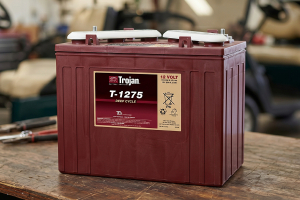
Batteries are the heart of the UPS system that protects your computers and other electronic equipment from power fluctuations. UPS units use high-current batteries that can handle power spikes, dips, blackouts and line noise. Most UPS batteries are sealed lead acid and designed to last from five to eight years.
UPS Battery Life
A UPS battery reaches the end of its useful life when it can no longer supply 80 percent of rated capacity. After this point, capacity and backup time degrade quickly. For example, a battery that normally provides 15 minutes of backup may have seven minutes at 80-percent capacity. This degradation is most often due to corrosion of the positive grid's inner wires. You can prolong your battery's life by keeping it clean, maintaining connectors and cables, and regularly checking performance.
Sealed Lead Acid Batteries
Sealed UPS batteries don’t require you to add water although they do need preventive maintenance. Absorbed glass mat (AGM) batteries are ideal for UPS systems because they store safely and charge and discharge efficiently. They are less prone to sulfation and outgassing than wet cell types. For best performance, recharge before the charge drops below 50 percent.
Undercharging or overcharging will shorten battery life. Lead acid batteries must be charged at greater than 2.15 volts per cell, and charge voltage ranges from 2.30 to 2.45 volts per cell. Undercharging leads to sulfation on the negative plate whereas overcharging causes grid corrosion on the positive plate and outgassing. Constant voltage charging is one of the best methods to safely maintain your battery at full charge. This charger type sets a maximum voltage limit and tapers the initial current amount. If the batteries are in an environment with variable temperature, consider a charger with a temperature sensor.
Lithium Ion Batteries
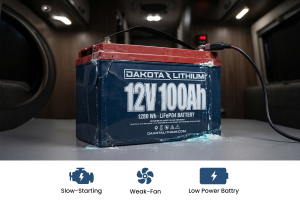
Lithium ion batteries are more frequently used in UPS systems as designs become safer. They provide longer battery life, can withstand more deep discharge cycles, and offer longer backup time. They also weigh less and use fewer cells to achieve the same output as a lead acid battery. Although the lithium electrolyte is flammable, manufacturers now include protection circuits that prevent damage from events such as excess voltage.
Lithium ion batteries do not need to be fully charged and should also avoid deep discharge. A lower voltage charge extends battery life but reduces backup time. The typical cell takes 4.20 volts and tolerates different voltages as long as it is not overcharged, which causes instability and high cell pressure. Most batteries ship charged at 40 percent and have a sleep mode that engages if the voltage per cell drops below about 2.70. As sleep mode often prevents recharging, charge batteries to half full before storing.
Disposal of UPS Batteries
Batteries should be recycled or exchanged - you may be able to trade in your old battery toward a new one. To find a recycling center near you, check with resources such as Call2Recycle that provide listings.