Comparing Battery Types
Comparing Battery Types
back to tutorials
back to Impact Battery homepage
Comparing Battery Types
Batteries are designed for specific performance expectations. A battery that excels in one device or application may be a poor performer in another. They are built to meet size and weight restrictions, to have long runtime, maximum durability, extended cycle life and maximum energy density. You may have noticed, for example, certain AA or AAA TV remote batteries seem to last forever while others not so long. Thus manufacturers market their goods to suit specific applications.
Below we highlight four well-known battery types—their strengths and limitations.
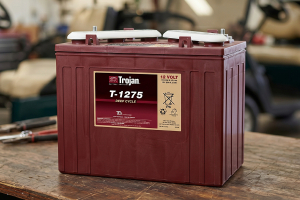
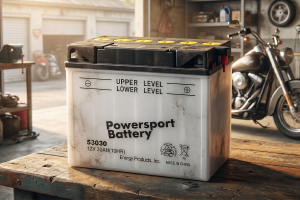
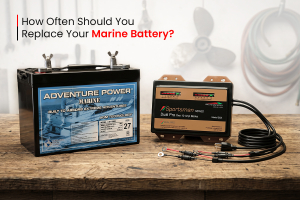
Lead Acid (Pb) - Heaviest but often most economical for large scale power systems especially where weight is not a concern. There are 3 types – flooded, gel and AGM sealed batteries. Lead acid is often used in motorsport vehicles, wheelchairs, UPS backup systems and hospital equipment. They are capable of high discharge rates but have a low energy density. The lead and acid are considered environmental hazards.
Nickel Metal Hydride (NiMH) - These batteries are non toxic. Used often in cell phones, two-way radios, AA and AAA sizes, and power tools. Higher energy density compared with lead acid and nickel cadmium but with a reduced cycle life.
Nickel Cadmium (NiCad) - Nickel cadmium is used where long life, high discharge rate and extended temperature range is important. Main applications are two-way radios, biomedical equipment, AA and AAA sizes and power tools. Nickel-cadmium contains toxic metals.
Lithium Ion (Li-Ion) – Most dangerous of all the battery systems; requires protection circuits to limit voltage and current. Provides high energy density and is light weight. Used in laptop computers, cell phones, power tools and electric automobiles.
Common Features Compared
| Pb | NiMH | NiCad | Li-Ion | |
| Cycle Life | 200 to 300 | 300 to 500 | Up to 1500 | 300 to 1000 |
| Overcharge Tolerance | High | Low | Moderate | Low |
| Self-discharge / Month 25oC | 5% | Up to 30% | Up to 20% | Less than 10% |
| Cell Voltage | 2V | 1.25V | 1.25V | 3.3V to 3.8V |
There is a battery for every occasion.

The information above was sourced and adapted from Batteryuniversity.com and was originally authored by Isidor Buchmann the founder and CEO of Cadex Electronics Inc., in Vancouver BC.