RV Battery Guide: Types, Sizes & What Should You Consider
Imagine you reach your campsite after a long drive and start to settle in for the night. Then the lights get weak, and the fridge controls shut off because the RV battery is dead.
That kind of problem often starts with the wrong battery setup. A 12V AGM deep-cycle battery works well for many weekend campers in the USA. Two 6V deep-cycle batteries are suitable for longer trips. Lithium RV batteries are the better pick for boondocking, solar setups, and people who camp often.
This RV battery guide breaks it all down so you can buy with confidence. You'll learn the types, the sizes, and the best picks for your next trip.
What Is an RV Battery?
An RV house battery is a deep-cycle battery that delivers steady power over many hours. Most RV house banks run at 12V and use either a single large battery or multiple batteries wired together. Whether you're outfitting your first rig or upgrading an old setup, browsing reliable RV batteries is the best way to start.
A car battery sends one big burst of power to start the engine. A deep-cycle battery does the opposite. It keeps running your lights, fans, water pump, and appliances hour after hour without fading fast.
A motorhome has one battery for the engine and another for the living space. The chassis battery starts the motor. The house battery runs lights, fans, pumps, and other 12V gear.
Most house banks run at 12V DC. An inverter can convert that 12V DC into 120V AC so you can run bigger devices like a coffee maker or a laptop. Knowing this helps you plan your battery bank the right way.
The Main RV Battery Types
Not all RV batteries are built the same. There are three main types to know. Each one fits a different kind of traveler and budget.
Flooded Lead-Acid Batteries
These are the oldest type and the most affordable. They are easy to find at most auto and marine stores. But they do need regular water top-ups to keep the cells healthy.
The safe depth of discharge is around 50%. So a 100Ah battery gives you about 50Ah of usable energy. Draining them past that point wears them out fast.
They are a solid fit for casual campers who go out a few times a year. The low price makes them easy to replace when the time comes.
AGM Batteries
AGM stands for Absorbent Glass Mat. These batteries are completely sealed and need no water or maintenance. They also hold up better in heat and cold than flooded lead-acid options.
AGM batteries cost more upfront. But they last longer and safely discharge to around 50–60%. That gives you more usable power per charge cycle.
They are a great choice for RVers who camp on a regular basis. The bump in cost is worth the performance gain.
Lithium Iron Phosphate (LiFePO4) Batteries
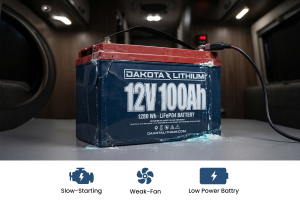
Lithium batteries are the most advanced option on this list. They are lighter, charge faster, and last far longer than the other two types. You can safely use up to 80–90% of their total capacity without hurting them.
The main barrier is the upfront price. A lithium battery costs far more than a lead-acid or AGM. But over a 10–15 year lifespan, the cost per charge cycle often comes out lower.
Boondockers and full-time RVers get the most value from lithium. If you live on the road, this type pays off in the long run.
RV Battery Sizes: The BCI Group Number Chart
The right size is just as important as the right type. A battery that doesn't fit your compartment or cover your power needs is money wasted. RV batteries use BCI group size numbers to help you match the right fit to your rig.
Here's a look at the most common group sizes:
Group Size | Voltage | Typical Ah | Best For |
Group 24 | 12V | 70–85 Ah | Small RVs, weekend trips |
Group 27 | 12V | 85–105 Ah | Mid-size RVs |
Group 31 | 12V | 95–125 Ah | Large RVs, longer trips |
GC2 | 6V | 200–225 Ah | Off-grid, series-wired pairs |
GC8 | 8V | 150–170 Ah | Special 8V battery banks |
GC12 | 12V | 150 Ah | Higher-capacity 12V setups |
GC2 batteries are one of the most popular choices for serious RVers. Two 6V batteries wired in series give you 12V power while keeping the same amp-hour rating. That setup can offer strong deep-cycle capacity at a fair cost.
Match the group size to your battery compartment first. Then look at the amp-hour rating to see if it covers your daily power use.
6V vs 12V RV Batteries: Which One Should You Get?
For most campers, a single 12V battery is the simpler and faster setup. But two 6V batteries wired in series create 12V power with strong deep-cycle capacity.
A 12V battery is the plug-and-go option. Wire it in, and you're ready. It works well for smaller rigs and casual campers who want a clean setup without extra wiring.
Two 6V batteries wired in series create 12V while keeping the same amp-hour rating. A single GC2 battery often holds 220–225Ah on its own. Two of them together give you a powerful house bank at a fair price.
For maximum capacity from flooded or AGM batteries, the paired 6V setup is hard to beat. It's a favorite among boondockers who need a large battery bank for days off the grid.
How Much Power Do You Actually Need?
Most RVers need between 50Ah and 200Ah of usable battery capacity per day. The exact amount depends on what devices you run and how many hours you use them.
Battery capacity is measured in amp-hours. A 100Ah battery can give 10 amps for 10 hours. The goal is to size your battery bank so it covers a full day without dropping below a safe discharge level.
Start by writing down every device in your RV and how long it runs each day:
LED lights: 2A × 5 hours = 10Ah
Water pump: 5A × 1 hour = 5Ah
Ceiling fan: 3A × 8 hours = 24Ah
Daily total: 39Ah
With a lead-acid or AGM battery, double that number to stay above the 50% discharge limit. In this case, you'd need at least an 80Ah battery. With lithium, you can use more of the rated capacity, so a smaller battery covers the same load.
Running this math before you buy saves you from running out of power mid-trip.
Lead-Acid vs AGM vs Lithium: A Quick Comparison
Lead-acid is the cheapest and most familiar option. AGM gives you the best balance of cost and performance. Lithium lasts the longest, but costs the most upfront. Here's how they stack up side by side:
Feature | Lead-Acid | AGM | Lithium (LiFePO4) |
Upfront Cost | Low | Medium | High |
Lifespan | 2–4 years | 4–6 years | 10–15 years |
Maintenance | Yes | No | No |
Usable Capacity | 50% | 50–60% | 80–90% |
Weight | Heavy | Medium | Light |
Charge Speed | Slow | Moderate | Fast |
Best For | Casual camping | Regular camping | Full-time use |
The right choice depends on how often you camp and what your budget allows. It's about what fits your life on the road.
The Right Battery for Your Travel Style
A good RV battery guide goes beyond specs. It matches the right battery to how you actually live and travel. Your camping habits make a bigger difference than most people realize.
Weekend Campers
A Group 27 or Group 31 AGM battery covers most weekend camping needs. It's low maintenance and holds up well for several years of light use. Pair it with a quality converter charger, and it stays ready for every trip without much effort.
Off-Grid Boondockers
Boondocking means no campground hookup at all. You rely on solar panels, a generator, or your alternator. Your battery bank is your only power supply between charges.
Boondockers need a battery that handles deep daily discharge cycles. GC2 deep-cycle batteries or lithium batteries are the top picks here. A large battery bank paired with a solar charge controller keeps power flowing all day and into the night. The more days off-grid you plan, the bigger your bank should be.
Full-Time RVers
If your RV is your permanent home, your battery system is your lifeline. You need something that handles daily charge cycles for years on end. Lithium iron phosphate batteries are the top choice for full-timers.
Many lithium packs handle over 3,000 charge cycles before capacity starts to drop. That's close to 10 years of daily use. The high upfront cost becomes worth it over that kind of lifespan.
Top 5 RV Batteries Worth Buying
You might be wondering about the best RV batteries. There are hundreds of batteries on the market. These five stand out because of their proven quality and real-world track record.
1. Trojan T-105 — The Legendary 6V Flooded deep-cycle
Trojan has been making batteries for over 100 years. Their flooded lead-acid line is one of the most recognized in the RV space. Wire two of them in series, and you get 12V power with a massive amp-hour capacity.
It needs regular water checks. But the price-to-performance ratio is hard to match anywhere on the market. The trusted Trojan 6V flooded deep-cycle has been a staple in RV battery banks for decades, and for good reason.
2. Trojan T-105 PLUS — Built for Heavier Use
The PLUS version builds on the original with the same 6V 225Ah specs. Trojan added MaxGuard technology to the cells to push cycle life further. That means more seasons of use before you need a swap.
If you camp often and want the same proven reliability with better longevity, their longer-lasting 6V deep-cycle is the step-up worth taking.
3. Lifeline GPL-4CT — American-Made AGM Quality
Lifeline builds its batteries to military-grade specs right here in the USA. That's a level of quality most battery brands never reach. This one is fully sealed, needs zero maintenance, and recharges faster than any flooded option.
It handles deeper discharge cycles well and holds up in tough weather conditions. Their American-made AGM deep-cycle is the top pick for anyone who wants serious AGM performance without the flooded battery hassle.
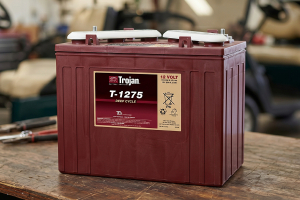
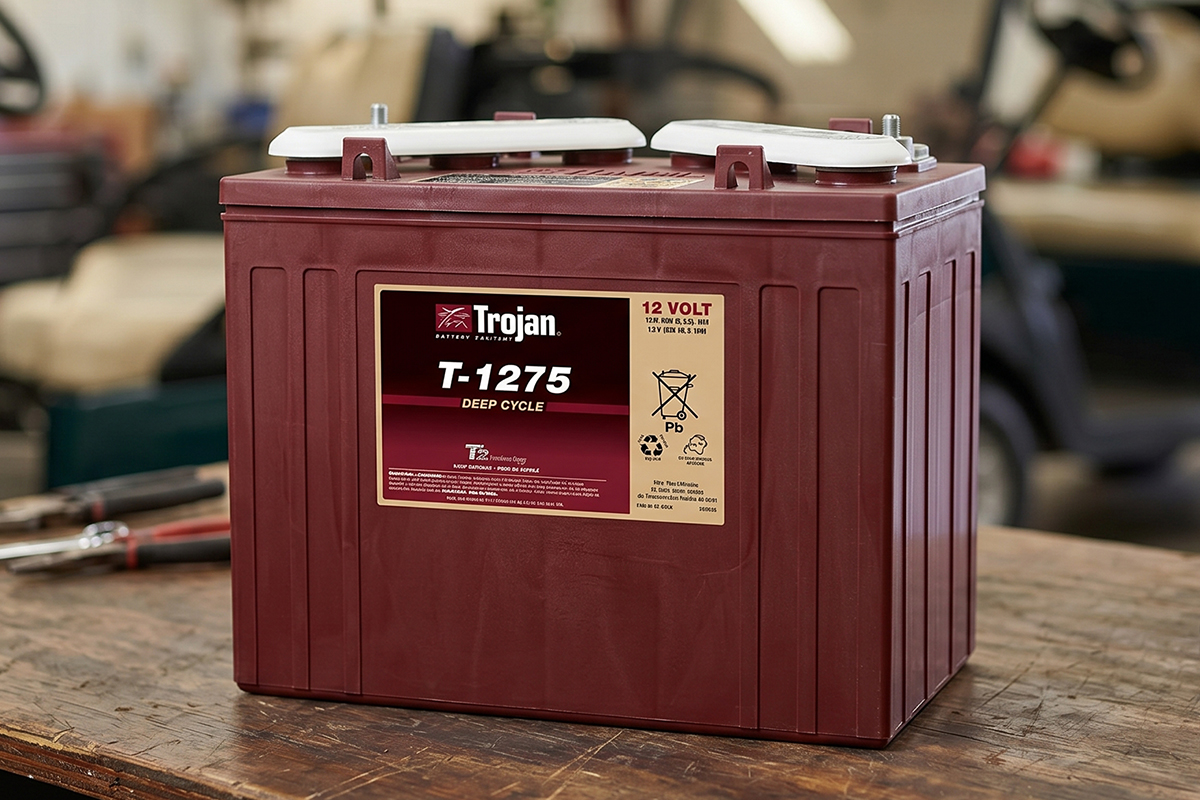
4. Trojan T-1275 — A Clean 12V Single-Battery Setup
Not everyone wants to wire batteries in series. For RVers who want a simple 12V setup, Trojan's single 12-volt GC12 deep-cycle delivers 150Ah without the extra wiring. No series configuration needed.
It's a clean and reliable setup for mid-size to large RVs. Trojan's build quality means it holds up season after season without dropping off.
5. Trojan T-875 — The High-Output 8V Option
Eight-volt batteries are less common but pack a punch in the right bank configuration. When wired correctly into a multi-battery system, they deliver strong and steady output. The 170Ah rating gives plenty of energy for a long camping weekend.
For RVers who know their electrical system well, Trojan's high-output 8V GC8 deep-cycle is one of the strongest performers in this entire list.
Track Your Charge With a Battery Monitor
A battery monitor is one of the best tools an RVer can add to their rig. It tells you your exact charge level at any moment. Without one, you're guessing, and guessing leads to dead batteries at the worst time.
Most monitors show you voltage, amp-hours used, and time remaining at your current load. Some higher-end units connect to an app on your phone. It's a small investment that protects your much bigger battery investment.
How to Make Your RV Battery Last Longer
A great battery won't last long if it's treated poorly. How you care for it determines how many seasons you get out of it. A few smart habits go a long way.
Flooded lead-acid batteries need regular water top-ups. Low water levels damage the cells and shorten battery life fast. A monthly water level check during camping season keeps them in top shape.
Lead-acid and AGM batteries should stay above 50% charge at all times. Draining them too deep wears down the internal plates fast. A battery monitor lets you track your level in real time so you never get caught off guard.
During off-season storage, keep the battery in a cool and dry spot. A battery maintainer plugged in through winter keeps it topped up and ready for spring. Heat and freezing conditions can shorten battery life.
How RVers Charge Their Batteries
A great battery is only as reliable as your charging setup. RVers use three main methods to keep their house battery bank charged on the road.
Shore power is the most common. You plug into a campground hookup and your converter charger handles the rest. It's a slow and steady charge that gets the job done overnight without any effort.
A converter/inverter charger is a popular all-in-one upgrade. It charges your battery from shore power and converts DC to AC when you're off-grid. It's a smart tool for RVers who camp in both hookup and off-grid settings.
Solar panels are the top pick for off-grid camping. They pull energy from the sun through the day and feed it into your battery bank. A solar charge controller keeps the battery from getting overcharged during long sunny stretches.
Your alternator charges the battery while you drive. But the rate is slow. It works best as a top-up between solar cycles or campground stops.
Frequently Asked Questions
These are some common questions people ask regarding RV batteries. Clear your doubts before making your decision.
What type of battery is best for an RV?
The right RV battery depends on how you camp. AGM works well for less care, and lithium works well for long off-grid trips.
What size RV battery do I need?
The right size depends on your battery space and daily power use. Check voltage, group size, and amp hours before you buy.
Is a 6V or 12V battery better for an RV?
A 12V battery is easier for basic RV setups. Two 6V batteries can work better for longer, deep-cycle power.
Can I use a car battery as an RV house battery?
A car battery is not a good RV house battery. A deep-cycle battery handles repeat drains much better.
How many RV batteries do I need?
A weekend camper may only need one battery. A boondocker or full-time RVer may need two or more.
How long do RV batteries last?
RV battery life depends on battery type and care. Lithium usually lasts longer than flooded lead-acid or AGM.
Do lithium RV batteries need a special charger?
Lithium RV batteries need a charger with a lithium charge profile. The wrong charger can reduce battery life.
When should I replace my RV battery?
Replace your RV battery when it stops holding a charge. Swelling, leaks, and weak power are also warning signs.
Choose the Right RV Battery Before Your Next Trip
The right battery can make camping feel easier from the first night. Pick one that matches how long you stay out. Your power setup should support your lights and fridge controls without stress.
Use this guide to compare each RV battery. Check the size before you choose. Then review the types and what to buy for your camping style.
A better battery choice helps you avoid weak lights at camp. It also keeps your house power ready for longer trips. Choose the setup that fits your rig before the next drive.