AGM Car Battery vs. Standard: Which One Deserves Your Engine?
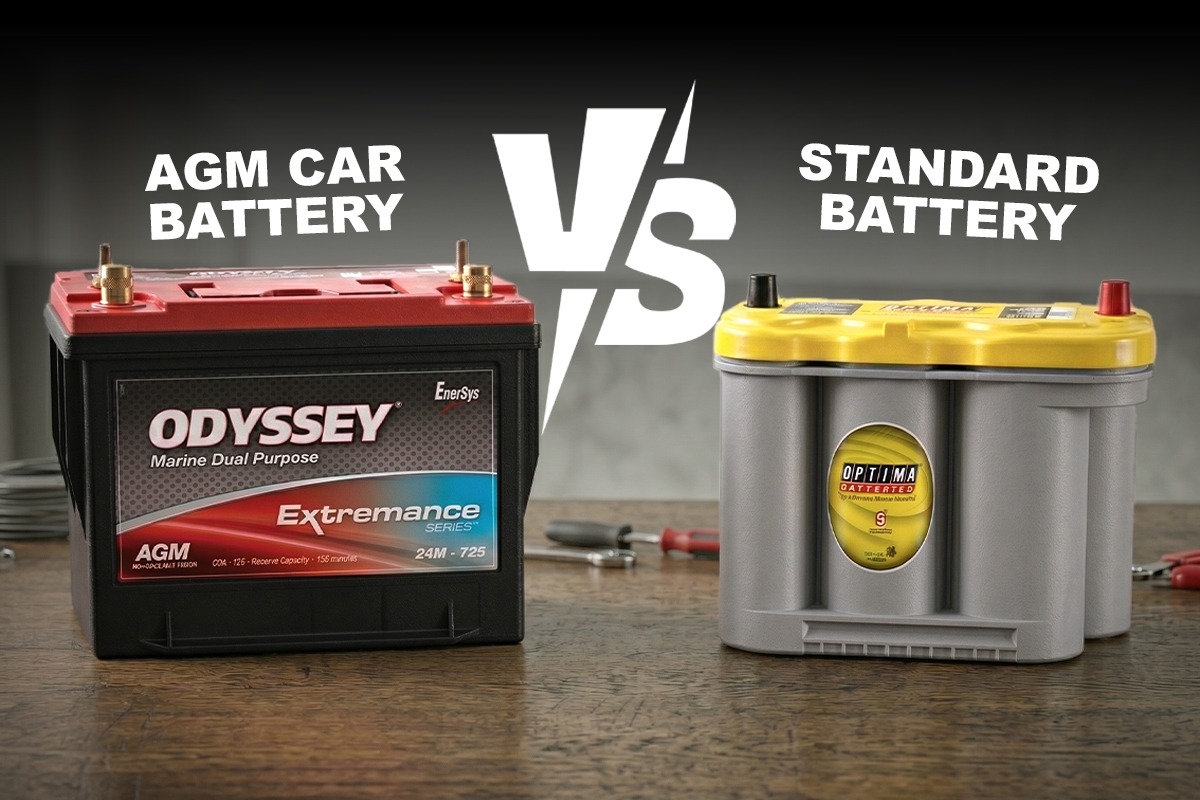
Most people do not think much about their car battery until something goes wrong. Then one day, the car struggles to start. Maybe the battery dies unexpectedly.
Suddenly, choosing the right replacement becomes a lot more important. That is where the comparison between an AGM car battery vs. standard lead-acid battery comes in.
Both serve the same basic purpose. Yet they are designed to handle different levels of performance, power demands, and driving conditions.
Modern vehicles rely on more electronics than ever before. Features like start-stop systems, infotainment screens, sensors, and advanced safety technology place greater demands on the battery.
Choosing the right option can improve reliability, extend battery life, and help prevent unexpected breakdowns. Let’s explore the differences and see which battery is the better fit for your car.
What Is An AGM And A Standard Battery
A standard flooded lead-acid battery uses a liquid electrolyte that moves freely inside the battery case. This design has been used for many years because it is affordable, reliable, and widely available.
However, it can leak if damaged, and some models may require water to be added as part of regular maintenance.
An AGM battery works differently. It uses an absorbent glass mat to hold the electrolyte in place instead of allowing it to move freely inside the battery. This sealed design makes the battery maintenance-free and more resistant to vibration.
AGM batteries also deliver power more efficiently, which helps support modern vehicles with advanced electronics, sensors, and digital displays. Both battery types can start and run your vehicle, but an AGM battery provides better durability, stronger performance, and less maintenance.
Quick Comparison Between AGM Batteries and Standard Lead Acid Ones
For over 100 years, the lead-acid battery was the standard. It uses lead plates and liquid acid to create power and start the engine. It is reliable, affordable, and easy to find, which makes it the go-to battery for most vehicles.
As cars added more technology, they needed more electrical power. Features like start-stop systems, screens, sensors, and computers put greater demands on the battery.
To meet these needs, newer battery designs were developed. One of the biggest improvements was the AGM car battery. Instead of using loose liquid acid, it holds the acid in a special glass mat. This simple design change makes the battery stronger, more reliable, and better suited for modern vehicles.
Feature | Standard (Flooded) | AGM (Absorbent Glass Mat) |
Electrolyte State | Liquid (Free-flowing) | Absorbed in Glass Mats |
Maintenance | May need water added | Completely Sealed |
Vibration Resistance | Low | High |
Charge Speed | Standard | Fast |
Best For | Older, basic vehicles | Modern, tech-heavy cars |
And for those driving a car built in the last five years, the choice might already be made for you. Most new cars come from the factory with an AGM. If you try to put an old-school battery in a car meant for an AGM, you are asking for trouble.
AGM Car Battery vs. Standard: 5 Critical Design Differences
Looking inside these batteries reveals two very different worlds of engineering. One is built for the basics, and the other is built for the extreme.
When we talk about AGM vs lead acid, we are talking about how the battery handles its internal chemistry. In a standard battery, the lead plates are suspended in a liquid electrolyte.
As you drive, that liquid can splash. If you hit a bump, it vibrates. This movement causes the plates to wear down over time. It also means the battery must stay upright, or it will leak acid all over your engine bay.
The AGM battery works differently. The "AGM" stands for Absorbent Glass Mat. Imagine a thin sponge made of glass fibers. These sponges sit between the lead plates and soak up all the acid. Because the acid is trapped in the mats, it cannot move or splash. The battery is now spill-proof and much tougher.
1. Vibration Resistance
Rough roads are the enemy of a lead-acid battery. Constant shaking can cause the internal plates to crack or short out. An AGM battery is packed tight. The mats act like a cushion for the lead plates. Perfect for off-road trucks or performance cars that take hard corners.
2. Internal Resistance
Energy moves faster in an AGM battery. It has very low internal resistance. This means it can dump a huge amount of power into the starter motor instantly. It also means it can take power back from the alternator much faster than a regular battery.
3. Depth of Discharge
Standard batteries hate being drained. If you leave your lights on and the battery goes flat, it takes permanent damage. An AGMcar battery can handle deeper "cycles." It can be drained further and charged back up more times without dying early.
4. Safety and Off-Gassing
Traditional batteries release gas when they charge. This gas is explosive and smells like rotten eggs. Because of this, they must be vented. AGM car battery designs use a "recombination" process. The gases are turned back into liquid inside the battery. So, they are safer to mount inside a trunk or under a seat.
5. Heat and Cold Performance
Extreme weather kills batteries. Standard liquid batteries can freeze in the winter or evaporate in the summer. The glass mats in an AGM protect the chemistry from these temperature swings. You get more "cranking amps" on a frozen morning when you need them most.
AGM Battery Benefits & Drawbacks
Today's vehicles rely on far more electronics than older models. Features such as touchscreens, heated seats, USB chargers, safety systems, and automatic start-stop functions constantly draw power.
An AGM starter battery is built for these higher demands. That is why many modern vehicles use them.
Benefits
Here are some benefits of using AGM battery:
Supports modern electronics such as touchscreens, chargers, and safety systems.
Perfect for start-stop vehicles thanks to its ability to handle frequent engine restarts.
Delivers strong starting power for reliable performance.
Charges faster than traditional lead-acid batteries.
Performs better on short trips by recharging more efficiently.
Lasts longer under demanding driving conditions.
Drawbacks:
They have high upfront costs.
You cannot add distilled water.
Usage Longevity Under Pressure Between AGM & Standard Lead Acid
We all want things that last, and your car battery is no exception. Comparing the AGM battery lifespan to a regular lead-acid one shows a clear winner in the race for longevity.
A Standard car battery usually lasts between three and five years. This depends on where you live and how you drive. In hot states like Arizona, that life might be even shorter. Heat makes the liquid acid evaporate. Once the plates are exposed to air, the battery is as good as dead.
But here is where the AGM battery vs regular battery comparison gets interesting. An AGM battery typically lasts six to eight years. Some drivers even report getting a full decade out of a quality AGM auto battery. This is because the acid is sealed inside. It cannot evaporate. The internal plates are also protected from the chemical buildup called sulfation, which is the number one killer of lead-acid power.
Silent damage is also a factor. Every time you start your car, you take a little bit of "life" out of the battery. An AGM battery can handle hundreds more of these "cycles" than a flooded one. If you plan to keep your car for a long time, the AGM's longer lifespan means fewer trips to the mechanic. You are buying time as much as you are buying power.
Analyzing Battery Cost vs. Performance Value
The AGM battery cost is usually double what you would pay for a standard one. It is easy to see the price and want to run the other way.
But we need to look at the "Total Cost of Ownership." If you buy a standard flooded car battery for $120 and it lasts three years, you are paying $40 per year. If it dies and leaves you stranded, you might also have to pay $100 for a tow truck.
Now, look at the AGM battery. You might pay $240 for it. But if it lasts seven years, you are only paying about $34 per year. You also get the "insurance" of knowing it is much less likely to leave you stranded in a parking lot at night.
Expense Type | Standard Battery | AGM Battery |
Initial Purchase | ~$120 | ~$240 |
Average Lifespan | 3-4 Years | 7-10 Years |
Cost Per Year | $40 | $34 |
Reliability Factor | Moderate | High |
When you look at it this way, the "expensive" battery is actually the cheaper one. It is a classic case of paying a bit more now to save a lot more later. For most people, the extra $100 up-front is a small price to pay for five extra years of reliability.
Choosing an AGM Battery Vs. A Standard Battery For Your Car (Compatibility Guide)
You might be ready to run out and buy an upgrade right now. But hold on a second. There is a "golden rule" when it comes to AGM battery vs regular (Standard) swaps that you must follow.
You can almost always upgrade. If your car came with a Standard car battery, you can usually put an AGM battery in its place. Your car will likely love the extra power. However, there is one catch. Modern cars have a "Battery Management System" or BMS. This is a computer that tracks how the battery charges. Since an AGM charges differently, you might need to "tell" your car's computer that you changed the battery type. A mechanic can do this in five minutes with a plugin tool.
But here is the warning: Never downgrade. If your car came with an AGM battery from the factory, you cannot replace it with a standard one. Your car’s charging system is tuned for the high-speed intake of an AGM. A standard battery will get too hot and could even leak or explode under that much pressure. It will definitely die very quickly.
Always check your owner's manual. If you see the words "Start-Stop" or "High Accessory Load," stay with an AGM. It is the only way to keep your engine's electrical "nervous system" healthy.
Caring Tips For AGM battery Vs. Standard Lead Acid One
AGM batteries require less maintenance than traditional lead-acid batteries, making them a convenient choice for modern vehicles. While they are designed to be durable and maintenance-free, a few simple care practices can help extend their lifespan.
Plus, you maintain a reliable performance. Here are some tips for maintaining an AGM battery:
Keep the terminals clean to prevent corrosion and ensure a strong electrical connection.
Use a smart charger when storing your vehicle for long periods to avoid overcharging and protect the battery.
Choose a charger with an AGM setting for safe and efficient charging.
Monitor your vehicle's charging system to ensure the battery receives the correct charge.
Check for warning signs such as dim lights or slow electrical accessories, which may indicate charging system issues.
Perform regular battery inspections to help maximize battery life and performance.
Frequently Asked Questions (FAQs)
We get asked a lot of questions about these power boxes. Here are the simple answers to help you navigate the world of car battery types.
Does an AGM battery need a special charger?
Yes, it is highly recommended. While your car's alternator handles it fine, a wall charger should have an "AGM" mode. Using a very old "dumb" charger can push too much voltage and damage the internal mats.
Are AGM batteries better for cars that sit a long time?
Absolutely. A Standard car battery loses its charge quickly when not in use. An AGM battery has a very low self-discharge rate. You can leave it for months, and it will likely still have enough kick to start the engine.
Is an AGM battery a "Deep Cycle" battery?
Most of them are "Dual Purpose." This means they can provide a big burst of starting power and handle slow drains. This is why they are so popular for boats and RVs as well as cars.
Why is my battery located in the trunk?
Many manufacturers put the AGM car battery in the trunk or under the seat to keep it away from engine heat. Heat is the number one enemy of battery life. Since AGMs don't off-gas like a Lead acid battery, they are safe to keep inside the cabin area.
Get Ready For the AGM Advantage
We’ve looked at the science, cost, and real-world use. The decision in AGM car battery vs. standard comes down to reliability.
If you drive an older car with basic features and need to save money, a standard battery is enough. It is the simple option that gets the job done.
But for most modern vehicles, AGM batteries are the better pick. They last longer, handle cold weather better, and resist vibration and leaks. They also support today’s power-hungry electronics more consistently.
Think of it as daily reliability, not just a replacement part. You are paying for the confidence that your car will start every morning without stress. In the end, it’s basic cost savings versus dependable performance.