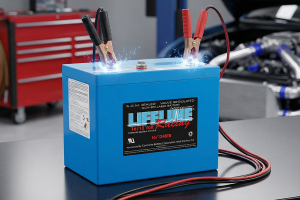
Can I Charge a 6V Battery with a 12V Charger: Let’s Find Out
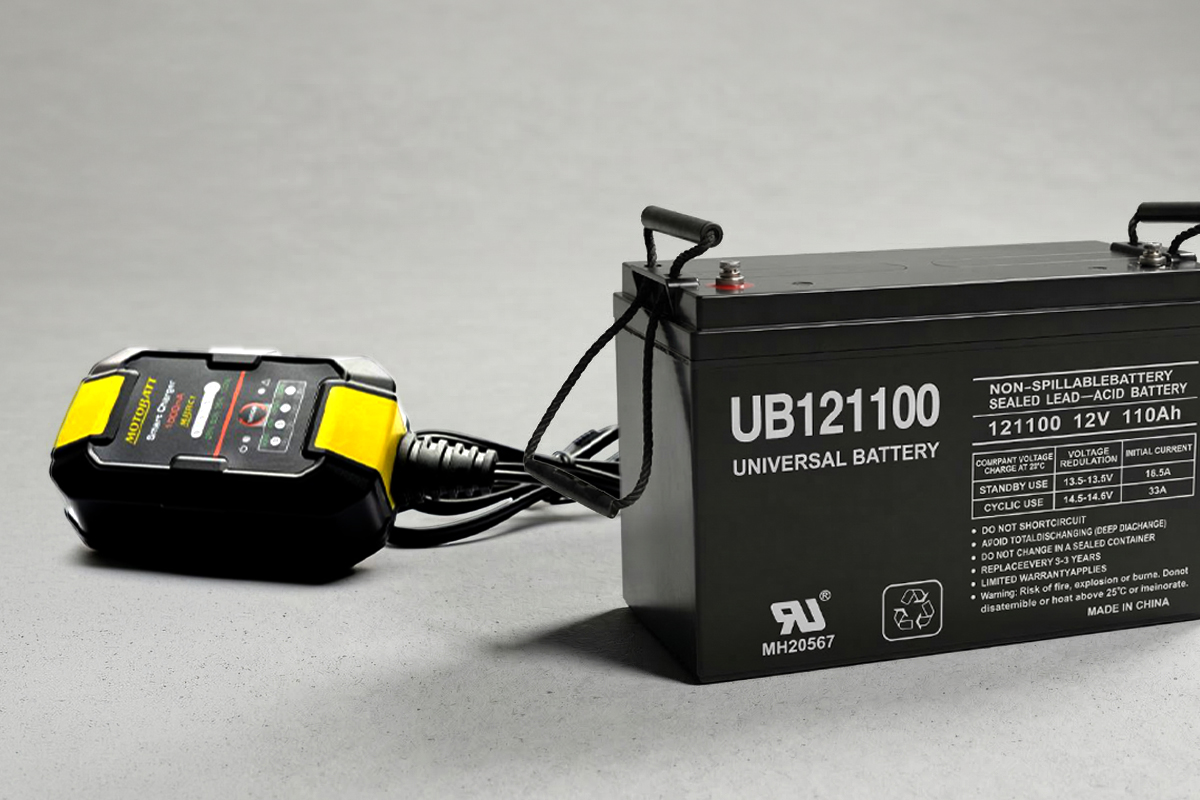
You stand in the garage. A 6V battery is in one hand. A 12V charger is in the other. Something feels off. You just want your device to work.
Can you charge a 6V battery with a 12V charger? The answer is no. But also yes. Simply plugging it in directly is dangerous.
The battery can overheat, leak, or even explode. Too much voltage pushes it too hard. There are safer ways. Step-down converters, voltage regulators, or charge controllers can turn 12V into a safe 6V.
With these, the battery can charge safely. The key is control. Match the tool to the battery, and it works without risk.
What Happens When You Connect a 12V Charger to a 6V Battery?
Do not connect a 12V charger directly to a 6V battery. The voltage is too strong. Else, you will end up searching for new 6V batteries. A 12V charger pushes electricity too much.
It sends current faster than the 6V battery can handle. This creates heat. Gas can build up inside. The risk of fire or explosion is very high.
Standard 12V chargers lack the settings to lower their output. They act like a fire hose filling a water balloon. Balloons cannot handle such pressure. It bursts. Your battery works the same way.
The internal components break down rapidly. In best-case scenarios, you ruin the battery. In worst-case scenarios, you cause a dangerous chemical fire. You must avoid a direct connection.
Why 12V is Too Much for 6V: The Science of Voltage Mismatch
Think of electricity like water pressure. Here, voltage acts as the pressure. Amperage acts as the flow rate. A 6V battery expects low pressure. It is designed to accept a gentle stream of electrons. A 12V charger doubles that pressure. It forces those electrons in with violent speed.
This process creates resistance inside the battery. The battery plates cannot convert the energy fast enough. The excess energy turns into heat. Heat is the enemy of batteries. It warps the lead plates. It boils the acid.
Take a look at how the input voltage changes the outcome.
Input Voltage | Battery Capacity | Resulting Action |
6V - 7V | 6V | Safe charging. Normal heat. |
7V - 9V | 6V | Slow overcharge. Gassing occurs. |
12V+ | 6V | Rapid overheating. Thermal runaway. High danger. |
The table shows the reality. Anything above the battery's rating spells trouble. The gap between 12V and 6V is massive. It guarantees damage.
The Dangers of Overcharging: Thermal Runaway and Grid Corrosion
You might wonder about the specific risks. What actually happens inside? The damage is internal and chemical. It happens fast.
Battery swelling/venting: The heat turns water in the acid into hydrogen and oxygen gas. The battery expands. The casing swells. Safety valves pop open. Acid sprays out.
Electrolyte boiling: The fluid inside boils away. This exposes the lead plates to air. The plates corrode instantly. The battery loses its ability to hold a charge forever.
Internal plate damage: The high voltage warps the metal grids inside. They can touch each other. This creates a short circuit. The battery becomes useless scrap.
These risks are real. They happen within minutes of connection. You cannot watch the battery closely enough to stop it by eye. The damage is done before you see smoke.
Is There a Safe Way? 3 Methods to Use a 12V Source for a 6V Battery
Sometimes, you just have to use a 12V charger for your battery. Unlike a variable charger with 6V and 12V capacity, yours is a 12V regular one. Maybe you are in an emergency and don’t have any other power source. You can do it. But you cannot do it directly.
You need to control the voltage. Bring the 12V down to a level the 6V battery can tolerate. Advanced users have methods to make this work. These methods require extra parts and high attention.
Note: They are not "plug and play." Proceed with caution. (And at your own risk)
Method 1: Using a Voltage Converter (Step-Down Buck Converter)
This is the safest method. A buck converter is an electronic device. It takes high voltage and steps it down. You can buy one online or at an electronics store. It acts as a translator between a 12v charger and your 6v battery.
How to connect it:
Connect the 12V charger positive lead to the converter input positive.
Connect the 12V charger negative lead to the converter input negative.
Set the converter output to 6.8V (the charging voltage for a 6V battery).
Connect the converter output to the battery terminals.
The device regulates the flow, prevents voltage spikes, and keeps the current steady. It provides the safety of a dedicated charger while still using your 12V power source. It works particularly well with sealed lead-acid batteries.
Method 2: The Resistor Method (Dropping Voltage)
You can use basic physics to lower the voltage. A resistor fights the flow of electricity. It turns some voltage into heat. This lowers the voltage that reaches the battery. This method is crude. It is inefficient. But it works in a pinch.
You need the right resistor. A small resistor will burn out. You need a high-wattage ceramic resistor. You must calculate the value needed. This calculation ensures the resistor absorbs the extra 6 volts.
The Calculation Box:
Use Ohm's Law, Voltage (V) = Current (I) x Resistance (R)
Target Drop: 12V - 7V (charging voltage) = 5V drop.
Target Current: Assume a slow charge of 1 Amp.
Resistance Needed: 5V / 1A = 5 Ohms.
Power Rating: 5V x 1A = 5 Watts. (Use a 10 Watt resistor for safety).
You place the resistor between the positive charger lead and the positive battery terminal. The resistor will get hot. Do not touch it. Make sure it sits on a non-flammable surface.
Method 3: Series Connection (Charging Two 6V Batteries at Once)
Do you have two 6V batteries? You can use the 12V charger safely. You connect the batteries in a series. This combines their voltage. Two 6V batteries in a series make 12V. The 12V charger sees the correct load.
Follow these steps carefully.
Connect the positive terminal of Battery-A to the negative terminal of Battery B. Use a jumper cable. This creates the series link.
A connected charger leads to the free ends. The positive charger clamp goes to the free positive post on Battery-B. The negative charger clamp goes to the free negative post on Battery-A.
The resulting system voltage becomes 12V. The charger pushes 12V, while the batteries share the load evenly. Each battery absorbs 6V.
This works perfectly for golf cart batteries or UPS batteries. It fails if you only have one battery. It also fails if one battery is damaged. Both batteries must be in similar condition.
Step-by-Step Guide: The Resistor Hack (For Advanced Users)
Let's focus on the resistor method. This is the most common "hack", which makes a 12V charger work on a 6V battery. However, you do need to spend a bit of money and focus. You are building a simple circuit.
First, gather your tools. You cannot do this with bare wire and hope.
Checklist of required tools:
Multimeter.
High-wattage resistor (calculated earlier).
Alligator clips.
Safety goggles.
Fireproof mat.
Safety is the priority. Put on your goggles. Place the battery on the fireproof mat. Batteries can vent gas. You do not want that gas near sparks or flames. Keep the area ventilated.
Calculating the Correct Resistor Size
One size does not fit all. You need to match the resistor to your battery size. A small toy battery needs a different resistor than a large lantern battery. The goal is a slow charge. Slow charging is safer.
Review this table to find the right part. It assumes a 12V source.
Battery Capacity (Ah) | Target Charge Rate (Amps) | Resistor Value (Ohms) | Resistor Power (Watts) |
Small (Under 5Ah) | 0.5 A | 10 Ohm | 5 Watts |
Medium (5Ah - 10Ah) | 1.0 A | 5 Ohm | 10 Watts |
Large (10Ah - 20Ah) | 2.0 A | 2.5 Ohm | 20 Watts |
Choose the row that fits your battery. A higher Ohm value means a slower charge. Slower is always better for battery health. Do not try to rush this process. High speed creates high heat.
Monitoring the Charging Process
You have connected the circuit. The charger is on. Now you must watch. Do not walk away. This is a manual process. There is no automatic shut-off.
Check the system frequently.
Check the temperature every 5 minutes. Touch the battery case. It should feel warm, not hot. If it hurts to touch, stop immediately.
Monitor voltage with a multimeter. Touch the probes to the battery terminals while charging. The reading should climb slowly. Stop when it reaches 6.4V to 6.8V.
Disconnect immediately if voltage exceeds 7.2V. Going higher causes damage. You are overcharging.
Listen to the battery. If you hear hissing or bubbling, stop. That sound means the electrolyte is boiling. You are cooking the battery. Unplug the charger. Let everything cool down.
Comparing Charging Equipment: What Should You Use Instead?
Why take the risk? You can buy the right tool for the job. A dedicated charger saves time. It saves stress. It protects your investment in batteries.
Compare your options here.
Feature | 12V Charger (Direct) | 6V Smart Charger | Adjustable Power Supply |
Safety | Dangerous. | High. | High. |
Cost | Free (if owned). | Low ($20 - $50). | High ($100+). |
Speed | Too Fast. | Optimal. | Adjustable. |
Risk Level | Severe. | Minimal. | Low. |
The table makes the choice clear. A 6V smart charger is the best option for most people. It is cheap. It is safe. It stops automatically when the battery is full. You do not need to watch it like a hawk.
An adjustable power supply is for experts. It allows you to set exact voltage and current. It works for many battery types. It costs more money. Most people do not own one.
Specific Battery Types: Lead-Acid vs. Li-Ion Sensitivity
Not all batteries act the same. The chemistry inside changes the rules. You must know what type you hold. Using a 12V charger on a Lithium battery is different than on a Lead-Acid battery.
Lead-Acid Batteries:
These are the most common 6V batteries. You find them in classic cars, motorcycles, and children's ride-on toys. They are somewhat forgiving and can take a brief surge of voltage.
They will still suffer damage, but might survive a short mistake. They vent gas when overcharged. Fluid loss here is permanent. You cannot add water to sealed batteries.
Risk: Boiling, swelling, fire.
Outcome: Permanent capacity loss.
Lithium-Ion (Li-Ion) Batteries:
These are different. They hold more energy and are lighter. They are extremely sensitive to voltage. Inside them, you will find a BMS (Battery Management System) circuit.
Risk: Thermal runaway, explosion.
Outcome: BMS lockout or fire.
A lithium battery’s BMS can cut off power if it sees a 12V surge, locking the battery. You won’t be able to use or charge it without a special reset tool. If the voltage bypasses the BMS, the cells can overheat, and lithium fires are fast and very hard to put out. Never use a 12V charger on a 6V lithium battery.
Frequently Asked Questions (FAQs)
Still have questions on whether you can charge your 6V battery with a 12V charger or not? Here are answers to common concerns. These address the gray areas of battery charging.
Can I use a standard car battery charger on a 6V motorcycle battery?
No. Standard car chargers output high amperage designed for 12V systems. Connecting one to a small 6V motorcycle battery will overwhelm and ruin the battery instantly. Always use a charger specifically rated for 6V batteries.
Is it safe to connect a 12V solar panel directly to a 6V battery?
No, direct connection is dangerous. A 12V solar panel can output up to 22V in sunlight, which will fry a 6V battery. You must use a solar charge controller to step the voltage down to a safe level.
What are the signs that a 6V battery has been damaged by overcharging?
Signs include a swollen or bloated case, leaking fluid, and a strange smell. The battery may also become extremely hot, make hissing noises, or lose its ability to hold a charge. If these occur, stop using it immediately.
Why is using a 12V charger on a 6V battery considered dangerous?
A 12V charger pushes electricity with too much pressure. This causes rapid overheating, gas buildup, and potential thermal runaway. In worst-case scenarios, the battery can explode or catch fire due to the massive voltage mismatch.
Can I use a resistor to safely charge a 6V battery with a 12V charger?
Yes, but proceed with caution. A high-wattage resistor can drop the excess voltage. You must calculate the correct resistance and monitor the process constantly, as the resistor will get hot. This is an advanced method for emergencies only.
Is it safer to charge a 6V Lithium-Ion or Lead-Acid battery with a 12V charger?
Neither is safe, but Lithium-Ion is riskier. Lead-acid batteries may boil or swell, but lithium batteries can experience thermal runaway and catch fire. Their internal BMS may also lock the battery permanently if it detects the high voltage.
Ready To Charge Your Battery
You came looking for a shortcut. You asked if you could charge a 6V battery with a 12V charger. Technically, yes. But you would need to use resistors, series connections, or other hacks.
It’s actually risky. Fire, chemical burns, or a ruined battery are real dangers. Making a workaround often takes more time than buying a new charger.
A 6V smart charger is cheap and safe. It protects your battery and keeps your garage safe. Don’t gamble with shortcuts. Use the right tool and do the job right.