Golf Cart Battery Maintenance Guide for Longer Life and Better Performance
Imagine cruising through a peaceful golf course. The sun is out, the breeze feels right, and your golf cart is running smoothly. Then it suddenly slows, jerks, and stops. You press the pedal again and hope for a miracle. Nothing. Now you are stuck between holes, while your friends try not to laugh. Not the highlight of your day.
That awkward moment usually comes down to one thing. And that is poor golf cart battery care. The good news is that it is completely avoidable. With proper cart battery maintenance, your battery can last for years. This guide shares all tips for battery maintenance, from charging the battery to cleaning and corrosion.
Golf Cart Battery Maintenance Basics
At first, you need to understand what a golf cart battery is and how exactly it works. In addition, there are different types of golf cart batteries that one can choose from. Therefore, it is essential to learn about each type and which one works better for you.
Let’s go through what exactly a golf cart is. A golf cart is a small motorized vehicle used to carry people around a golf course.
It is usually electric or gas-powered. Originally, golf carts were made to help with accessibility. However, they are now used for short trips in communities, campuses, and for maintenance work.
Now, let’s dive deep into golf cart batteries. A golf cart battery is a ‘’deep-cycle battery’’ designed to deliver steady power over a long period.
Unlike car batteries, they can be discharged and recharged hundreds of times. They are commonly available in 6V, 8V, or 12V options in the USA.
Golf Cart Battery Chemistry
There are various types of golf cart batteries. Each type works a bit differently and needs its own care routine. Learning about different battery types will help you choose the best golf cart batteries and maintain them properly.
In golf carts, the traditional lead-acid batteries are more commonly used. They dominate the market and are quite affordable. However, they are heavier than the other types and need proper care to last longer.
Flooded Batteries and AGM Batteries
Typically, there are two kinds of lead-acid batteries. One is flooded batteries and the other is Absorbent Glass Mat (AGM) batteries. Flooded batteries use a liquid electrolyte and need regular watering and cleaning to keep them working well. While they are affordable, they require more maintenance and proper ventilation.
On the other hand, AGM batteries use a glass mat to hold the electrolyte in place. They are sealed and do not need watering. They also charge faster and perform better; however, they are quite expensive compared to the flooded types.
Lithium Batteries
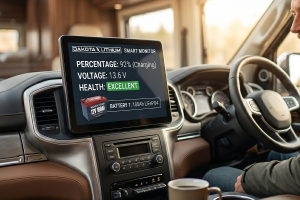
Then there are modern lithium batteries, which are gaining popularity in recent times. They are lighter, charge faster, and last longer than lead-acid batteries. Unlike flooded batteries, the electrolyte is sealed inside. They do not need watering or heavy maintenance, but can be extremely costly.
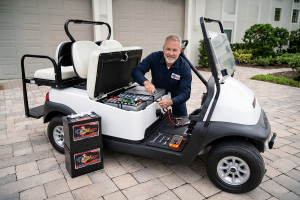
Most golf carts run on 36-volt, 48-volt, or higher systems. This setup means you connect several 6-volt or 8-volt batteries in a series. It is better to use batteries of the same brand, age, and capacity in one pack. Mixing them causes uneven performance and shorter life for the whole set.
In the USA, Trojan and US Battery are reliable brands that provide different battery types. Many users still prefer lead-acid batteries because they offer a balance between cost and performance. Both lead-acid and modern lithium batteries have their place depending on your needs and budget.
Why Battery Maintenance Matters for Longevity
A golf cart battery is not cheap. Without proper battery maintenance, you will need to change your battery quite often. Frequent replacements will only hurt your wallet.
Neglecting maintenance will shorten your golf cart battery life. There is a high chance that dirt and sulfation will build up. As a result, your golf cart will suffer from short runs and early failures.
Regularly maintaining the cart battery can double its lifespan. Think of it like brushing your teeth. If you skip it, problems will show up sooner than you expect.
Full charges will result in longer rides. Sulfation happens when batteries sit partially charged for too long. Sulfate crystals build up on the plates and reduce capacity. Once it hardens, you cannot reverse it fully.
Well-maintained flooded lead-acid batteries can run for three to five years. AGM types often last four to seven years. On the contrary, lithium batteries frequently last eight to fifteen years with basic care.
Key Components of Effective Battery Care
Taking care of your cart battery is not difficult. It just requires consistency.
Regular Inspection: The best practice is to check your golf cart battery at least once a week. It is necessary to look for cracks, leaks, or swelling. If something looks off, it probably is.
Cleaning Battery Terminals: Corrosion is the silent enemy of battery performance. It blocks power flow and reduces efficiency. You should clean terminals using baking soda and water.
Checking Water Levels: For lead-acid batteries, water levels are critical. Without enough water, the battery plates get damaged. You must always use distilled water and never overfill.
Tightening Connections: Loose connections cause power loss and overheating. Make sure all cables are tight and secure.
Allowing Full Charge: It is essential to charge after every use, even short trips. As mentioned earlier, partial charges lead to sulfation. It is better to plug in overnight or for the time your charger recommends.
Best Practices for Charging a Golf Cart Battery
Charging is the most frequent maintenance task you will perform. Doing it incorrectly will ruin even the highest-quality golf cart battery.
The Importance of a Full Charge
One of the most important rules is to always aim for a full charge after every single use. Even if you only drove the cart for five or ten minutes, you should plug it in. The battery will perform better when it is in a high state of charge.
As mentioned previously, a partially charged golf cart battery will trigger a process called ‘’sulfation’’. In this process, lead sulfate crystals harden on the battery plates and permanently reduce the battery’s capacity.
Choosing the Right Charger
It is mandatory to match the charger to your system voltage and battery type. A 48-volt pack needs a 48-volt charger. Using the wrong one causes undercharging or overheating.
For flooded lead-acid batteries, you need to charge in a well-ventilated spot. Charging produces hydrogen gas. Therefore, it is crucial to keep flames and sparks away.
It is better to choose smart chargers for your voltage. They auto-stop at full. For better performance, it is preferred to avoid old trickle types.
Avoid Overcharging
Overcharging will build up heat. As a result, the battery life will be reduced.
To avoid this issue, smart automatic chargers can come in handy. This is because they stop automatically when the charge is full. In this way, you do not need to check every time you put the battery on charge.
Charging Tips to Improve Battery Performance
Small changes in your charging routine can have a big impact. To generate the best battery performance, the following charging tips can be quite beneficial:
You should always aim for a full charge after each use
It is recommended to avoid charging in extreme heat or cold
It is better not to interrupt the charging process
You should keep your charger clean and in good condition
These habits will improve battery maintenance and extend the life of your golf cart battery.
The Golden Rules of Watering Lead-Acid Batteries
For those using flooded lead-acid batteries, water management is the most critical part of your routine. The electrolyte inside is a careful balance of water and sulfuric acid.
Flooded lead-acid batteries lose water through use. Plates dry out without a refill. The following key practices can significantly improve your battery health:
Only Use Distilled Water: Tap water is full of minerals like calcium. These minerals attach to the lead plates and block the chemical reaction. Distilled water is the only safe choice.
Water After the Charge: You should only add water after the batteries reach a full charge. The fluid level naturally rises during the charging process. If you fill an empty battery before charging, it will likely overflow and spill acid everywhere.
Monthly Checks: The recommended practice is to set a recurring schedule. If the lead plates are exposed to the air for even a short time, they will suffer permanent "dry-out" damage.
Proper Levels: There is an indicator line that you need to look for. You need to fill to about half an inch above the plates. It is advised not to fill all the way to the cap.
Proper watering maintains the internal chemistry of the battery. It also prevents the plates from warping under heat.
Cleaning and Corrosion Prevention
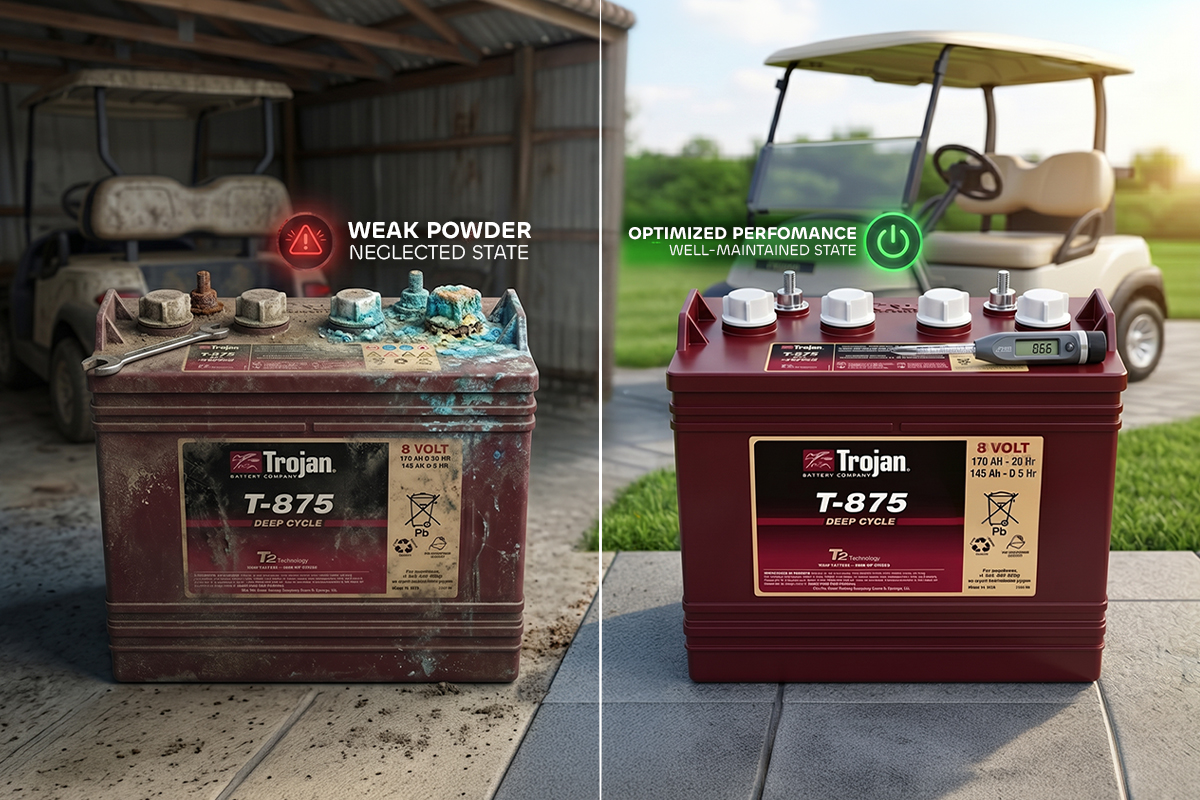
A dirty golf cart battery is an inefficient one. Over time, acid mist and dust create a "conductive film" on top of the batteries. This film can actually allow a tiny bit of electricity to leak across the top of the casing. This will drain your power while the cart is parked.
How to Clean Safely
To clean your batteries, you need to mix a tablespoon of baking soda into a cup of warm water. Using a soft brush, scrub the terminals and the tops of the cases.
The baking soda neutralizes the acid, which you will see as a bubbling reaction. Once the bubbling stops, you must rinse the area with clean water and dry it thoroughly with a cloth.
Protecting the Terminals
Corrosion usually looks like white or blue powder around the metal posts. This "fuzz" blocks the flow of electricity and makes your golf cart feel slow or jerky.
After cleaning and tightening the nuts, you have to apply a dedicated terminal protector spray. This creates a seal that prevents moisture and acid fumes from reaching the metal. Regular cleaning should be a part of your quarterly battery maintenance routine.
Troubleshooting Common Golf Cart Battery Issues
Sometimes, despite your best efforts at cart battery maintenance, the vehicle starts to lose its ‘’pep’’. Understanding how to troubleshoot these issues can save you from buying a new set of batteries prematurely.
Using a Multimeter
A digital multimeter is a vital tool for any owner. After the cart has finished charging and has sat idle for an hour, check the voltage of the entire pack.
A healthy 48-volt system should actually read around 50.9 volts when full. If the reading is significantly lower, you may have a dead cell in one of the batteries.
The Specific Gravity Test
For flooded batteries, a hydrometer is even more accurate than a voltmeter. It measures the density of the electrolyte liquid.
If one cell has a much lower reading than the others, that specific battery is failing. This helps you identify if the problem is the whole pack or just one faulty connection.
However, you should keep in mind that mixing one new battery into an old pack is usually a bad idea, as the old batteries will overwork the new one.
Battery Maintenance Schedule for Long-Term Use
Maintaining a proper battery maintenance schedule will help you keep track of your battery health. The following table gives a better idea of how to create a good schedule:
Task | Frequency | Description |
Inspect the golf cart battery | Weekly | Check for leaks or damage |
Clean terminals | Monthly | Remove corrosion build-up |
Check water levels | Monthly | Add distilled water |
Maintain a full charge | After each use | Maintain battery health |
Inspect cables | Monthly | Tighten connections |
It is not necessary to check your battery health daily. Some tasks require weekly maintenance, whereas some need to be checked monthly.
Best Storage Practices for Golf Cart Batteries
If you live in a cold climate, the way you store your golf cart during the winter will determine if it survives until spring. Also, when your golf cart is not in use, proper storage is essential.
Here are some of the best storage practices for a golf cart battery maintenance:
Charge the battery to a full charge before storage
Disconnect cables to prevent power drain
Store in a cool and dry place
Check the battery periodically
Signs You Need a New Golf Cart Battery
Even with the best care, every golf cart battery has a lifespan. There are some obvious signs when it comes to changing a golf cart battery.
Longer charging times are a critical indication
Frequent need for water is never a good sign
Visible damage to the battery is a clear sign of a replacement
When these signs appear, it may be time to replace your cart battery.
Safety Tips for Battery Maintenance
While checking battery health, it is important to maintain some safety measures. Here are some tips to reach maximum safety during battery maintenance:
Wear gloves and protective eyewear
Keep sparks and flames away
Handle battery acid carefully
Use insulated tools
Safe practices make battery maintenance easier and risk-free.
Frequently Asked Questions (FAQs)
Navigating the world of golf cart battery maintenance can bring up a lot of questions, especially for new owners. To help you get the most out of your ride, we have gathered the most frequently asked questions on the internet. Below, you will find straightforward answers to keep your batteries running smoothly.
How long does a golf cart battery last?
With proper maintenance, lead-acid batteries typically last between 4 and 6 years Lithium-ion batteries have a much longer lifespan, often lasting 8 to 10 years or more with minimal degradation and regular use.
How often should I charge my golf cart battery?
You should charge your golf cart battery after every single use, regardless of how short the trip was. Daily charging keeps the battery at optimal capacity and prevents harmful sulfation from forming on the plates.
How do I know if my golf cart battery needs replacing?
Common signs include noticeably shorter driving ranges, reduced acceleration, and significantly longer charging times. You might also notice physical issues like bulging, leaking acid, or a strong sulfur smell coming from the battery casing].
Do I need to add water to my golf cart battery?
If you have flooded lead-acid batteries, you must check and add water monthly. Always use distilled water and fill it only after the battery is fully charged to prevent acid overflow and internal damage.
Can I leave my golf cart charger plugged in all the time?
It depends on your charger. Advanced smart chargers with an automatic shut-off or storage mode can be left plugged in safely. However, older manual chargers can overcharge and permanently ruin your battery if left connected.
How do I clean my golf cart battery terminals?
Mix baking soda with warm water and gently scrub the terminals using a soft-bristle brush. This safely neutralizes corrosive acid buildup. Afterward, rinse with clean water, dry thoroughly, and apply a protective spray to prevent future corrosion
Extend Golf Cart Battery Life with Proper Maintenance Today
The secret to a long-lasting golf cart isn't how much you spend on the vehicle, but how well you handle your battery maintenance. By following a strict routine of cleaning, watering, and proper charging, you can save thousands of dollars over the life of your cart.
Whether you choose traditional lead-acid and modern lithium batteries, the key is consistent care. With the tips in this guide, you can avoid getting stranded and enjoy every ride without worry.