Why Does My UTV Battery Keep Dying? A Complete Diagnostic Guide
There’s nothing more frustrating than turning the key on your UTV only to hear a weak click. It’s a moment that ruins a perfect day on the trails and leaves you asking one big question: why does my UTV battery keep dying?
Whether you have a new battery or an old one, the answer isn't always obvious. The good news is, you can solve this mystery yourself. This complete diagnostic guide breaks down the top 8 reasons for a dead battery, from silent parasitic draws and faulty stators to simple bad connections.
We’ll show you exactly how to find the real problem and get it fixed for good. So keep reading to find out if your UTV is ready whenever adventure calls.
Is It Really the Battery? Common Symptoms of a Dying UTV Battery
First, let's make sure the battery is the issue. Your UTV will give you clues when the battery is weak or failing. These signs are hard to miss if you know what to look for.
Here are the most common symptoms:
Slow Engine Crank: When you turn the key, the engine turns over very slowly. It sounds lazy, like it’s struggling to wake up. This is a classic sign of a weak battery.
Dimming Headlights: Your headlights and accessory lights look dim or yellowish. They might flicker when you try to start the engine. This shows there isn't enough power to go around.
Winch Works Slowly: If you have a winch, it might operate much slower than usual. It may not even have the power to pull anything. A weak battery can't supply the high power a winch needs.
A "Clicking" Sound: You turn the key and hear a rapid clicking noise. This is the starter solenoid trying to work, but there isn't enough juice to turn the engine. It's a sure sign of a nearly dead battery.
Dashboard Warning Light: Many modern UTVs have a battery warning light. If this light comes on while you're riding, your UTV is telling you there’s a problem with the charging system or the battery itself.
If you notice any of these signs, your battery is crying for help. Now, let’s explore the reasons why it keeps happening.
The 8 Most Common Reasons Your UTV Battery Drains
A battery that keeps dying is usually a symptom of a deeper problem. It's rarely just a "bad battery," especially if it's new. Let's dig into the top eight reasons this happens.
1. Parasitic Draw: The Silent Killer
A parasitic draw is something that uses power even when your UTV is turned off. It’s like a silent thief that slowly drains your battery overnight. This is one of the most common UTV electrical problems.
These draws are usually small, so you won’t notice them right away. But over a day or two, they can drain a fully charged battery completely. Common causes include an aftermarket sound system, a GPS unit that doesn’t fully shut down, or an LED light bar. Sometimes, a faulty component, like a bad relay, can also be the culprit.
How to Test for It: You can find a parasitic draw with a tool called a multimeter. You disconnect the negative battery cable and connect the multimeter between the cable and the battery post. If it shows a significant current draw with the key off, you have a parasitic draw.
2. A Faulty Charging System (Stator & Voltage Regulator)
Your UTV’s charging system keeps the battery topped off while the engine is running. This system has two main parts: the stator and the voltage regulator. If either one fails, your battery will not charge correctly.
The stator creates power as the engine spins. Think of it like a little power plant for your side-by-side. If you have a bad stator, it won't produce enough electricity. Your battery will slowly die as you ride because it’s not being recharged.
The voltage regulator is the brain of the charging system. It controls how much power goes to the battery. If you have a bad voltage regulator, it can cause two big problems. It might not send enough power, so your battery never charges. Or, it might send too much power, which can "cook" and destroy your battery.
3. Corroded or Loose Battery Terminals
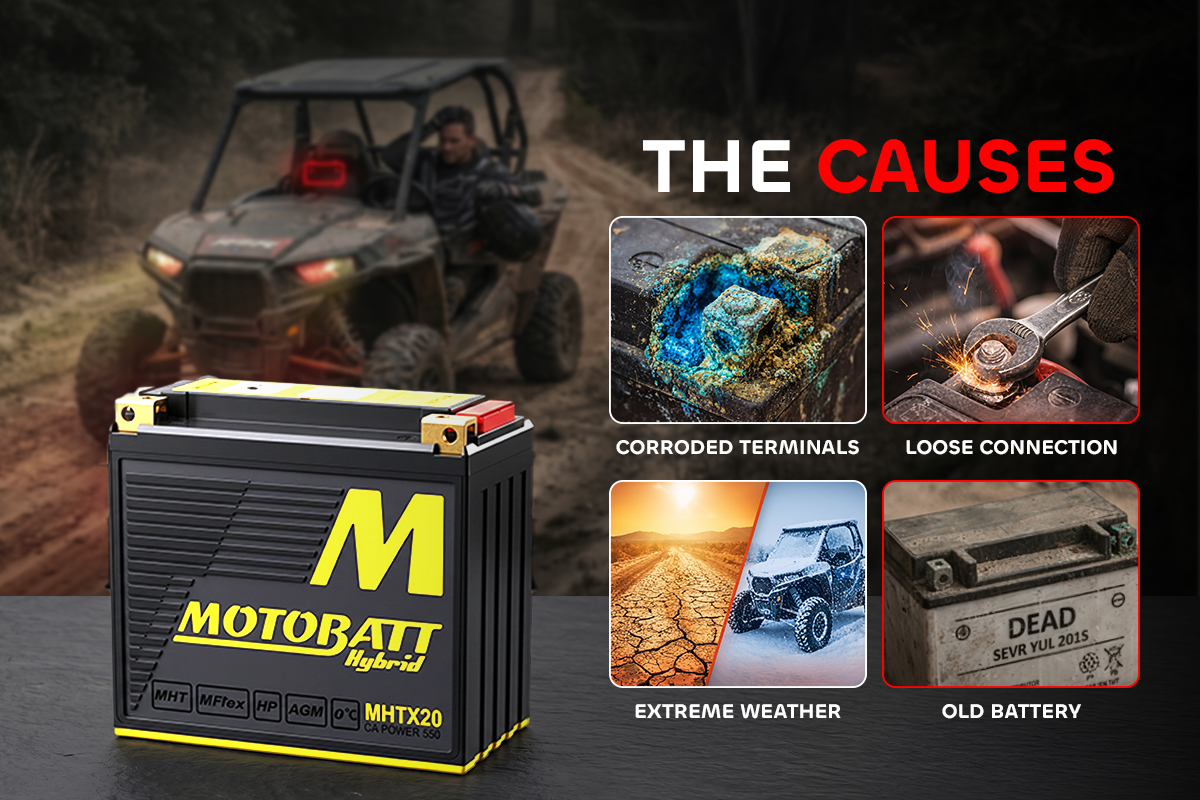
This is a simple problem that is often overlooked. Your battery terminals are the metal posts where the cables connect. If these connections are loose or covered in fuzzy, crusty corrosion, electricity can't flow properly.
Think of it like a clogged pipe. Even if your stator is working perfectly, the power can't get to the battery. Likewise, the battery can't send its full power to the starter. A bad connection can make a good battery seem dead.
The Fix: Luckily, this is an easy fix. Disconnect the cables (negative first). Clean the battery posts and cable clamps with a wire brush. A mix of baking soda and water can help dissolve the corrosion. Then, reconnect everything tightly (positive first).
4. Frequent Short Trips
Starting your UTV’s engine takes a huge amount of power from the battery. Your charging system is designed to replace this power as you ride. But it needs time to do its job.
If you only take short trips around your property, your engine may not run long enough to fully recharge the battery. You might just move it from the garage to the barn and shut it off. If you do this repeatedly, you are taking more power out of the battery than you are putting back in. Over time, the battery will go dead.
Pro-Tip: If you often take short trips, a battery tender is your best friend. It’s a smart charger that keeps your battery topped off and ready to go.
5. Old or Worn-Out Battery
UTV batteries don't last forever. They live a hard life with lots of vibration, heat, and big power demands. Typically, a powersport battery will last about 2 to 4 years. As it gets older, it just can't hold a charge as well as it used to.
A process called sulfation happens over time. Lead sulfate crystals build up inside the battery and prevent it from charging properly. If your battery is a few years old and won't hold a charge, it might just be its time. In this case, getting a high-quality UTV battery replacement is the simplest and most effective solution.
6. User Error: Forgetting to Turn Off Accessories
This one is simple, but it happens to everyone. You finish a great ride, and you're tired. You forget to turn off the headlights, a light bar, or the stereo. You come back the next day to a completely dead machine.
Modern accessories can pull a lot of power. Leaving something on overnight will almost certainly drain your battery. Always do a quick walk-around and make sure everything is switched off before you put your UTV away.
7. Extreme Temperatures (Hot & Cold)
Batteries are a bit like people. They don't like extreme temperatures. Both hot and cold weather can cause serious battery problems.
In cold weather, the chemical reaction inside the battery slows down. This reduces its ability to produce power. A battery that works fine in the summer might be too weak to start your UTV on a cold winter morning. For riders in harsh climates, a robust sealed AGM battery like the Motobatt MBTX12U is a great choice because it is built to handle tough conditions.
Extreme heat is even worse. It can cause the liquid inside the battery to evaporate and can speed up degradation. A battery that lives in a hot climate may not last as long as one in a cooler area.
8. Demanding Aftermarket Accessories
UTVs are fun to customize. Big sound systems, powerful winches, and bright LED light bars are popular upgrades. However, these accessories use a lot of electricity. Your stock charging system might not be able to keep up.
If you have added a lot of electronic gear, you might be using more power than the stator can produce. This forces the battery to make up the difference, and it will slowly drain even while you're riding. This is a key reason you might ask, "why does my UTV battery keep dying?" especially right after installing new accessories. For these heavily modified machines, a powerful hybrid battery like the Motobatt MHTX30 may be needed to provide the extra power you need.
How to Properly Test Your UTV's Electrical System?
Okay, so you know the possible causes. Now it’s time to be a detective and find the real problem. You'll need a simple tool called a multimeter or voltmeter. You can get one at any auto parts store.
Safety First: Before you start, remember to be safe. Wear safety glasses and gloves. When you disconnect battery cables, always remove the negative (black) cable first and reconnect it last. This prevents sparks.
Step 1: The Voltage Test (Static & Running)
This simple test tells you a lot about your battery and charging system.
Static Test (UTV Off): Connect your multimeter to the battery terminals with the UTV completely off. A healthy, fully charged battery should read around 12.6 to 12.8 volts. If it reads below 12.4 volts, it’s low and needs to be charged. If it's below 12.0 volts, it may be damaged.
Running Test: Now, start the UTV’s engine. Check the voltage again with the engine running at a fast idle. You should see a reading between 13.5 and 14.5 volts. This shows that the charging system is working and sending power to the battery. If the voltage stays low (below 13 volts) or doesn’t change, your charging system likely has a problem.
Step 2: Performing a Load Test
A voltage test is good, but a load test is the ultimate test of a battery’s health. It checks if the battery can deliver power under pressure, which is what it does when starting your UTV.
A load tester puts a heavy electrical demand on the battery to simulate starting the engine. It will tell you if the battery is truly good or bad. You can buy a load tester, but most auto parts stores will perform a load test for you for free. Just take the battery to their counter. This is the best way to know for sure if you need a new battery.
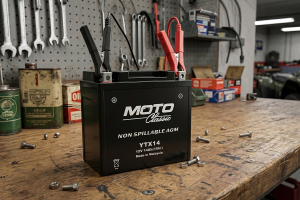
Sometimes, a battery that tests well still causes problems because of a poor fit in the battery tray. A premium AGM upgrade like the Motobatt MBTX20U often solves this with a more secure connection and better vibration resistance. For those who want a reliable standard option, the Moto Classic YTX20HL is always a solid choice.
Choosing the Right Replacement Battery for Your UTV
If your tests show that your battery is indeed the problem, it’s time for a new one. But don't just grab the first one you see. Choosing the right battery is important for performance and long life.
AGM vs. Lithium
There are two main types of batteries for UTVs today: AGM and Lithium.
AGM (Absorbent Glass Mat): These are the most popular choice. They are sealed, spill-proof, and very resistant to vibration. AGM batteries are reliable, powerful, and offer great value. They are perfect for most riders.
Lithium: These are a newer, high-tech option. Their biggest advantage is that they are extremely lightweight, often saving you 10 pounds or more. They also provide very strong starting power. However, they are more expensive and may require a special charger.
Size Matters
Make sure you get the right size battery for your UTV. A battery that doesn't fit properly in the tray can vibrate and get damaged. Check your owner's manual for the correct battery group size. Also, make sure the positive and negative terminals are in the correct positions.
For general use, a universal size like the UB12350 Group U1 battery can be a versatile and reliable option. If you need a high-performance upgrade, the lightweight Braille B14115 AGM delivers incredible power.
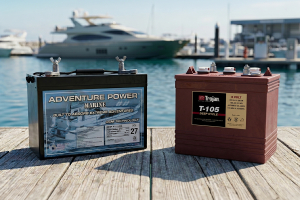
Riders looking for a different fit might find the Motobatt MBTX14AU Sealed AGM Upgrade to be a perfect match. For very specific uses like running high-power electronics for long periods, a true deep-cycle battery like the Trojan T-875 8-Volt is what you need.
Frequently Asked Questions (FAQs)
Still have questions? We’ve got answers. Here are some of the most common questions riders ask about their UTV batteries.
How long should a UTV battery last?
A typical UTV battery lasts between two to four years. Its lifespan depends on your riding habits, the climate you live in, and how well you maintain it. Regular charging and proper storage can significantly extend its life.
Can a bad stator drain a battery when the UTV is off?
No, a bad stator cannot drain a battery when the UTV is off. Its job is to generate power only when the engine is running. If your battery drains overnight, the cause is more likely a parasitic draw.
What are the signs of a bad UTV stator?
Common signs of a bad stator include the battery dying while you ride, dim or flickering headlights, and a low voltage reading (below 13V) at the battery when the engine is running. Your UTV may also struggle to run.
Why would a brand new UTV battery keep dying?
If a new battery keeps dying, the problem is almost always with the UTV, not the battery. The most common causes are a parasitic draw, a faulty charging system (bad stator or regulator), or loose/corroded terminal connections.
How do I know if my UTV voltage regulator is bad?
A bad voltage regulator can either undercharge or overcharge your battery. Signs include a battery that won't stay charged, dim or overly bright headlights, and a battery that is hot to the touch or smells like rotten eggs.
Will a trickle charger fix a bad battery?
A trickle charger can maintain a healthy battery and may revive a deeply discharged one, but it cannot fix a battery that is internally damaged or has reached the end of its life. It's a maintenance tool, not a repair tool.
Power Up Your Ride: Find the Perfect UTV Battery Today!
A dead battery shouldn't ruin another ride. You've learned how to diagnose the problem, and now it's time to get the right power source for your machine. Don't settle for a battery that leaves you stranded.
At Impact Battery, we have a premium selection of AGM, Lithium, and specialty batteries built to handle the toughest conditions. Our experts are here to help you match the perfect battery to your UTV and riding style. Stop worrying about starting problems and get the reliable power you deserve.