How Do Car Engines Work
Most people don't spend much time thinking about their car's engine. While it's certainly possible to drive a car without understanding how its engine works, taking the time to learn about the mechanical processes involved in driving can give you greater appreciation for your vehicle. It will also help you understand what's going on whenever your vehicle breaks down, which can save you time and money when it comes to repairs.

How Car Engines Work
Gas-powered vehicles use an internal combustion engine. This means that fuel is burned inside the engine. The energy created by this combustion is then used the power the wheels and propel the vehicle forward. In order to harness the power of combustion, the engine is designed to go through four fuel-burning stages. First, the piston lowers, which allows the intake valve to open and release gas into the engine. Second, the piston goes back up, which compresses the gas; the resulting pressure creates more power. Once the piston reaches the topmost position, the spark plug ignites the compressed fuel. This in turn drives the piston back down, which opens the exhaust valve.
This process repeats indefinitely while the vehicle is driving. All of this activity occurs in the vehicle's cylinders, which house the pistons, spark plugs and valves. Engines with a higher number of cylinders will have more power than smaller engines, and the configuration of the cylinders will affect the smoothness of the car's acceleration.
Of course, there is more to a car engine than combustion. In order to convert the energy in the cylinders to movement for the vehicle, cars require additional parts. A cooling system including a radiator and fan is necessary to prevent the engine from overheating, and an oil distribution system is required to keep all engine components well lubricated. The transmission helps to control the vehicle's motion by determining how quickly the wheels should turn when the accelerator is pressed.
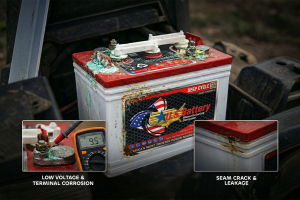
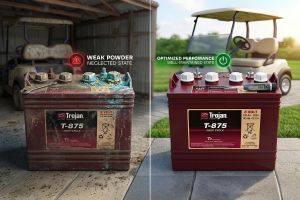
One part of a vehicle that's especially crucial is the ignition system. Ignition allows the first spark to ignite within the engine, starting its combustion processes. Without this, the car will not be able to start. In order to start the ignition process, vehicles use a battery. This battery provides the energy necessary to ignite the spark plugs and set the engine in motion. After the vehicle has started, it transfers energy to the alternator, which in turn re-charges the battery.
The inner workings of an engine can be extremely complex, and every moving part serves a valuable purpose. The more you know about the car's inner workings, the more you can appreciate the hard work it does for you each day. You'll also be better equipped to assess the possible problems that may arise throughout the life of your car.