The History of Electric Cars
Although electric vehicles have a long history, they did not become popular until quite recently. Recent technological advances have made them more affordable while improving their performance, and the entire industry continues to grow at a breakneck pace.
[caption id="attachment_1945" align="aligncenter" width="300"]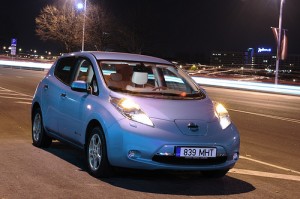 Pic from: Kaspars Garda, garda.lv[/caption]
The First Models
By the end of the 19th century, electric cars were in production in Europe and the United States. While early models had a very limited range of just 18 miles, many people preferred them over gasoline engine vehicles because they ran more smoothly and did not emit any bad odors.
The need for long distance travel and fast speeds eventually caused the early electric vehicle market to crash. Gasoline was cheaper than ever before, Henry Ford had perfected the art of mass production and interchangeable parts, and the electric starter allowed anyone to easily turn on a gasoline engine. All the stars were aligned in gasoline's favor, and the electric vehicle faded into obscurity for the better part of a century.
20th Century Revival
Electric cars experienced a renaissance in the 1990s with the introduction of the hybrid vehicle. Unlike electric vehicles that are powered solely from their batteries, hybrids combine electric motors with gasoline engines to achieve excellent fuel economy.
Early hybrids generated electricity by harnessing a vehicle's momentum. As a hybrid slows down, its own momentum turns a small turbine, which charges the hybrid's battery. Because hybrids recapture some energy used during acceleration, they work exceptionally well for city driving.
Fully electric cars that lacked gasoline engines did not emerge for another decade. In 2010, Nissan released the Leaf, the first mainstream battery electric vehicle. In 2012 alone, Nissan sold more than 43,000 Leafs.
Technological Breakthroughs
Compared to other emerging technologies, electric battery vehicles are available today. While they still have short ranges of 100 miles or less, the average commute in the United States is only around 25 minutes. Electric car owners can charge their vehicles up at night, drive to work, drive home, and still have enough of a charge left over to run errands.
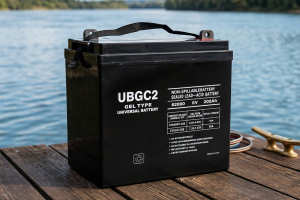
Universities and manufacturers are constantly improving electric motors and the batteries that power them. Most electric cars still use lead acid batteries today, but newer types like zinc-air and molten salt batteries promise higher energy densities while keeping manufacturing costs low.